
Vandaag of morgen in huis

Kwaliteit gegarandeerd

Welkomstaanbiedingen ontgrendelen: GRATIS bezorging | Tot 80% korting | Gratis 30 dagen JoyPlus-proefperiode
Download de app
A post-operative compression bra should above all be comfortable, fit well and be easy to put on. Yet many shoppers first look for terms such as “medical-grade”, “firm control” or “anti-sag”. These descriptions only tell you so much: it’s also important to check the materials, fastening, sizing and care instructions.
This guide will help you choose a medical compression bra, a post-liposuction bra or shapewear without relying on marketing claims alone.
Important: after breast surgery or liposuction, you should decide with your treating clinician or clinic which type of support, fit and level of compression is right for you. A product description is not individual medical advice.
A product page may describe a bra as offering “medical-grade support” or call it a medical compression bra. That doesn’t automatically mean the garment is suitable for every operation or stage of recovery. So check:
If a brand claims that a product works or reduces swelling, treat this as a claim made in the product information. It is not a guaranteed result for every wearer.
S, M, L and XL can vary between brands and styles. Bust, underbust and body shape matter too. A bra that’s too tight may feel uncomfortable, while one that’s too loose may not offer enough support. Always use the size guide on the specific product page, and check whether the number of hook rows or straps is adjustable.
A post-operative bra with a front fastening is generally easier to put on than a style you have to pull over your head. However, not all front fastenings are the same. Check the number of hook rows, the spacing between fastening positions and whether you can fasten the bra gently without pulling at sensitive skin.
Many compression garments are made from a blend of nylon and elastane. Nylon helps the garment hold its shape, while elastane provides stretch. According to the product information, the Feelingirl compression bras in this selection are made from 53% nylon and 47% spandex.
A breathable compression bra won’t necessarily feel cool in every situation. Check for features such as mesh, moulded cups and fabric thickness. Care instructions matter too. These styles are listed as hand-wash only, with no bleach, ironing, dry cleaning or tumble drying.
The number of hook rows determines how much room you have to adjust the fit. Depending on the size, the selected styles have 3, 8, 9 or 10 hook rows. More rows can be useful if you want to try different fastening positions, but the number of hooks alone doesn’t tell you whether a bra will be comfortable or suitable.
An adjustable compression bra can be useful at different times. Check that the fastening sits flat under clothing and that the straps provide enough support without digging into your shoulders.
Moulded cups can help keep the breasts in a defined shape. The product information describes this as breast support and shape retention, but how a bra feels will vary from person to person.
If you want to shape your waist, stomach, back or hips as well as support your breasts, you could look at women’s shapewear, control underwear or full-body shapewear. These are different product categories from post-operative compression bras and cover more of the body.
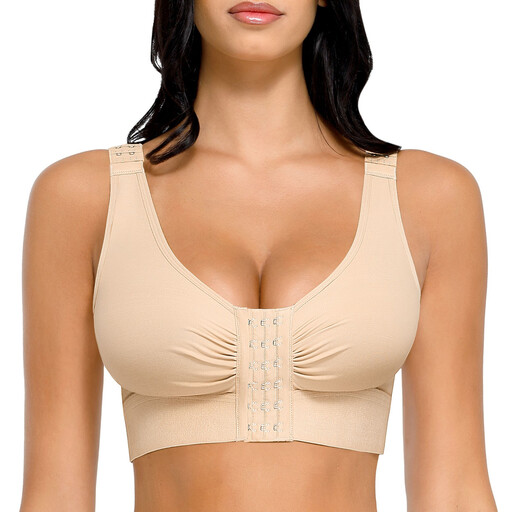
Why it suits this shopper: This style is aimed at anyone looking for a simple design with a front fastening and moulded cups. According to the product information, the S variant has 10 hook rows for adjustability.
The adjustable front means you aren’t limited to a single fixed fastening position. Check the size guide before ordering.
53% nylon and 47% spandex; moulded cups; front fastening with 10 hook rows.
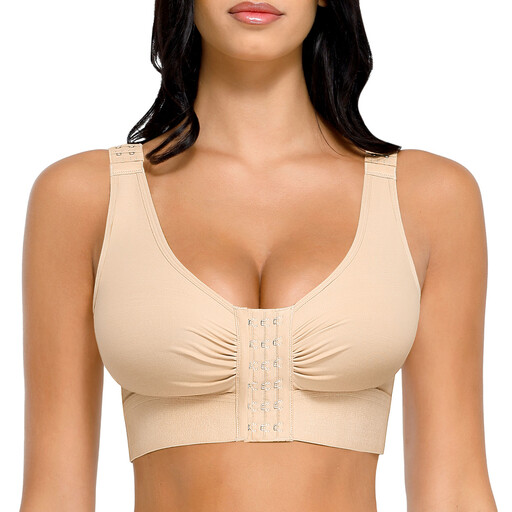
Why it suits this shopper: A good option if adjustability and support around the chest are a priority. According to the product information, the L variant has 9 hook rows.
The product information lists the material, cup shape and fastening system separately. This lets you check each feature instead of relying on the word “medical” alone.
Moulded cups; 53% nylon and 47% spandex; front fastening with 9 hook rows.
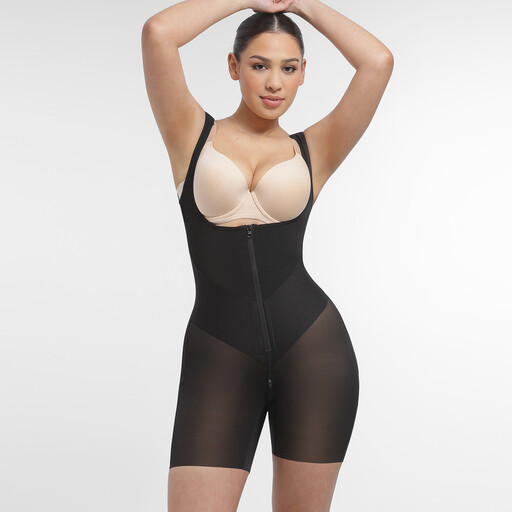
Why it suits this shopper: This isn’t a separate post-operative compression bra, but full-body shapewear for anyone who also wants support around the waist, stomach, back and legs. The compression is described as medium.
The product information clearly states that the garment is put on from the bottom up. This is worth noting because full-body shapewear takes more effort to put on than a bra with a front fastening.
11 cm-wide waistband; adjustable shoulder straps; front zip and crotch fastening; laser-cut leg openings.
We’ve put together a complete, up-to-date list of products that meet these strict selection criteria and the applicable European safety regulations.
Put on your compression bra gently, then check that the straps lie flat and the hooks aren’t pressing into your skin. For a full-body style, follow the stated way of putting it on. Stop wearing it and contact your treating clinician if you experience increasing pain, numbness, skin irritation or any other symptoms.
Wash the garment according to the label. Hand washing is recommended for the bras mentioned, and you should leave the garment to dry flat. Heat from a tumble dryer can damage elastic fibres. How long the garment lasts depends on how often you wear and wash it, how much it stretches and how well it fits. Replace it if the fabric is visibly stretched, the fastening no longer stays secure or the support has noticeably changed.
You can compare the materials, fastening and size yourself, but ask your treating clinician or clinic to decide whether the style and compression are right for your recovery. This applies to bras worn after liposuction or breast surgery too.
Take your measurements according to the brand’s sizing instructions, then compare your bust and underbust measurements with the product size chart. Don’t automatically choose the same size you wear in everyday lingerie. An adjustable fastening gives you a little extra flexibility, but it doesn’t replace choosing the correct size.
That depends on the design and your circumstances. Some product descriptions list pregnancy and everyday wear as possible uses. After an operation, your treating clinician’s advice should always come first. For everyday shaping when there’s no medical need, control underwear or shapewear may be a more suitable category.
