
Stage photographer in a fixed position
You shoot from a tripod without moving around during the performance. Choosing a field of view that keeps the movement in frame is therefore important.


First, choose a field of view that keeps both the portraits you want and the dancer’s movement within the frame from your fixed tripod position. A fast prime is better suited to a fixed distance and low light; a zoom makes it easier to reframe, but check its maximum aperture, how well your setup is supported and whether the lens mount is compatible with your camera.
You shoot from a tripod without moving around during the performance. Choosing a field of view that keeps the movement in frame is therefore important.
You work with available light and weigh up a wide aperture against the depth of field and shutter speed needed to capture movement.
You want to switch between a wider view and a closer portrait from one tripod position, and are comparing a prime with a zoom.
Choose this when: your distance and tripod position are predictable and a wide aperture matters to you.
Trade-off: you can’t zoom if the dancer moves across the frame; a wide aperture also gives you less depth of field.
Choose this when: you want to switch regularly between a wider composition and a closer portrait from the same position.
Trade-off: the f/2.8 zooms listed have a smaller maximum aperture than the f/1.4 or f/1.8 primes; at the longest telephoto setting, it may be difficult to fit a full pose into the frame.
Choose this when: an 85mm lens doesn’t leave enough room for the dancer and their movement from your fixed position.
Trade-off: it’s harder to get a tight portrait from the same distance; consider your actual shooting distance and sensor size.
| What to consider | What should you check? | Who is this important to? |
|---|---|---|
| Framing and room for movement | Compare your desired portrait framing with a full dance pose from the permitted tripod position; take focal length and sensor size into account. | If I want to capture a jump or an outstretched arm in full from one position, I look for enough room around the dancer. Around 26% of consumers prioritise framing and room for movement. |
| Maximum aperture | Compare the maximum aperture with the available light and the depth of field you want; if possible, test it at the venue. | If I work with available light, I weigh up a wider aperture against the depth of field I need. Around 21% of consumers give maximum aperture top priority. |
| Focusing and movement | Check which autofocus features your camera supports with the lens, and choose a shutter speed to suit the effect you want. | If I want to capture a moving moment sharply, I consider both focus and shutter speed; a tripod won’t keep the dancer still. Around 21% of consumers prioritise focusing and freezing movement. |
| Portrait look and depth of field | Consider whether the aperture you choose will keep the pose you want in focus and suit your intended framing. | If I want the dancer to stand out from the background, I also want to know whether their face and body will fall within the depth of field. Around 16% of consumers start with the portrait look they want. |
| Mount and tripod support | Check the exact lens version for your camera model, and look at the tripod attachment if you’re considering a larger zoom. | If I want to use a lens with my own camera and tripod, I check the exact mount and support for that combination. Around 16% of consumers prioritise system and tripod compatibility. |
A tripod reduces camera shake, but it won’t freeze a dancer’s movement.
Consider shutter speed, autofocus and available light separately from camera stability. A slower shutter speed may be right if you want to show movement.
With a fixed focal length, you can’t adjust the framing by zooming when the dancer moves across the frame.
Check the dancer’s full range of movement from your fixed position, and take your camera’s sensor size into account.
The brand or focal length alone won’t tell you whether a specific version is compatible with your camera mount.
Compare the full model name and mount with your exact camera model before ordering.
A manufacturer’s warranty is not the same as your right to a product that is fit for purpose. According to the Dutch Government, there is no fixed statutory warranty period in the Netherlands.
Report a faulty consumer product to the retailer. Check any additional warranty terms alongside your statutory rights, not as a replacement for them.
For compatible EOS R cameras, options include an RF 85mm prime and an RF 70-200mm telephoto zoom.
For a compatible Sony E camera, the FE 85mm F1.8 is a prime that Sony lists for use with full-frame and APS-C cameras.
For compatible Nikon Z cameras, options include an 85mm prime and the NIKKOR Z 70-200mm f/2.8 VR S II telephoto zoom.
Sigma offers, among other options, the 85mm F1.4 DG DN | Art and the 70–200mm F2.8 DG DN OS | Sports in specific L-Mount or Sony E-mount versions.
The 70-180mm F/2.8 Di III VC VXD G2 is a telephoto zoom available for compatible Sony E or Nikon Z cameras.
This selection includes Sony E primes and a Sony E zoom for photographers who want to take portraits or switch between different framings from a fixed position. Before buying, check the lens version and field of view for your camera model and sensor size.
 No image available
A fixed focal length may suit you if your distance and framing are predictable from your tripod position; you won’t be able to zoom in or out during the dance.
The product name lists 50 mm, f/1.8 and OSS. Check that this version is compatible with your camera model and the field of view you want.
 No image available
A prime may suit you if you can set your framing from one tripod position; you can’t zoom to reframe a moving dancer.
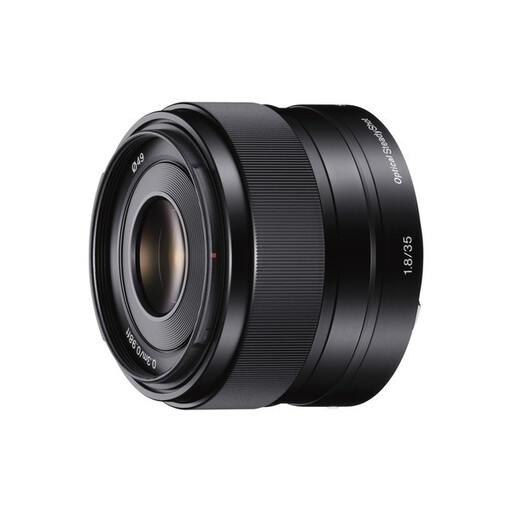
The product name lists 35 mm, F1.8 and OSS. Check the field of view for your sensor size and that the lens version is compatible with your camera.
 No image available
The zoom range may suit you if you want to create different framings from the same position without moving your tripod.
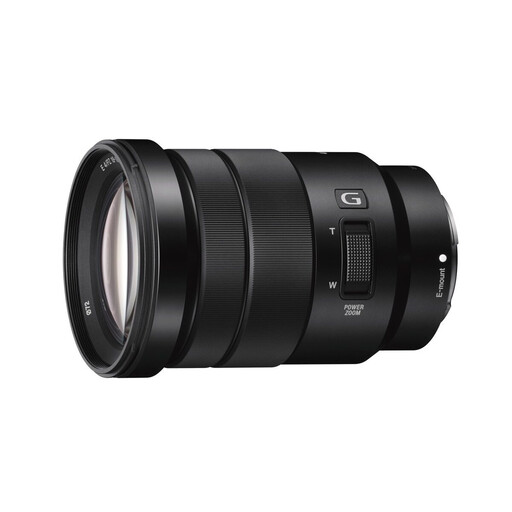
The product information lists 18–105 mm, a maximum aperture of f/4, OSS and autofocus. The maximum aperture is smaller than f/1.8, so weigh this up against the available light.
Not automatically: a tripod and image stabilisation reduce camera shake, but won’t keep the dancer still. Choose a shutter speed and focusing method that suit the moment you want to capture; a slower shutter speed can be used to show movement.
Compare your exact camera model with the mount on the specific lens version. For a larger zoom, also check the tripod attachment and the guidance for your camera and lens combination; having the same focal length doesn’t prove compatibility.
Report the fault to the retailer. According to the Dutch Government, you’re entitled to a product that is fit for purpose, and there is no fixed statutory warranty period in the Netherlands. A manufacturer’s warranty or additional guarantee doesn’t replace your statutory rights.
This depends on the photographer, how the photos are used and the circumstances. The Dutch Data Protection Authority explains that an organisation photographing and publishing images of identifiable visitors, colleagues or pupils needs a lawful basis under the GDPR; consent is one possible basis, but not the only one. Rules for purely personal or household use may differ. Also check the venue’s terms and the intended use.