First, check that the lens mount is compatible and that the angle of view can fit the whole family into your space. A fast prime can give you more flexibility to choose a faster shutter speed in low light, while an f/2.8 zoom makes it easier to switch between group shots and tighter crops. With a group, you may need a smaller aperture to keep faces at different distances in focus.
Which lens is right for you?
Photographing active children
For candid family photos indoors, a fast lens can give you more flexibility when choosing a shutter speed. Also consider focusing and depth of field; Canon Netherlands and the Consumers’ Association discuss these trade-offs in low-light photography.
Families in small rooms
If you can’t move further back, the angle of view matters when you’re trying to fit everyone—and perhaps part of the room—into the frame. Canon Netherlands and Sony Netherlands explain why focal length and sensor size are important here.
Photographers with a mirrorless camera
Check your camera’s exact lens mount and sensor size before choosing between a fast aperture and zoom range. The Consumers’ Association points out that a lens must be compatible with the camera mount.
What should you consider when choosing?
35mm prime
Choose this if: you stay close to the family with a compatible Sony E-mount camera and want to include the room in the shot. On APS-C, Sony says the Sony FE 35mm F1.8 has an angle of view equivalent to 52.5 mm.
Bear in mind: the angle of view on your camera’s sensor and the shallow depth of field at a wide aperture.
50mm prime
Choose this if: you can stand far enough back and want a fixed, fast focal length, such as a Canon RF 50mm F1.8 STM or NIKKOR Z 50mm f/1.8 S with the right mount.
Bear in mind: you can’t zoom out if the room turns out to be too small. You may need to stop down to keep faces at different distances in focus.
Fast APS-C zoom
Choose this if: you want to switch quickly between group shots and tighter crops during a gathering. The Sigma 18–50mm F2.8 DC DN Contemporary and Tamron 17–70mm F/2.8 Di III-A VC RXD are examples; choose the version that fits your mount.
Bear in mind: both of these zooms have a maximum aperture of f/2.8 rather than f/1.8. Tamron’s VC reduces camera shake, not the movement of a child.
85mm portrait prime
Choose this if: you mainly photograph one person or a smaller part of the family and can stand far enough back; the Sony FE 85mm F1.8 is one example.
Bear in mind: check that you have enough room to stand back and frame everyone.
| What to consider |
What to look for when buying |
Who is this important for? |
| Light for active family members |
Compare the maximum aperture and consider whether you’ll have enough light when stopping down. |
When I take candid photos of active children, I want flexibility with the shutter speed in low light. Around 31% of consumers prioritise having enough light to capture movement. |
| Fitting everyone in the frame |
Assess the angle of view from your available shooting distance and take the sensor size into account. |
When I can’t move further back, I want to fit the whole family into one frame. Around 31% of consumers prioritise having a wide enough angle of view for the group. |
| Mount and sensor size |
Check the full camera model, the mount and whether the lens version is compatible with the sensor. |
I want a version that fits my existing camera before considering other features. Around 23% of consumers prioritise compatibility. |
| Switching between crops |
Consider whether you often switch from a group shot to a tighter portrait during one session. |
When the group size varies during a gathering, I want to adjust the framing without changing lenses. Around 15% of consumers prioritise this flexibility. |
Common pitfalls
-
Focusing only on the brand and “35mm f/1.8”
Lenses with similar specifications can have different mounts or model codes. Sony SEL35F18 and SEL35F18F are separate models.
Before buying, compare the full model code and mount with your camera model, and check that the version is compatible with your sensor size.
The wrong mount or a mix-up between model codes could mean the lens isn’t compatible with your camera.
-
Assuming the widest aperture is always best for a group photo
With a shallow depth of field, faces at different distances may fall outside the area in focus.
Check all the faces in a test shot and stop down if necessary; bear in mind that this lets in less light.
-
Confusing image stabilisation with freezing movement
Stabilisation is designed to reduce camera shake, not to freeze a moving family member.
When photographing children at play, consider the shutter speed you need and the available light.
Brands to consider
Canon
The RF 50mm F1.8 STM is a fixed f/1.8 prime for EOS R cameras, designed for use with available light.
- Canon lists a weight of 160 g and a minimum focusing distance of 0.3 m.
- The fixed 50mm focal length doesn’t offer zoom; also check the difference between RF and EF mounts.
Sony
Sony offers separate E-mount models, including the full-frame FE 35mm F1.8 and the APS-C E 35mm F1.8 OSS. The FE 85mm F1.8 is an option for portraits taken from further away.
- Sony specifies an f/1.8 aperture for the FE 35mm F1.8.
- According to Sony, the FE 35mm F1.8 has no in-lens stabilisation; the E 35mm F1.8 OSS is a different model with built-in stabilisation. Don’t mix up the model codes.
Nikon
The NIKKOR Z 50mm f/1.8 S is a fixed prime for Nikon Z cameras.
- Nikon specifies an f/1.8 aperture and a minimum focusing distance of 0.4 m.
- The focal length is fixed; consider the angle of view on your camera body and the space available.
Sigma
The 18–50mm F2.8 DC DN Contemporary is an APS-C zoom available in different mount versions.
- Sigma specifies an f/2.8 aperture throughout the zoom range and a weight of 290 g for the Sony E version.
- This APS-C lens doesn’t cover the full-frame sensor; its maximum aperture is smaller than f/1.8.
Tamron
The 17–70mm F/2.8 Di III-A VC RXD, model B070, is an APS-C zoom with VC image stabilisation specified by Tamron. It’s available in different mount versions.
- Tamron specifies a weight of 525 g for Sony E and 540 g for Nikon Z.
- VC is designed to reduce camera shake, not to freeze a moving child. Check the exact version.
Joybuy lenses for family portraits
This selection of Joybuy products includes Sony E-mount primes and zooms for family photos indoors, from a fixed portrait crop to changing compositions.
 No image available
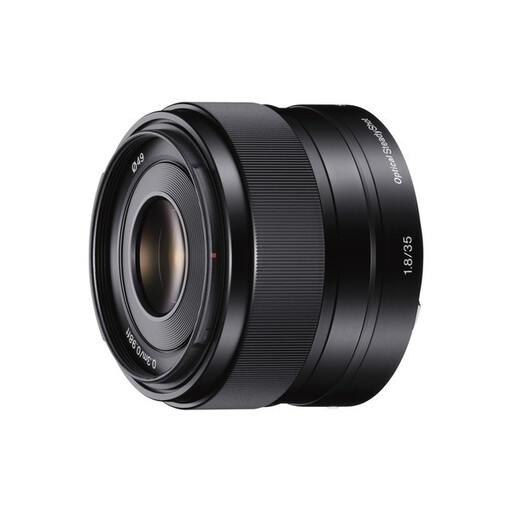
Sony SEL 35mm F1.8 OSS
A fixed 35mm prime for anyone looking for a Sony E-mount version for family photos indoors.
The product description lists F1.8, OSS and APS-C.
The fixed focal length doesn’t offer zoom.
View at Joybuy
 No image available
Sony E 50mm f/1.8 OSS, black
A fixed 50mm prime for anyone who can stand far enough back and wants a portrait crop.
The product title lists f/1.8 and OSS.
The fixed focal length doesn’t offer zoom.
View at Joybuy
 No image available
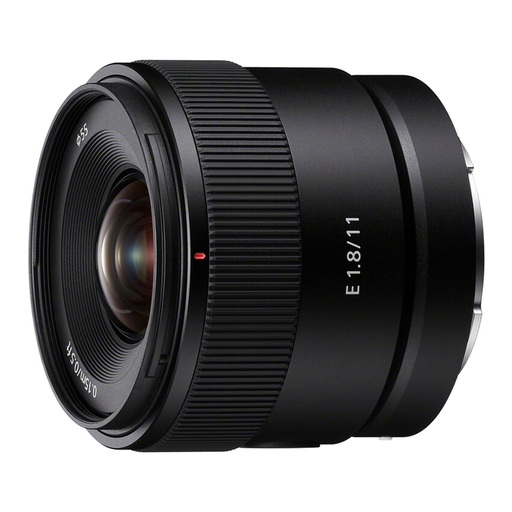
Sony E 11mm F1.8 APS-C (SEL11F18)
A fixed wide-angle prime for anyone looking to create a wide family composition with a Sony E-mount camera.
The product description lists 11 mm, F1.8, APS-C and a 104° angle of view.
View at Joybuy
 No image available
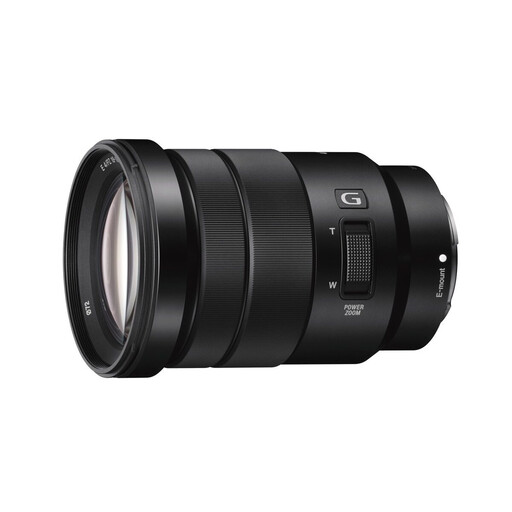
Sony E PZ 18–105mm f/4 G OSS
A zoom for anyone who wants to switch between wider and tighter crops during a gathering without changing lenses.
The product description lists an 18–105 mm range, f/4, OSS and a Sony E mount for APS-C.
The maximum aperture is f/4, which gives you less flexibility in low light than an f/1.8 prime.
View at Joybuy
Frequently asked questions
Will every portrait lens fit my camera?
No. Check the mount on your camera model and the exact mount version of the lens. Also check that an APS-C lens is compatible with your camera’s sensor.
Should I always shoot at f/1.8 for a family group?
No. With faces at different distances, a smaller aperture can give you more depth of field, but it lets in less light. Take a test shot and check that all the faces are in focus.
Will image stabilisation keep a moving child in focus?
No. Image stabilisation reduces camera shake; movement by the person you’re photographing is a separate cause of blur.
Can I return a lens bought online?
For a standard online purchase, ACM ConsuWijzer says you generally have a statutory cooling-off period of up to 14 days after delivery. Check the applicable exceptions and the conditions for trying and returning the item.


