Camera brands and lenses to compare
The specifications listed apply to the models and versions in question. Always check that the mount fits your camera.
Canon
Canon offers the RF 50mm F1.8 STM and RF 85mm F2 MACRO IS STM, among others, for the EOS R system.
- Canon Europe lists a maximum aperture of f/1.8, STM autofocus and a weight of 160 g for the RF 50mm F1.8 STM.
- The fixed focal length doesn’t offer zoom, and the RF mount means it isn’t a general-purpose choice for other camera systems.
Nikon
According to Nikon Netherlands, the NIKKOR Z 85mm f/1.8 S is an 85mm lens for the full-frame Nikon Z system.
- The stated focal length and maximum aperture are 85 mm and f/1.8.
- The fixed focal length gives you less freedom to change your framing without moving; in a small space, allow for the distance you’ll need.
Sony
The FE 85mm F1.8 (SEL85F18) is a Sony E lens that Sony describes as suitable for full-frame and APS-C cameras.
- Sony lists a maximum aperture of f/1.8 and notes that on APS-C the angle of view is equivalent to 127.5 mm on a 35mm-format camera.
- The fixed focal length limits your ability to reframe without changing position; check the framing for your sensor format.
Tamron
The 35-150mm F/2-2.8 Di III VXD (A058) is the Sony E version of Tamron’s zoom lens covered here.
- Tamron Europe lists a range of 35–150 mm and a maximum aperture of f/2–2.8, giving you room to adjust your framing without changing lenses.
- The maximum aperture isn’t f/2 throughout the entire zoom range; consider your chosen framing in relation to the lighting conditions.
Fujifilm
The FUJINON XF56mmF1.2 R WR is a prime for the Fujifilm X system.
- Fujifilm lists 56 mm and f/1.2; according to the manufacturer, its angle of view is equivalent to 85 mm on a 35mm-format camera.
- For group shots, consider the depth of field and check that you have enough distance.
Sigma
The 85mm F1.4 DG DN | Art is a full-frame mirrorless prime that Sigma offers with Sony E and L mounts.
- Sigma lists f/1.4 and a weight of 625 g for the Sony E version.
- Mounts and versions vary, so check which one is compatible with your camera.
Joybuy lenses for portraits in low light
This selection includes Sony E lenses with fixed focal lengths and zooms. The models vary in focal length and aperture; the 11mm version is an ultra-wide-angle lens, so check whether it suits the portrait framing you want.
 No image available
Sony E 50mm f/1.8 OSS Black
A fixed focal length to consider if you’re looking for a prime for portrait photography; you can’t zoom in to change the framing.
The product name lists 50 mm and f/1.8. Check that the fixed framing suits the space you’ll be photographing in.
View at Joybuy
 No image available
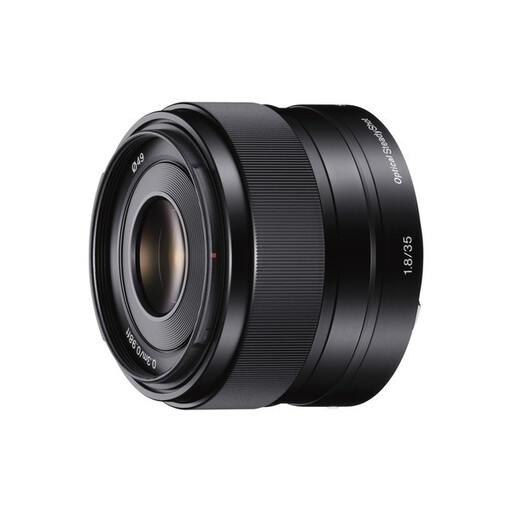
Sony SEL 35mm f/1.8 OSS
A prime to consider if you don’t want to rely on a zoom during the ceremony; plan where you’ll stand around its fixed framing.
The product name lists 35 mm and f/1.8. Check that its angle of view suits your distance from the stage and the number of people you want to photograph.
View at Joybuy
 No image available
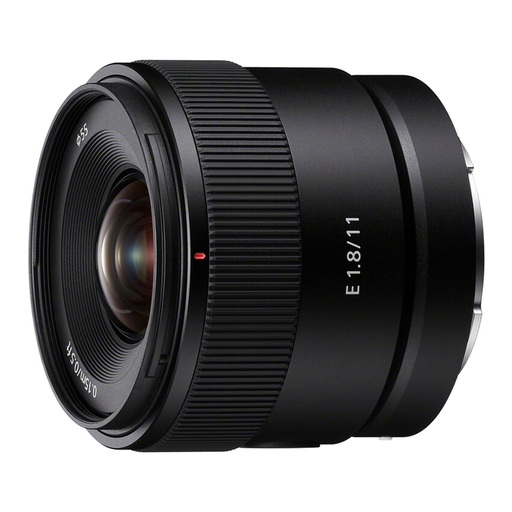
Sony E 11mm f/1.8 APS-C Wide Angle Prime Lens (SEL11F18)
This APS-C ultra-wide-angle prime is mainly worth considering if you need a wide frame; its angle of view may be less suitable for a tightly framed individual portrait.
The product name lists 11 mm, f/1.8 and APS-C. Check the framing you want before choosing this fixed focal length.
View at Joybuy
 No image available
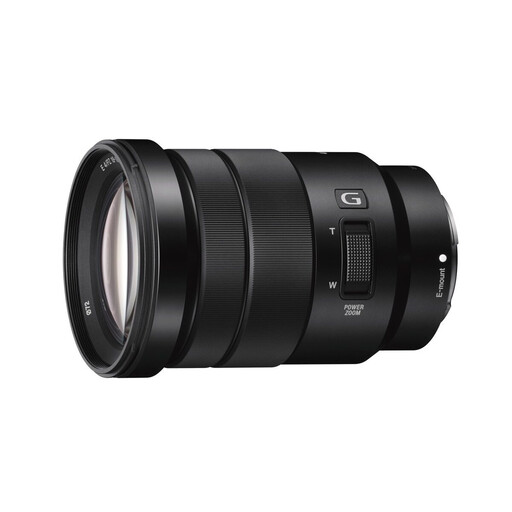
Sony E PZ 18-105mm f/4 G OSS
The zoom range can be useful if you need different framings during the ceremony without changing lenses.
The product name lists 18–105 mm and f/4. In low light, bear the maximum aperture in mind and check that it suits the shutter speed you need.
View at Joybuy
Frequently asked questions
Does image stabilisation help with a graduate who’s moving and out of focus?
Image stabilisation is designed to reduce blur caused by camera shake; a suitable shutter speed is still important when photographing a moving person. Take test shots during the ceremony to check whether your settings work in the available light.
Should I always use an f/1.2 or f/1.8 lens wide open for a group photo?
No. A wide aperture reduces depth of field, making it harder to keep all the faces at different distances in focus. Choose the aperture to suit the group, and adjust the other exposure settings to suit the available light.
How can I check whether a lens fits my camera?
Compare the exact mount for your camera model with the full model name and mount of the version on offer. Also check the sensor format: the same focal length gives you a different field of view on APS-C and full-frame.
What are my rights when buying a lens online in the Netherlands?
The Dutch government states that for distance purchases, a 14-day cooling-off period applies in many cases; check which exceptions and returns conditions apply. You’re also entitled to a statutory guarantee for a product: it must meet the terms of the agreement.
Can I publish recognisable photos of a graduation ceremony?
For a school or other organisation photographing and publishing images of recognisable visitors or pupils, the Dutch Data Protection Authority points to the need for a lawful basis under the GDPR; according to the Authority, consent is often the most obvious basis. This guidance does not set a general rule for every private photo. Agree on publication and any venue rules in advance.


