Start by checking your camera’s mount and sensor, then work out how much room you have to step back. A short telephoto prime is a good choice for both looser and tighter headshots if you have enough distance; in a small space or when you need different crops, a shorter focal length or a zoom may be more practical. Before printing, check the final crop and make sure you have considered the rights relating to identifiable people.
Who are these options for?
Photographer with an existing mirrorless camera
You’re looking for a lens for headshots, so first check the mount and angle of view for your sensor. The 85 mm figure alone doesn’t tell you whether a lens will fit your camera or give you the crop you want.
Headshot photographer working in low light
You shoot in available light and want to control depth of field and background blur. Bear in mind that a shallow depth of field makes accurate focusing on the eyes especially important.
Photographer in a small exhibition space
The distance you have available, along with whether you want a mix of tight and wider portraits, will help determine whether a shorter focal length or a zoom will suit your set-up.
Which lens features should you consider?
Short telephoto prime
Choose this if: you mostly shoot looser headshots, have plenty of room to step back and can find a lens with the right mount for your camera.
Trade-off: you can’t zoom; in low light, a shallow depth of field calls for careful focusing on the eyes.
Shorter focal length
Choose this if: an 85 mm lens frames too tightly on your camera or in your space; check the angle of view on your camera body.
Trade-off: with a shorter focal length, you’ll need to stand closer to get the same tight crop, so work out your shooting distance in advance.
Zoom for different crops
Choose this if: you want to switch between headshots and wider portraits during one session without changing lenses.
Trade-off: check that you have the right mount and that the weight of the version you choose will feel comfortable during your session.
| What to consider |
What should you check? |
Who is this important for? |
| Mount and sensor |
Check the exact lens mount and assess the angle of view on your camera body. |
If you’re looking for a lens for your existing camera, you’ll want to be sure the version fits. Around 30% of consumers are most concerned about compatibility with their camera and sensor. |
| Tight crop |
Compare the angle of view on your sensor with the available distance and the framing you want. |
If you mainly want to shoot tightly framed headshots, you need to be able to get the crop you want from your shooting position. Around 30% of consumers prioritise this type of headshot framing. |
| Available light |
Compare the maximum aperture of the exact lens version and check test shots to make sure the eyes are sharp. |
If you shoot in available light, you’ll want to choose your depth of field and keep the facial details you want in focus. Around 20% of consumers prioritise working in available light and controlling background blur. |
| Multiple crops |
Compare a prime’s focal length with the zoom range and weight of the version. |
If you switch between headshots and wider portraits in the same location, you’ll want to adjust your framing without changing lenses each time. Around 20% of consumers give this flexibility top priority. |
Common buying pitfalls
-
Searching for ‘85 mm’ alone
Mounts vary between camera systems, and a sensor can change the angle of view. For example, Sony specifies a 127.5 mm full-frame equivalent for the FE 85mm F1.8 on APS-C.
Before buying, check your camera model, lens mount, sensor and available shooting distance.
-
Assuming a zoom and a prime are interchangeable
With a prime, you can’t adjust the crop using the lens; with a zoom, you can switch between angles of view during a session. Tamron says the 35-150mm F/2-2.8 Di III VXD weighs 1.165 g in the Sony E version and 1.190 g in the Nikon Z version.
First decide whether you’ll mainly shoot one type of headshot crop or need different crops, then check the mount and weight of the version.
A prime may mean moving around more or changing lenses; a zoom weighing over 1 kg may feel heavier during a longer session.
-
Judging the print from the uncropped camera file
Cropping leaves you with fewer pixels for the chosen print. Adobe explains how pixel dimensions, resolution and print size are related; the viewing distance also matters.
Check the final crop and ask for the print size and file requirements before deciding you need a different lens.
Brands worth comparing
Canon
RF portrait options for EOS R cameras, including a prime with a short minimum focusing distance.
- For the RF 85mm F2 MACRO IS STM, Canon specifies f/2, 0.5× maximum magnification, image stabilisation and a weight of 500 g.
- These specifications apply to this RF model; check that the mount is compatible with your camera.
Sony
The FE 85mm F1.8 is a prime for Sony cameras with an E mount.
- Sony Netherlands specifies f/1.8 and a weight of 371 g for this lens.
- Sony does not list optical stabilisation for this lens. For APS-C, Sony gives a 127.5 mm full-frame equivalent; check whether that angle of view will work in your space.
Nikon
The NIKKOR Z 85mm f/1.8 S is a prime portrait lens for the Nikon Z system.
- Nikon Netherlands specifies 85 mm, f/1.8 and a minimum focusing distance of 0.80 m.
- Check the mount and focusing distance for your set-up; Nikon’s statements about optical performance are manufacturer claims.
Fujifilm
The XF56mmF1.2 R WR is a prime portrait lens for Fujifilm X cameras.
- Fujifilm lists f/1.2 and focusing from 50 cm.
- Check the angle of view and focusing on your X camera; claims about sharpness and background rendering come from the manufacturer.
Tamron
The 35-150mm F/2-2.8 Di III VXD offers a zoom range for headshots and wider portraits.
- Tamron lists versions for Sony E and Nikon Z, with a maximum aperture ranging from f/2 to f/2.8 across the zoom range.
- According to Tamron, the Sony E version weighs 1.165 g and the Nikon Z version 1.190 g. Check which mount you need and whether the weight suits your session.
Sigma
The 85mm F1.4 DG DN | Art is a prime portrait lens available for Sony E and L-Mount.
- Sigma specifies f/1.4 and a weight of 625 g for Sony E or 630 g for L-Mount.
- Check the exact mount; Sigma’s statements about optical performance are manufacturer claims and do not constitute an independent comparison with other models here.
Joybuy products for headshots
These Joybuy product picks are for Sony E cameras: primes for different types of framing and a zoom for switching between crops.
 No image available
Sony E 50mm f/1.8 OSS Black
A prime for portrait photography; check whether 50 mm gives you the headshot crop you want on your sensor.
Sony E mount, 50 mm, maximum aperture f/1.8 and OSS.
You can’t adjust the crop by zooming with the lens.
View at Joybuy
 No image available
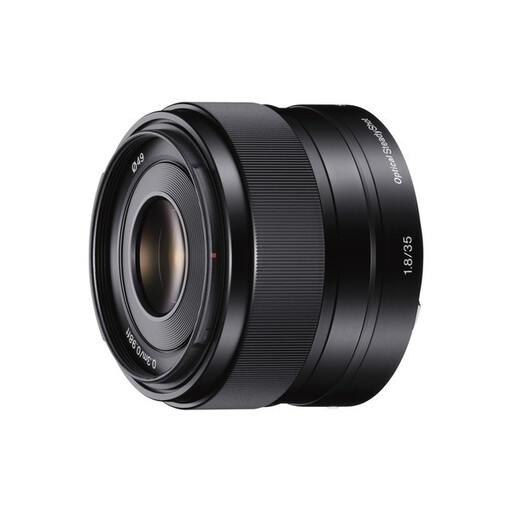
Sony SEL 35mm F1.8 OSS
A shorter prime to consider if a longer lens frames too tightly in your space; assess the angle of view on your camera.
35 mm, maximum aperture f/1.8 and OSS.
You can’t adjust the crop by zooming with the lens.
View at Joybuy
 No image available
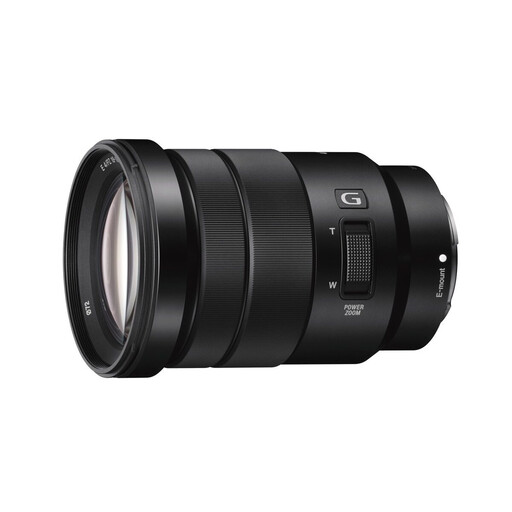
Sony E PZ 18-105mm f/4 G OSS
A zoom for switching between different crops during the same session without changing lenses.
Sony E mount, 18–105 mm zoom range and maximum aperture f/4.
Compare the maximum aperture with your lighting conditions and check that the range suits the framing you want.
View at Joybuy
Frequently asked questions
Can I use an 85 mm lens on any mirrorless camera?
No. Check the exact mount and also assess the angle of view on your sensor. For example, Sony gives a 127.5 mm full-frame equivalent for the FE 85mm F1.8 on APS-C; Canon RF, Nikon Z and Fujifilm X use different mounts.
How should I prepare a headshot for an exhibition print?
First, ask the print service for the desired print size and file requirements. After making the final crop, check how many pixels remain. Adobe cites 300 pixels per inch as a common guideline for detailed close-viewing prints, but notes that larger prints viewed from further away can also work at a lower pixel density; this is not a minimum requirement for every exhibition.
What should I check when using a fast portrait lens?
Take test shots in the planned lighting and from the intended shooting distance, then check that the eyes and any other facial details you want are sharp. A wider maximum aperture gives you more control over depth of field, but with a shallow depth of field, getting that control right becomes especially important.
Can I display recognisable headshots at a local exhibition without further consideration?
Beforehand, consider the legal basis for processing personal data and the portrait rights for your intended use. The Dutch Data Protection Authority considers identifiable people to be personal data and states that a legal basis under the GDPR is needed to take and publish identifiable images. According to Auteursrecht.nl, publishing a commissioned portrait requires the subject’s permission; for a portrait that was not commissioned, that person may have a reasonable interest that weighs against publication.
What warranty applies when I buy a lens as a consumer in the Netherlands?
According to ACM ConsuWijzer, you have a statutory guarantee in addition to any retailer’s or manufacturer’s guarantee. If a product is faulty despite normal use, the retailer must offer an appropriate solution; a commercial guarantee period does not replace this statutory right. The circumstances of the purchase also matter.


