Start with a lens that fits your camera and gives you the head-and-shoulders framing you want from the available distance. An 85 mm prime suits a tight headshot if you have enough working distance; 50 mm can be more practical in a smaller room, while a zoom is useful if you often need to reframe. A tripod won’t prevent your subject from moving: Canon Europe notes that lens stabilisation compensates for camera shake, not subject movement.
Which lens is right for you?
Photographers with a fixed headshot setup
If you’re always shooting the same tight crop, you can set the distance between the tripod and your subject in advance. A prime lens may suit this setup, but you’ll need to move the camera or the person to change the framing.
Photographers working in a small space
When working distance is limited, the angle of view and sensor size matter for the head-and-shoulders framing you want. For example, Canon Europe says that the RF 50mm F1.8 STM on a Canon APS-C camera gives an angle of view comparable to 80 mm on full-frame.
Photographers who switch between portrait crops
If you shoot both tight headshots and wider business portraits from the same tripod position, a zoom lets you adjust the framing without changing lenses. Just make sure you have enough room for the focal length range you choose.
What should you look for when choosing?
85 mm prime
A good fit if: you want a tight headshot and have enough room to keep the camera at a suitable distance from your subject.
Bear in mind: you’ll need to move the camera or your subject to change the framing; also check that the lens mount is compatible with your camera body.
50 mm prime
A good fit if: you have less working distance or want a wider head-and-shoulders crop as well.
Bear in mind: the angle of view also depends on sensor size, so check the framing on your own camera.
Portrait zoom
A good fit if: you regularly switch between tight and wider portraits from a fixed tripod position.
Bear in mind: the zoom range needs to suit your available working distance, and the version you choose needs to be compatible with your camera.
| What to consider |
What to look for when buying |
Who should pay particular attention? |
| Camera compatibility |
Check the lens’s exact mount and version; also consider the sensor size and angle of view you want. For example, Sigma makes separate 85 mm versions for Sony E and L-Mount. |
If I’m looking for a lens for my existing camera body, I want to be sure the mount and angle of view are right before I buy. Around 36% of consumers put compatibility first. |
| Working distance and framing |
Check at the shooting location whether you can achieve the framing you want; compare focal lengths using the same sensor size. |
With a tripod position close to my subject, I want a usable head-and-shoulders crop without running out of room. Around 29% of consumers prioritise limited or fixed working distances. |
| Sharpness and background |
Check the maximum aperture and take a test shot to see how much of the face stays in focus at your chosen setting. |
If facial detail and a blurred background are both important to me, I want to judge that balance in the final shot. Around 21% of consumers prioritise this balance. |
| Reframing from a tripod |
Check that the zoom range is useful at your shooting distance and compare the maximum apertures of the specific models. |
When I take different portraits from the same tripod position, I want to be able to reframe quickly. Around 14% of consumers prioritise this convenience. |
Common buying mistakes
-
Choosing based only on ‘85 mm’ or the brand name
The mount determines whether the lens fits your camera, while the sensor size also affects the angle of view. So two lenses with the same focal length may not give you the same framing on your camera.
Make a note of your camera model, mount, sensor size and available working distance. Then check the lens’s full name and version.
-
Automatically choosing the widest aperture
A wide maximum aperture doesn’t mean that setting is right for every headshot. With a very shallow depth of field, less of the face may be in focus than you’d like.
Take a test shot and check the sharpness across the face at the aperture setting you plan to use.
-
Confusing image stabilisation with keeping your subject still
According to Canon Europe, stabilisation compensates for camera shake, not movement by your subject. Using a tripod doesn’t change that.
Choose your shutter speed and pose with movement in mind, and check your camera and lens manuals for guidance on using stabilisation with a tripod.
Brands and their relevant lenses
Canon
Canon offers RF prime lenses for EOS R cameras, including 50 mm and 85 mm models.
- The RF 50mm F1.8 STM is worth considering if you want a wider angle of view; Canon says that on a Canon APS-C camera it gives an angle of view comparable to 80 mm on full-frame.
- Canon specifies optical stabilisation for the RF 85mm F2 MACRO IS STM. For a fixed camera, Canon advises considering whether to use or switch off stabilisation; it won’t prevent your subject from moving.
Nikon
The NIKKOR Z 85mm f/1.8 S is an 85 mm prime for Nikon Z cameras.
- Nikon Netherlands lists this model as a full-frame prime lens.
- Check the mount and make sure your shooting position gives you enough working distance for the framing you want.
Sony
The FE 85mm F1.8, model SEL85F18, is Sony’s 85 mm option with an E-mount.
- Sony Netherlands lists f/1.8 as this model’s maximum aperture.
- Check that the version is compatible with your camera and that you have enough distance for the framing you want.
Sigma
The 85mm F1.4 DG DN | Art is a full-frame prime available in versions for Sony E and L-Mount.
- The maximum aperture of f/1.4 is a specification for this lens model.
- The Sony E and L-Mount versions are different variants, so check the full model name and mount. A wider aperture doesn’t automatically make a setting right for your headshot.
Tamron
The 70–180mm F/2.8 Di III VC VXD G2 is a zoom available in versions for Sony E and Nikon Z.
- Tamron specifies a constant maximum aperture of f/2.8 and VC stabilisation for this model.
- Consider the available working distance when choosing this zoom range. Also check that the version you choose is compatible with your camera.
Lenses at Joybuy
This selection includes Sony E prime lenses and a zoom for portraits and changing crops.
 No image available
Sony E 50mm f/1.8 OSS Black
A prime to consider for a pre-arranged portrait setup; check that the E-mount is compatible with your camera.
Focal length: 50 mm. Maximum aperture: f/1.8. OSS.
You’ll need to move the camera or your subject to change the framing.
View at Joybuy
 No image available
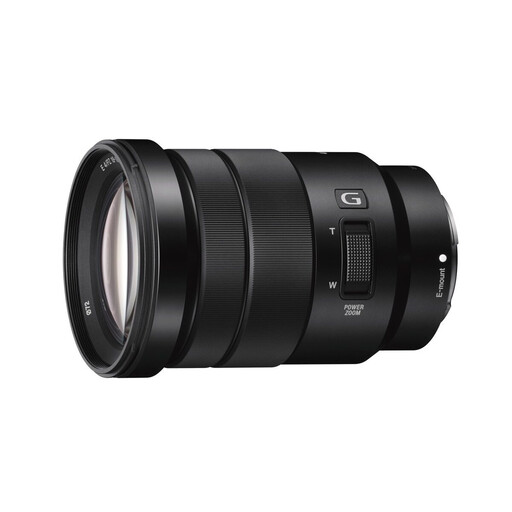
Sony E PZ 18-105mm f/4 G OSS
The zoom range can be useful if you switch between portrait crops from a fixed setup; check that this E-mount is compatible with your camera.
Zoom range: 18–105 mm. Maximum aperture: f/4. OSS.
View at Joybuy
 No image available
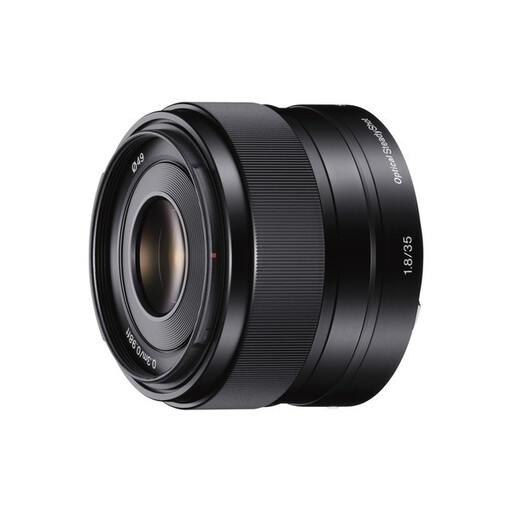
Sony SEL 35mm F1.8 OSS Lens
A prime to consider if you want a wider crop as well as headshots; check the framing where you plan to shoot.
Focal length: 35 mm. Maximum aperture: f/1.8. OSS.
A shorter focal length gives you a wider angle of view than a longer one; check whether that suits the headshot you want.
View at Joybuy
Frequently asked questions
Does a portrait lens need image stabilisation if you’re using a tripod?
No, not simply because you’re using a tripod. Canon Europe explains that stabilisation compensates for camera shake, not movement by your subject, and that it may be worth switching it off when the camera is fixed. Follow the instructions for your camera and lens combination.
Why does a 50 mm lens give a different crop on APS-C compared with full-frame?
An APS-C sensor records a narrower angle of view than a full-frame sensor. For the RF 50mm F1.8 STM on a Canon APS-C camera, Canon Europe gives an angle of view comparable to 80 mm on full-frame; the actual focal length remains 50 mm.
What are my rights when buying a lens from a Dutch online shop?
When you buy as a consumer, you have a legal guarantee in addition to any manufacturer’s warranty. ACM ConsuWijzer explains that the seller is responsible if the product does not meet what you could reasonably expect. For distance purchases, you’ll often have a 14-day cooling-off period; check the terms of the specific purchase.
Can I publish business headshots of employees without further ado?
No, don’t assume that you can. The Dutch Data Protection Authority says that an organisation needs a lawful basis under the GDPR to take and publish photographs. According to the regulator, in most cases the basis for photographs of employees is the consent of the employee pictured; consider the intended use separately.


