What should you look for when choosing?
Start with your preferred framing and the maximum shooting distance available in the studio. Then assess the angle of view for your sensor size and check that the mount fits your camera.
| Consideration |
What to look for when buying |
Who it matters most to |
| Framing and shooting distance |
Decide on your preferred composition and the available distance between camera and subject; check the angle of view for your sensor size. |
If I want to include a gown or diploma in a small studio, the framing needs to work from where I can position my camera. Around 36% of consumers prioritise distance and the framing they want. |
| Mount and sensor size |
Check the complete lens mount, your camera model and whether the version is suitable for your sensor size. |
With an existing camera body, I want to know that the lens will fit and give me the angle of view I expect. Around 29% of consumers prioritise compatibility and the angle of view on their own camera. |
| Switching between compositions |
Compare a prime lens with a zoom that covers your preferred framing; check the version and maximum aperture for each model. |
When taking a series of portraits, I want to switch quickly between wider and tighter framing without changing lenses. Around 21% of consumers prioritise flexible framing. |
| Light and background |
Check the maximum aperture, but also consider the depth of field required for your pose and composition. |
If I want to control how the background looks using the aperture, the setting also needs to work for a gown or multiple faces in the frame. Around 14% of consumers prioritise low-light performance and background rendering. |
Joybuy portrait lenses
The Joybuy lenses below are either primes or zooms. Consider your preferred framing alongside the space available in your studio, and check the mount and sensor compatibility for each model.
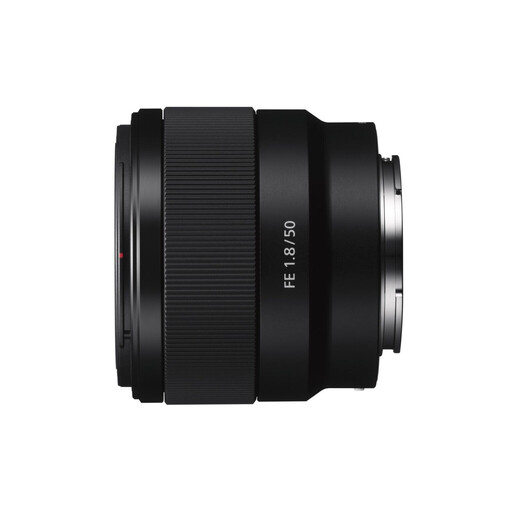 Image unavailable
Sony E 50mm f/1.8 OSS Black
A prime lens may suit individual portraits if your preferred framing fits from your shooting distance.
Check the full model code and stabilisation specification: Sony lists Optical SteadyShot for SEL50F18, while a Joybuy product description for a lens with a similar name says that it has no image stabilisation.
View at Joybuy
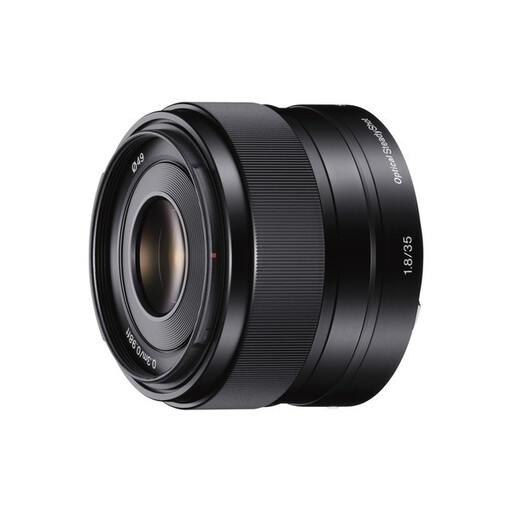 Image unavailable
Sony SEL 35mm F1.8 OSS
A 35 mm prime may be worth considering if you want to assess the framing from the limited distance available in your studio.
The lens name lists f/1.8 and OSS; check the exact version and mount for your camera.
View at Joybuy
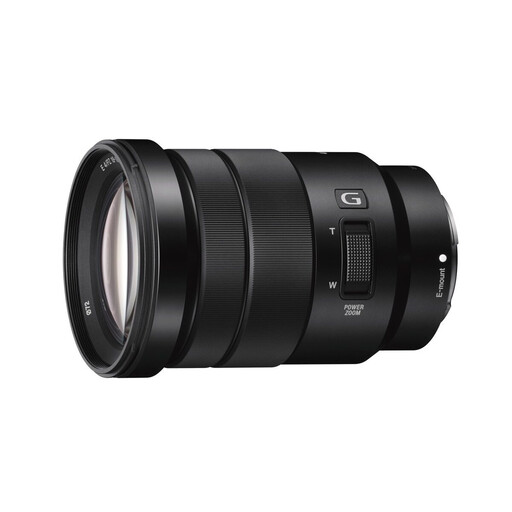 Image unavailable
Sony E PZ 18-105mm f/4 G OSS
A zoom can be useful if you want to switch between wider and tighter framing during a portrait session without changing lenses.
The product name lists an 18–105 mm range and a maximum aperture of f/4. Check that the version is suitable for your camera body and sensor size.
View at Joybuy
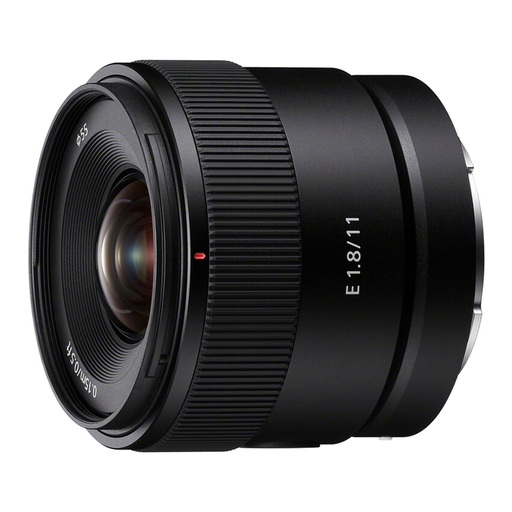 Image unavailable
Sony E 11mm F1.8 APS-C Wide Angle Prime Lens (SEL11F18)
The lens name lists 11 mm and APS-C; carefully consider whether that angle of view suits the portrait framing you want.
At a short camera-to-subject distance, a short focal length can make facial features appear more pronounced. So check the composition from the camera position you intend to use.
View at Joybuy
Frequently asked questions
Will every portrait lens from the same brand fit my camera?
No. Compare the exact mount on the lens and camera body, then check the sensor size. The Consumentenbond stresses that the mount must be compatible; a brand name or focal length alone doesn’t confirm compatibility.
How can I avoid framing that’s too tight with an 85mm lens in my studio?
First, establish the maximum distance between camera and subject and your preferred framing, then assess the angle of view for your sensor size. Sony Netherlands lists an APS-C equivalent of 75 mm for the FE 50mm F1.8, showing that sensor size affects the angle of view.
Should I always shoot at the widest aperture for graduation portraits?
No. Choose the aperture based on the sharpness and background rendering you want. Canon Netherlands shows the differences between f/1.8, f/4 and f/8 for the RF 50mm F1.8 STM; choose the setting that suits your portrait setup.
What are my rights if a lens I bought online is faulty?
Under the Dutch government’s guidance, the seller must offer a solution if a product is faulty. The Netherlands has no fixed statutory guarantee period that applies to every product. Many consumer purchases made at a distance also come with a 14-day cooling-off period, with some exceptions.
Can I freely publish graduation portraits for a studio or school?
Don’t assume that you can. The Dutch Data Protection Authority states that professional or commercial photography and publication covered by the GDPR require a valid legal basis under the GDPR; consent is one possible example. For publication by a school, the regulator says that parental consent is required for recognisable images of pupils under the age of 16.


