
Vandaag of morgen in huis

Kwaliteit gegarandeerd

Welkomstaanbiedingen ontgrendelen: GRATIS bezorging | Tot 80% korting | Gratis 30 dagen JoyPlus-proefperiode
Download de app
The aroma of freshly ground beans and the hissing sound of a steam wand; for many coffee lovers, nothing beats a self-brewed espresso. A fully automatic machine is convenient, but a portafilter machine, also known as a semi-automatic espresso machine, gives you complete control. You determine the grind size, the amount of coffee, and the extraction time. The result? A cup of coffee with the quality of your favourite café, right in your own kitchen.
However, the choice is vast. Which machine is right for you? In this article, we'll guide you through the process. We'll discuss what to look for and highlight several popular choices, so you can make an informed decision.
Before you make a choice, it's good to understand a few key specifications. These largely determine the quality of your espresso and the ease of use.
For a great espresso, a pressure of about 9 bar at the group head is ideal. Most machines advertise 15 bar or even 20 bar of pump pressure. This is the maximum pressure the pump can generate and ensures enough power to achieve the crucial 9 bar where it counts. Equally important is a stable water temperature. Machines with PID temperature control keep the temperature constant throughout the entire brewing process, resulting in more consistent flavour and extraction.
A portafilter machine with a built-in grinder offers convenience: you have one appliance for the entire process. This is ideal for beginners or if you want to save counter space. The grind size is often adjustable, allowing you to experiment. Advanced home baristas sometimes prefer a separate grinder. This provides even more control over the grind size and consistency but requires an additional investment and more space.
Dreaming of homemade cappuccinos or latte macchiatos? Then a good espresso machine with a steam wand is essential. There are basic steam wands that froth milk just fine, but for the fine, creamy microfoam needed for latte art, you'll need a more powerful system. Machines with a dual boiler can even brew espresso and steam milk simultaneously, which saves a lot of time.
Based on specifications, functionality, and user-friendliness, we have selected a few models that are interesting for different types of home baristas.
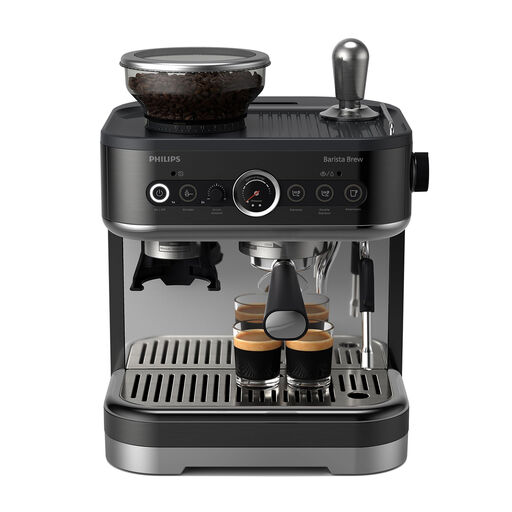
Why It Stands Out: This Philips is a complete home barista coffee machine. It combines a built-in grinder with professional features, such as a 58 mm portafilter, in a user-friendly package.
Key Features:
Who Is It For? For the beginner to intermediate home barista looking for an all-in-one solution that delivers professional results without the complexity of separate components.
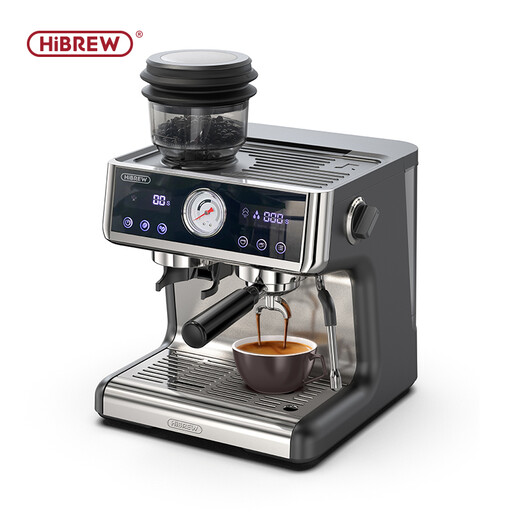
Why It Stands Out: The HiBREW H7A distinguishes itself with a dual boiler and dual water pump system, features you typically only find in more expensive, commercial machines.
Key Features:
Who Is It For? For the serious coffee enthusiast who seeks efficiency and performance. Ideal if you frequently make milk specialities and don't want to wait between brewing and frothing.
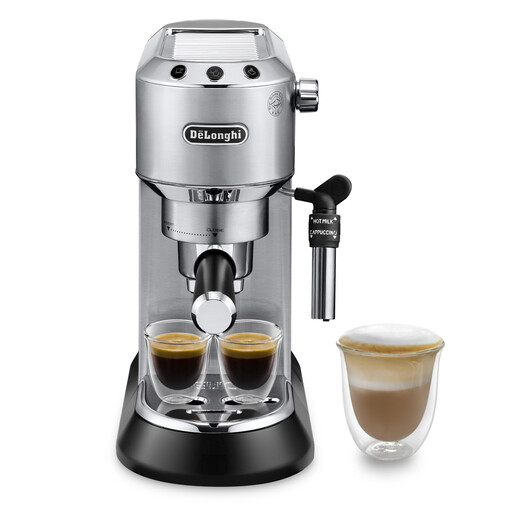
Why It Stands Out: The De'Longhi Dedica has been a popular choice for years due to its extremely slim design and reliable performance. At just 15 cm wide, it fits in almost any kitchen.
Key Features:
Who Is It For? For the novice barista or those with limited space. It's an excellent starting point for exploring the world of portafilter espresso machines without immediately investing in a large and complex appliance.
These three models offer a good overview of what's possible, but the world of portafilter machines is vast. Everyone has different preferences regarding budget, design, and functionality. Curious about more options?
Check out our full range and find the semi-automatic coffee machine that's perfect for you.
What is the difference between a portafilter machine and a fully automatic one? A portafilter machine (semi-automatic) puts you in control. You grind the beans yourself (or use pre-ground coffee), fill and tamp the portafilter, and start and stop the extraction. A fully automatic machine does all of this at the touch of a button. With a portafilter machine, you have more influence over the final taste, but it requires a bit more practice.
How much pressure does a good espresso machine need? For a true espresso, a pressure of about 9 bar on the coffee itself (the 'puck') is the standard. Most machines have a pump that can deliver 15 bar or more to ensure this 9 bar is consistently achieved, even if the grind or tamp isn't perfect.
Can I use regular coffee beans in a portafilter machine? Yes, you can use virtually any type of coffee bean. For the best results, choose beans specifically labelled as an 'espresso roast'. These are often roasted a bit darker, which creates the rich, full flavour characteristic of espresso. The most important thing is that the beans are fresh and that you grind them just before brewing.
