
Vandaag of morgen in huis

Kwaliteit gegarandeerd

Welkomstaanbiedingen ontgrendelen: GRATIS bezorging | Tot 80% korting | Gratis 30 dagen JoyPlus-proefperiode
Download de app
A portable espresso machine is handy for travelling, the office, the car or the campsite. Many models look similar, though, while their performance can vary considerably. A machine with a high pressure rating isn’t automatically right for your needs. And a large battery may be less practical if it’s difficult to recharge on the go.
So keep an eye out for these three common pitfalls:
There are broadly three types:
Electric models with a battery
This portable coffee maker heats water on its own and works without a mains connection while brewing. That’s handy in the car, at the office or when camping. You will need to recharge it regularly, though.
Manual espresso machine
A manual espresso machine doesn’t use a battery or mains electricity. You’ll need hot water and build up the pressure yourself using a pump mechanism. This type suits walkers and travellers looking to keep weight and charging requirements to a minimum.
Outdoor coffee maker with an external heat source
A moka pot, such as a camping espresso maker, works on a gas burner, spirit burner or hob. It’s a simple device, but it makes a different style of coffee from a portable espresso machine that uses pump pressure.
For a battery-powered model, heating time, water tank capacity and charging time matter more than battery capacity alone. A compact espresso machine with a 50 to 80 ml tank is suitable for making one small coffee. That capacity is limited if you’re making several coffees in a row.
According to the product specifications, the OutIn Mino has a maximum water tank capacity of 70 ml, a 30 W USB-C connection and takes around 149 seconds to heat cold water. The manufacturer states that it can make up to six espressos per charge when using water at room temperature. In practice, these figures depend on the starting water temperature, the surroundings and the age of the battery.
If you want to switch between coffee beans and the convenience of capsules, you’ll need an espresso machine for ground coffee and capsules. Check the exact wording: “capsule-compatible” doesn’t mean that every capsule system will fit.
According to the product information, the OutIn Mino supports Nespresso Original capsules and holds up to 12 grams of ground coffee. The AMZCHEF CP024 is also described as suitable for NS capsules and up to 12 grams of ground coffee. Always check that your capsule system matches the product listing before you buy.
Pump pressure is often listed as 15, 20 or 22 bar. This is usually the maximum pump pressure, not necessarily the pressure throughout the extraction. Adjustable pressure control or a pressure gauge can give you more control, but also require a little more attention.
According to the product description, the STARSEEKER Super58 has a 58 mm portafilter, a visual pressure gauge and an adjustable OPV valve. The stated ideal extraction pressure is around 8 to 12 bar. This model therefore requires more preparation, a suitable espresso grinder and a precise grind size than a capsule machine.
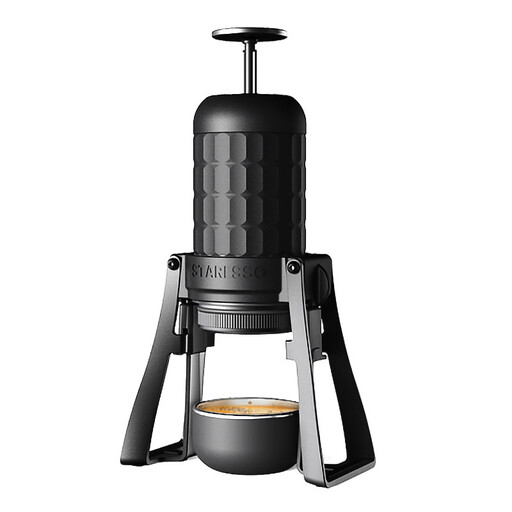
Why it suits this type of user: This manual model doesn’t need electricity, making it suitable for travelling, camping, the office and use in the car when you can bring your own hot water.
You don’t need to rely on a battery or mains connection. Just remember that you’ll need to provide hot water separately.
Manual operation, foldable design, fully dismantlable and, according to the product specifications, suitable for up to 24 grams of ground coffee.
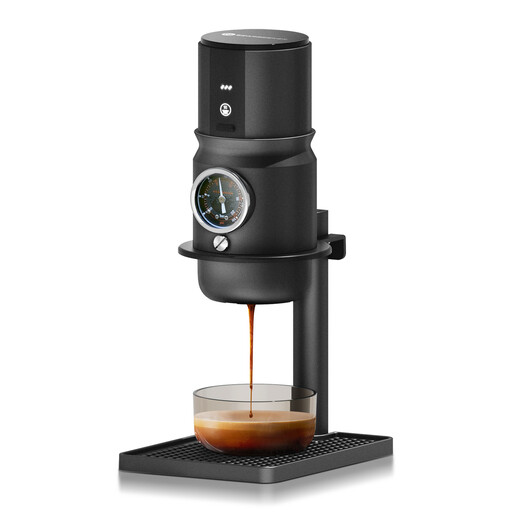
Why it suits this type of user: For users who grind their own coffee and want control over pressure and extraction, this electric model offers more adjustment options than a basic capsule machine.
The pressure gauge lets you monitor the extraction, while the adjustable OPV valve means you don’t have to rely solely on a high maximum bar rating.
58 mm portafilter, pre-infusion function, metal housing and, according to the product information, around 50 extractions per full charge.
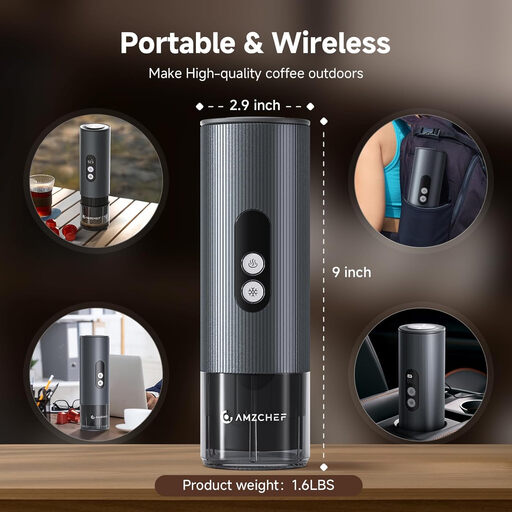
Why it suits this type of user: This model is designed for road trips, camping and busy professional use, when you want to make several coffees without having to look for a mains connection straight away.
According to the product description, the display shows the temperature and remaining battery charge. This gives you more information than a machine with just one control button.
9000 mAh battery, 80 ml water capacity and support for NS capsules and ground coffee. The stated heating time is around 200 seconds for 80 ml of water.
We’ve put together a full, up-to-date list of products that meet these strict selection criteria and the applicable European safety requirements.
Use this quick checklist:
Take extra care with heat when using electric models. Let the machine cool completely before cleaning or storing it. An IP rating also doesn’t mean you can submerge the whole machine in water. Always follow the instructions and use a suitable charger.
First, fill the filter with ground coffee or insert a compatible capsule. Then add the recommended amount of water. With an electric model, press the button to start heating and extraction. With a manual model, add hot water and build up the pressure using the pump system. Clean any removable parts after use and let hot components cool down.
Yes, especially if the model can heat the water itself. Check the battery capacity, charging time and whether you’ll have access to a power bank or car connection. For longer camping trips, a manual espresso machine may be more practical, as you won’t need to recharge a battery. A moka pot is another option if you have a burner with you.
Capsules generally cost more per coffee than ground coffee, but they’re easy to use and the portion size is fixed. With ground coffee, coffee beans or pre-ground coffee are the main ongoing costs. Electric models also use electricity to heat the water, though the amount used for normal charging is limited. The total cost mainly depends on how many espressos you make, the type of coffee you choose and how you can recharge while you’re out.
