
Vandaag of morgen in huis

Kwaliteit gegarandeerd

Welkomstaanbiedingen ontgrendelen: GRATIS bezorging | Tot 80% korting | Gratis 30 dagen JoyPlus-proefperiode
Download de app
A compact cooker seems easy to choose until you consider fuel, cookware, stability and safety. A camping cooker that looks powerful on paper can be awkward to use in practice if the gas canister does not fit. A portable induction hob only works with magnetic pans. And a portable barbecue requires more space, cleaning and ventilation than many buyers expect.
This guide helps campers, backpackers, festivalgoers, students and people living in small households compare portable cookers objectively.
Higher power does not automatically mean that a cooker is more convenient to use. With gas models, wind, fuel pressure, the quality of the pan supports and flame control also play a part. A 3,240 W camping gas burner can heat up quickly, but it requires a stable surface and correctly connected fuel.
With electric models, the available socket is important. A 2,000 W appliance may place too much load on some older or shared circuits. So check not only the maximum power, but also where you intend to use the cooker.
With several camping cooking sets, the gas canister is not included. This applies, for example, to the BRS 11-Series and BRS 61-Series. An adapter is not universal either. Check that your butane, propane or isobutane canister has the correct connection, such as a 7/16 thread or EN 417 compatibility.
A portable gas stove is intended for use in well-ventilated outdoor areas. Never use a gas burner in a tent, caravan, room or other enclosed space because of the risk of fire and carbon monoxide poisoning.
An ultralight camping burner may weigh very little, but usually does not include a pan, windscreen or integrated ignition. A complete outdoor cooking set is often slightly heavier, but saves space because the components fit inside one another. Decide beforehand whether your priority is saving weight or being able to cook quickly and keep everything organised.
Gas models are convenient in places without electricity. Look out for:
The BRS TS19 Reactor lists a power output of 1,900 W, a weight of 0.425 kg and compatibility with butane and propane. According to the product description, the appliance can boil 1 litre of water in around 3 minutes. The manufacturer states that an external ignition source is required. So always take a suitable lighter with you.
For backpackers, every gram counts. According to the product information, the BRS 3000T weighs 26 grams and has folding pan supports. The stated cooking performance is approximately 1 litre of water in 2 minutes and 58 seconds, according to the manufacturer. A lightweight camping burner like this is well suited to solo hikes, but is less suitable for large pans or cooking for several people.
An integrated set such as the BRS 61-Series weighs 0.36 kg according to the specifications and includes a burner head, 0.5-litre pan, lid, insulating sleeve and carry bag. This makes the system easy to keep organised for one person, while loose components are less likely to go missing.
An electric hotplate or induction hob is particularly practical in a student room, small kitchen, office or campsite with an electricity hook-up. With induction cooking, the base of the pan must be magnetic. A simple test is to check whether a magnet sticks to the base of the pan.
According to the product details, the IAGREEA induction hob works with pans featuring a magnetic, flat base measuring 12 to 26 cm. The hob has an adjustable power range of 100 to 2,000 W, a timer and a child lock. A suitable wok pan for induction must therefore be magnetic and fall within this size range.
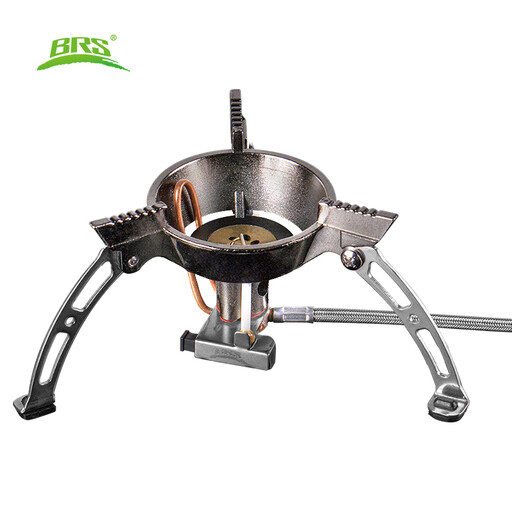
Why it suits this profile: A compact camping gas burner for camping trips, picnics and short hikes, supplied with a carry bag and adapter.
The product description states that it is compatible with various canisters and has an adjustable flame. However, check the required fuel; the gas canister is not included.
240 grams, up to 3,240 W according to the manufacturer, folding pan supports and piezo ignition.
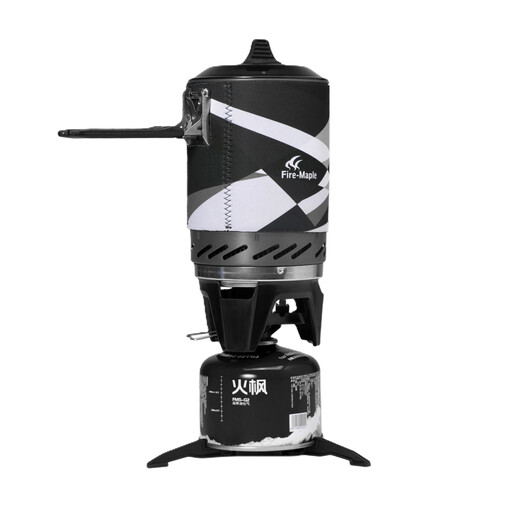
Why it suits this profile: An integrated outdoor cooking set for solo travellers who value compact storage and quick setup.
According to the product information, the burner, pan support and gas canister holder can be stored inside the 1-litre pan. The gas canister must be purchased separately.
Hard-anodised aluminium pan, neoprene sleeve, folding handle and a design for standard threaded gas canisters.

Why it suits this profile: Suitable for a small kitchen, student room or campsite with mains electricity, without an open gas flame.
The product details list eight power levels, a timer, child lock and missing-pan detection. Use magnetic cookware measuring 12 to 26 cm only.
2,000 W, temperature control from 60 to 270 °C according to the manufacturer, a timer of up to 3 hours and a smooth glass surface.
Only use a camping gas burner outdoors, on a flat, heat-resistant surface. Before each cooking session, check the hose, O-rings and connections for damage or leaks. Allow the appliance to cool completely before storing it.
With an electric hob, the main ongoing cost is electricity consumption. Actual usage depends on the selected power level and cooking time. An induction hob only heats suitable cookware, but you still need a compatible pan. According to the product information, a wok such as the WANGYUANJI pan has a flat base and is suitable for gas, induction and electric hobs. With this type of pan, regular drying and oiling are needed to help prevent rust.
We have put together a complete, up-to-date list of products that fully meet these strict selection criteria and the applicable European safety regulations.
A gas burner, portable gas stove or gas camping cooker is not intended for indoor use. Choose an electric hotplate or induction hob when you need extra cooking space indoors. Always follow the instructions and keep ventilation openings clear.
Its lifespan depends on the materials, transport, cleaning and storage. Check gas connections and pan supports regularly. Do not allow an electric appliance to come into contact with water, and store every appliance in a dry place. With intensive outdoor use, wind, moisture and sand can accelerate wear.
This depends on the type of appliance, its power, cooking time and the price of gas or electricity. So do not compare the purchase price alone. Also check whether a gas canister, adapter, pan or carry bag is required separately. This helps prevent unexpected costs after purchase.
