
Vandaag of morgen in huis

Kwaliteit gegarandeerd

Welkomstaanbiedingen ontgrendelen: GRATIS bezorging | Tot 80% korting | Gratis 30 dagen JoyPlus-proefperiode
Download de app
A portable Bluetooth speaker may seem simple: connect it to your smartphone and play music. However, some models disappoint in practice. A compact enclosure may produce limited volume, long battery life may only apply at low volume, and “water-resistant” only really tells you something when it is accompanied by a clear IP rating.
This buying guide compares the most important features of a wireless Bluetooth speaker. You’ll discover which specifications matter for use at home, while travelling, camping, at the beach and at parties. We then make recommendations for different usage profiles, based on verifiable product information.
A higher wattage does not automatically mean that a speaker sounds better. It mainly indicates the available output power. The speaker’s construction, driver size, enclosure and any equaliser are at least as important.
As well as the power rating, check:
A Bluetooth speaker with powerful bass can sound appealing at parties, but check that the manufacturer clearly explains how this is achieved. Marketing terms such as “SoundPulse”, “ULT” or “punchy bass” are product claims, not an independent guarantee of a particular listening experience.
The stated playback time usually depends on volume, music type and additional features. With a Bluetooth speaker offering long battery life, lighting can significantly reduce operating time. The Tronsmart T7, for example, is listed with up to 12 hours of playback without lighting, and a shorter duration when the light show is active.
Therefore, check:
Always check the IP rating. The first digit refers to dust, while the second refers to water. IP67 generally means complete protection against dust and protection during temporary immersion under the stated conditions. IPX7 does indicate water protection, but not certified dust protection.
A waterproof Bluetooth speaker is not automatically suitable for salt water, high-pressure jets or prolonged immersion. Follow the manufacturer’s safety instructions and check the port covers before using the speaker outdoors.
Bluetooth 5.3 or 5.4 appears in the product specifications of several models. A newer version can contribute to an efficient and stable connection, but the actual range also depends on walls, other devices and the smartphone or laptop.
For everyday use, these features are particularly practical:
A small speaker weighing around 250 to 300 grams is convenient for cycling, walking and travelling. Larger models often deliver more volume and bass, but take up more space. A carrying loop, handle or attachment clip makes outdoor use easier.
Think about where you will use the speaker most often. For a bedroom or desk, a retro Bluetooth speaker with physical buttons may be a better fit than a rugged cylindrical model. For the beach, camping or sport, a sturdy enclosure with clear water and dust protection ratings is more practical.
A Bluetooth speaker with LED lighting can add atmosphere to a party, but lighting uses energy. Check whether you can switch the light show off, dim it or adjust it using buttons or an app. Also consider the controls: physical buttons are often more convenient outdoors than a touchscreen alone.
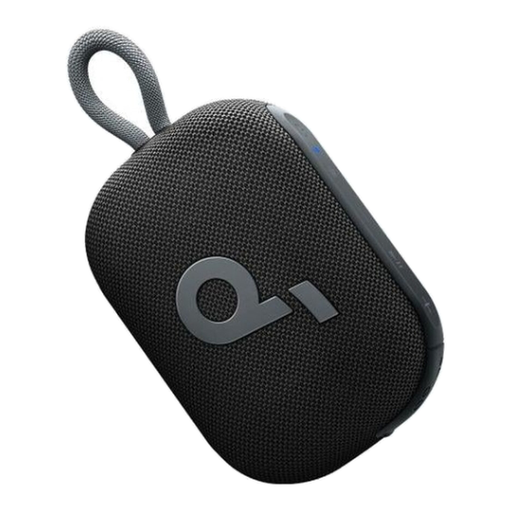
Why it suits this profile: According to the product information, this compact model weighs around 264 grams and has an integrated carrying loop. This makes it suitable for walking, cycling and everyday use.
The stated IP67 rating gives a clearer indication of what the enclosure is designed for than a general term such as splashproof.
5 W output power, up to 20 hours of stated battery life, IP67 and TWS pairing.
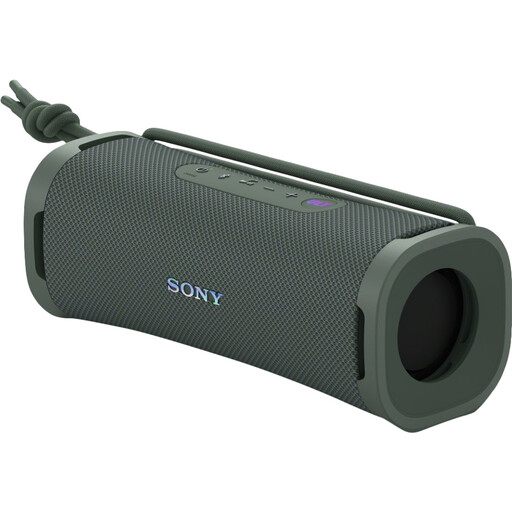
Why it suits this profile: This model combines 30 W RMS, a stated battery life of 12 hours and an IP67 rating in a portable enclosure weighing around 650 grams.
The product specifications state both the power output and the water and dust protection. The ULT button is designed to adjust the bass response.
30 W RMS, Bluetooth 5.3, IP67 and support for pairing with a second speaker.
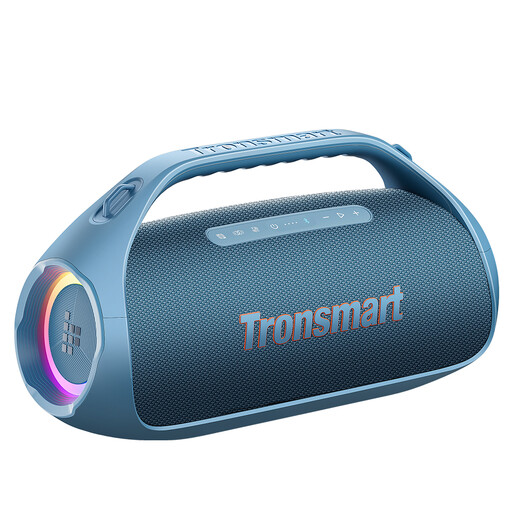
Why it suits this profile: With a stated output power of 90 W, a handle and a carrying strap, this model is designed for larger gatherings and parties where a Bluetooth speaker is needed.
The manufacturer states the playback time separately with the lighting switched off and on. This allows you to estimate power consumption more realistically.
Up to 26 hours at 50% volume without LED lighting, IPX6 and TWS or multi-speaker pairing.
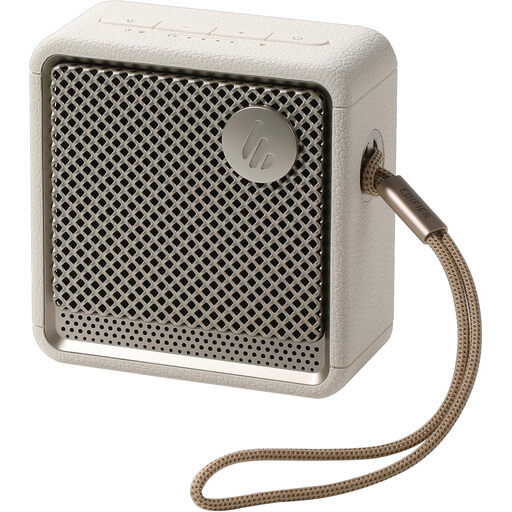
Why it suits this profile: This speaker is designed for use at home, on the go and during smaller gatherings, with adjustable lighting and control via the Edifier ConneX app.
The product information lists a maximum playback time of 15 hours separately from the lighting function. This helps you weigh atmospheric features against battery consumption.
6 W RMS, Bluetooth 5.4, IP67, RGB ambient lighting and stereo pairing.
We’ve put together a complete, up-to-date list of products that fully meet these strict selection criteria and the applicable European safety regulations.
Switch on the speaker and activate pairing mode. Then open the Bluetooth settings on your smartphone, tablet or laptop and select the speaker’s name. If the device has been paired before, this often happens automatically. If the connection does not work, remove the old pairing and try again.
This varies by model and usage. Manufacturers often state a maximum playback time at a particular volume and with the lighting switched off. High volumes, heavy bass, phone calls and LED lighting reduce battery life. Therefore, check both the stated playback time and the charging time.
Only if its IP rating is suitable and the ports are properly closed. According to their product specifications, IP67 and IPX7 models are designed to withstand a certain level of water contact. Avoid salt water, high-pressure jets and conditions not covered in the manual.
