
Vandaag of morgen in huis

Kwaliteit gegarandeerd

Welkomstaanbiedingen ontgrendelen: GRATIS bezorging | Tot 80% korting | Gratis 30 dagen JoyPlus-proefperiode
Download de app
A portable water flosser can be handy for rinsing away food debris from between your teeth, along the gum line, or around braces. What’s more, the compact size makes a cordless water flosser suitable for the bathroom, the office, and holidays.
That said, not every model is equally practical. Marketing copy often emphasises high pressure, long battery life, or a waterproof casing, while important details are less clearly stated. So before you buy a water flosser, pay particular attention to the following pitfalls.
A device with a high maximum PSI rating sounds powerful, but that setting isn’t suitable for every user. If you’re using an electric water flosser for the first time or have sensitive gums, you’ll usually benefit more from a gentle starting level and enough adjustable settings.
Therefore, check:
A USB-rechargeable water flosser with a large battery is convenient for travel, but a bulky device won’t fit as easily into a wash bag. Always check the dimensions, weight, and how the water tank is filled.
A compact water flosser for travel ideally has:
Battery claims such as “up to 30 or 50 days” are usage estimates from the manufacturer. The actual duration depends on the selected mode, frequency of use, and charging condition.
A waterproof water flosser with an IPX6, IPX7, or IPX8 rating is designed for different conditions, but the meaning varies from product to product. Check the manual and pay attention to the charging port. A USB connection must be completely dry before you plug in the cable.
A waterproof casing makes rinsing easier, but the water tank and nozzles still need to be emptied, cleaned, and dried regularly.
A tank of around 180 to 300 ml is often enough for one cleaning session, depending on the water pressure you choose. A larger tank reduces the need to refill, but usually makes the device less compact. Models with a wide filling opening or a removable tank are easier to clean.
For daily use at home, a larger tank can be more convenient. For travel, a smaller, collapsible water flosser may be more practical.
A water flosser with multiple settings offers more control than a model with a single fixed stream. A gentle setting is useful for starting off slowly. A higher setting can be suitable once you’re comfortable with it, but more pressure isn’t an end in itself.
Also pay attention to the controls. A pulse or press button that lets you activate the water stream only when needed can reduce splashing and help with a controlled start.
A water flosser with replaceable nozzles is more practical in the long run. Check whether standard, orthodontic, gum, or tongue-cleaning nozzles are included, and whether individual replacements are available.
For a water flosser for braces, orthodontic nozzles are relevant. For implants or other dental work, it’s wise to follow your dentist’s advice. A water flosser does not replace professional check-ups or regular oral care.
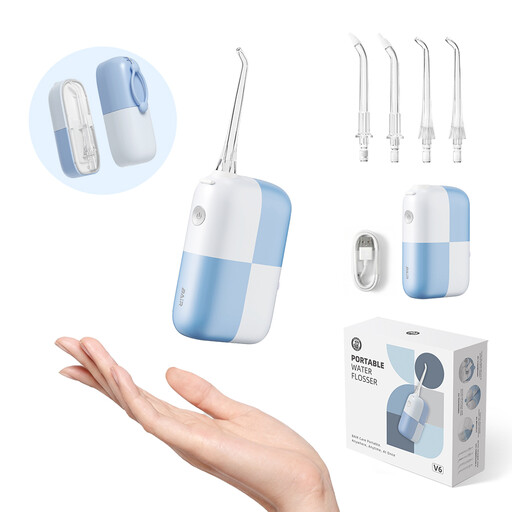
Why this fits the profile: According to the product information, this compact model collapses to around 10 cm and weighs approximately 145 grams. That means it fits into a bag or wash bag without taking up much space.
The press-and-spray control gives beginners control over when to spray. The stated pressure is 75–80 PSI, without an extremely wide pressure range.
IPX7 waterproof, USB-C rechargeable, and according to BAIR CARE suitable for up to 30 days of typical use. Standard, orthodontic, and periodontal pocket nozzles are mentioned.
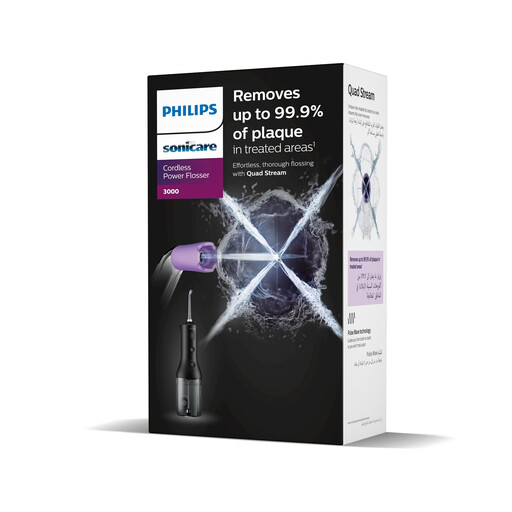
Why this fits the profile: The combination of a 250 ml reservoir, two modes, and three intensity levels offers clear adjustable options for daily use.
The three intensity levels mean you’re not stuck with one fixed water pressure. According to Philips, the Quad Stream tip is designed to distribute the water flow across multiple streams.
Two cleaning modes, three intensities, a 250 ml reservoir, and a stated battery life of up to 14 days with typical use.
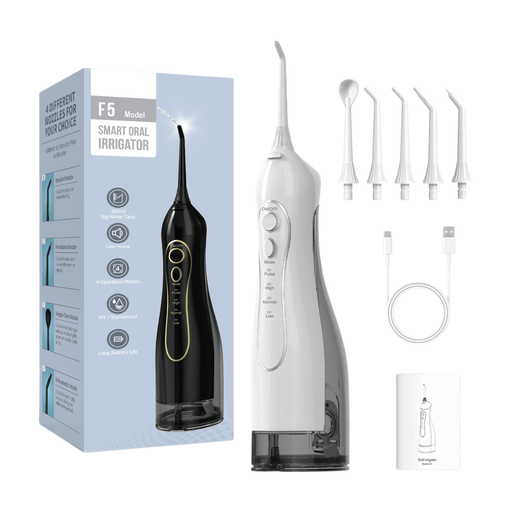
Why this fits the profile: This model is aimed at users who want to combine different pressure settings and nozzles for daily cleaning, brace care, and gum care.
According to the product information, the F5 has five pressure settings from 40–140 PSI. This means you can start on a lower setting and decide for yourself which level suits you.
A 300 ml tank, five included nozzles, a 360° rotating nozzle, IPX7 waterproofing, and a stated battery life of up to 40 days.
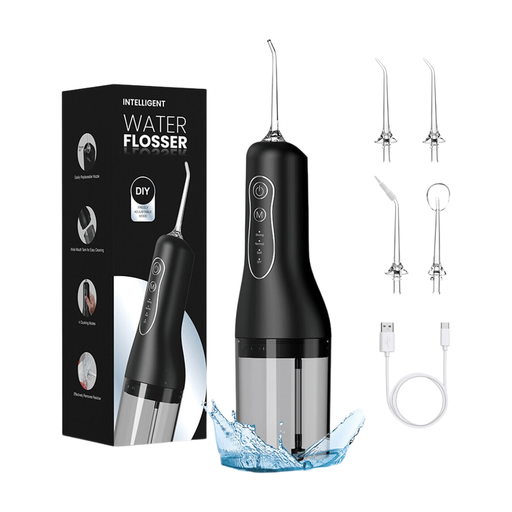
Why this fits the profile: The removable 260 ml tank, USB-C charging, and stated weight of around 0.38 kg make it suitable for travel and daily carrying.
According to the product information, the four settings include Soft and DIY. The wide opening of the removable tank is designed to make filling and cleaning easier.
IPX6 water resistance, four settings, three types of nozzles, smart memory, and a manufacturer-stated battery life of up to 50 days.
We’ve put together a full, up-to-date list of products that fully meet these strict selection criteria and comply with current European safety regulations.
Do not use hot water, oil, or other additives unless the manufacturer expressly allows it. Stop if bleeding persists or if you notice clear irritation, and seek advice from a dentist.
A water flosser can help rinse away food debris around brackets and wires. Choose a model with an orthodontic nozzle and multiple pressure settings. Also follow your orthodontist’s cleaning instructions.
The lifespan depends on the battery, charging method, seals, and maintenance. Empty the tank after every use, clean the nozzle regularly, and do not charge the device when the charging port is wet. Replaceable nozzles can extend the practical lifespan.
Besides the purchase price, replacement nozzles and electricity consumption are the main factors. Charging a small battery typically costs very little; the main thing is to check whether suitable nozzles are available separately and what replacement interval the manufacturer recommends.
