
Vandaag of morgen in huis

Kwaliteit gegarandeerd

Welkomstaanbiedingen ontgrendelen: GRATIS bezorging | Tot 80% korting | Gratis 30 dagen JoyPlus-proefperiode
Download de app
A portable tyre inflator comes in handy if your car tyre is slowly losing air, you’re going on a long bike ride or you’re heading out of town on your motorbike. However, not every compact air pump is suitable for every vehicle. For example, a high pressure rating on the packaging tells you little about inflation speed, battery life or suitability for car tyres.
The most common buying mistakes are:
Always check the technical specifications, the connectors included and any limitations on use.
The recommended tyre pressure for cars is often somewhere between about 2 and 3 bar, but you’ll find the correct pressure on the sticker inside the door frame, in the owner’s manual or on the fuel filler flap. Use the pressure recommended for your vehicle as your guide, not the maximum pressure shown on the pump.
A good electric tyre inflator for different uses should ideally have:
Bear in mind that maximum ratings of 150 or 160 PSI are product limits, not recommended tyre pressures.
A rechargeable tyre inflator works without a cable, making it practical for roadside use, camping or taking along on a bike ride. However, battery life varies considerably between models. Don’t just look at the battery capacity: check the stated run time and how many tyres the product information says it can inflate.
A 12V tyre inflator draws power from your car, so it relies less on an internal battery. This is useful for several tyres or regular use. Check the cable length and where the 12V socket is located, though. A long cable means you won’t have to keep moving the device around.
Some models combine both power options. For example, the OSRAM TYREinflate 4000 has a built-in battery, USB-C charging and a 12V cable. According to the product description, it also has a maximum working pressure of 8.3 bar and an airflow rate of 15 litres per minute.
A tyre inflator with automatic shut-off stops when it reaches the set pressure. This reduces the risk of over-inflating the tyre, but you should still check the pressure afterwards using your vehicle’s gauge or a separate pressure gauge.
A digital display is especially useful in low light and when you want to switch between bar, PSI and kPa. A tyre inflator with LED lighting can help when you’re using it beside a dark road. The light is no substitute for a warning triangle, reflective vest or other legally required safety equipment.
Also check the recommended run time. A compressor can get hot when used for a long time. Let it cool down as instructed in the manual, and don’t assume a small cordless pump is suitable for vans, motorhomes or trailers.
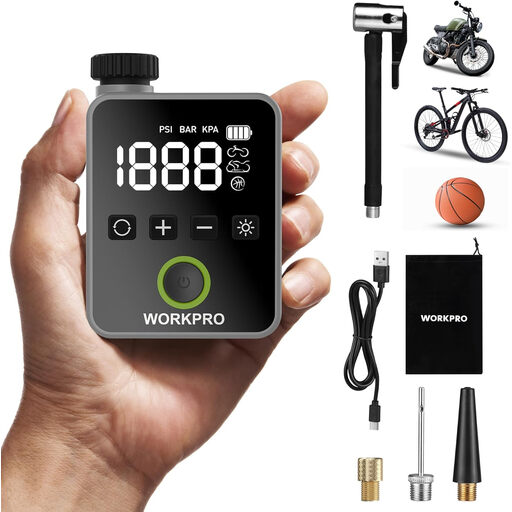
Why it suits this type of user: This compact cordless model is designed for drivers, cyclists and campers who want to carry a small pump in their glove compartment or rucksack.
The product information states that it has an adjustable range of 3 to 140 PSI, automatic shut-off and four attachments. Check that its capacity is right for your car tyres, though; according to the description, this model isn’t suitable for lorry or trailer tyres.
Weighs 270 grams, with an LED display, multiple pressure units and three lighting modes, according to the product description.
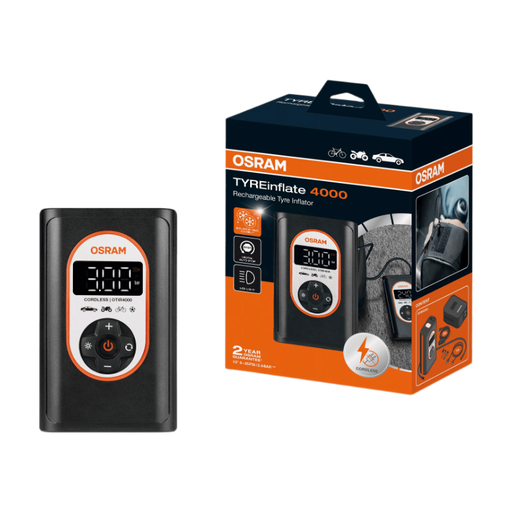
Why it suits this type of user: A good choice for drivers looking for a cordless pump who also want a 12V connection as a backup when the battery is running low.
The dual power supply means it doesn’t rely solely on its built-in battery. The product description also mentions automatic shut-off, pressure memory for four vehicles and a valve for releasing air.
Type-C charging, 12V cable, digital pressure settings, LED lighting and three adapters, according to the product specifications.

Why it suits this type of user: An option for people who look after several vehicles, bikes or balls and value a larger battery and a range of preset modes.
According to the brand description, this model has a 7500 mAh battery, four modes, automatic shut-off and an adjustable range of 4 to 160 PSI. Check that its stated capacity suits your needs before buying.
Digital display with PSI, kPa and bar, LED lighting and a power bank function, according to the product information.
We’ve put together a full, up-to-date list of products that meet these strict selection criteria and current European safety requirements.
An electric pump is designed to top up tyre pressure or deal with a small loss of air. If there’s visible damage, a puncture or a loose valve, you’ll still need a repair or roadside assistance.
That depends on its maximum working pressure, airflow, battery capacity and run time. Also check whether the manufacturer specifically lists it as suitable for car tyres. A pump designed for bike tyres or balls may not have enough capacity for a car tyre.
Its lifespan depends on battery wear, storage, charging habits and how much heat it generates during use. Don’t leave it running for longer than necessary, store it in a dry place and charge the battery regularly if the manual recommends it.
A 12V compressor uses a relatively high amount of power while inflating, but usually only for a few minutes per tyre. Leave the car engine running if the manual says this is permitted, and avoid unnecessarily draining the vehicle battery.
