
Vandaag of morgen in huis

Kwaliteit gegarandeerd

Welkomstaanbiedingen ontgrendelen: GRATIS bezorging | Tot 80% korting | Gratis 30 dagen JoyPlus-proefperiode
Download de app
A flat or underinflated tyre always seems to happen at the worst possible moment. Keep a portable tyre inflator in your car, motorbike or bicycle bag and you can top up your tyre pressure on the go without having to find a service station first. However, not every electric tyre inflator is suitable for every vehicle. A high PSI rating on the packaging, for example, tells you little about actual run time, inflation speed or connection options.
In this buying guide, you’ll find out what to look for in a cordless tyre inflator, a 12V model or a compact mini air compressor. We’ve also included a few products to suit different needs.
A rating such as 150 PSI sounds impressive, but it’s the maximum pressure. The recommended tyre pressure for a standard car tyre is usually much lower. Airflow, motor power, battery capacity and the time it takes to inflate a flat tyre are more important.
So always check:
A small model for bicycle tyres or sports balls may not be suitable as a car tyre compressor.
A cordless tyre inflator is handy in a car park, at the roadside or on a campsite. However, the battery will run flat, especially if you need to inflate several tyres from empty. Check the capacity in mAh, charging time and stated run time.
A model with both USB-C and a 12V connection gives you more flexibility. A fully cordless tyre inflator is especially useful for short top-ups and bicycle or motorbike tyres. For several car tyres, a wired model with a long cable may be a better choice.
A digital tyre inflator can clearly display the pressure you’ve set, but check which units are available: PSI, bar, kPa or kg/cm². You’ll find the correct tyre pressure on the sticker inside the door frame, on the inside of the fuel filler flap or in your car’s handbook. Don’t simply use the maximum pressure shown on the tyre sidewall.
A tyre inflator with automatic shut-off helps prevent overinflation. The feature will only work properly if you set the correct pressure and the connection isn’t leaking air.
There are three common types for use on the go:
A stated capacity of 4,000 mAh doesn’t mean the inflator delivers 4,000 mAh of air. It refers to the battery capacity. Also check the stated run time and inflation time.
Airflow is often listed in L/min. A higher figure may mean faster inflation, but the actual speed also depends on the hose, connection, tyre volume and pressure. According to the product description, a pump with multiple cylinders may be designed to provide a more consistent airflow, but always compare the specific specifications.
For a car, a model with a car tyre mode or a suitable pressure hose makes more sense than a very small air pump designed mainly for balls and low-pressure items.
Check whether the set includes the right attachments for:
Also check the hose and cable length. A long cable means you won’t have to move the inflator for every car tyre. The valve adapter should fit securely: leaks affect both inflation time and pressure readings.
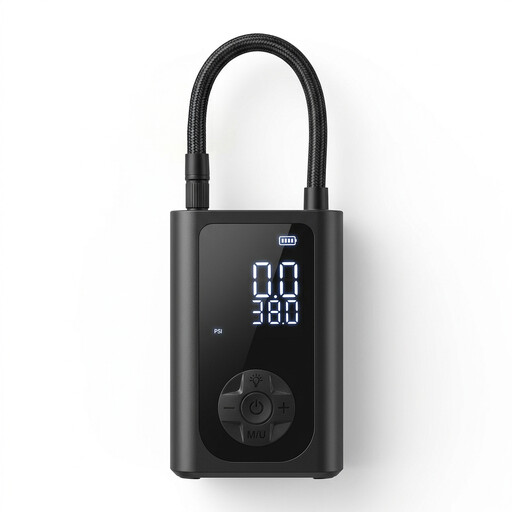
Why it suits this type of user: According to the product description, this compact model combines five modes for cars, motorbikes, bicycles, balls and custom pressure with a 4,000mAh battery. That makes it suitable for regular top-ups and a range of smaller jobs.
The description lists digital pressure detection, automatic selection from five modes and a stated maximum of 150 PSI. It takes around 7 to 8 minutes to inflate a flat car tyre, so allow plenty of time if you have several flat tyres to inflate.
26 L/min airflow, USB-C charging, LED light with a steady setting and SOS mode, plus a stated run time of 25 minutes.
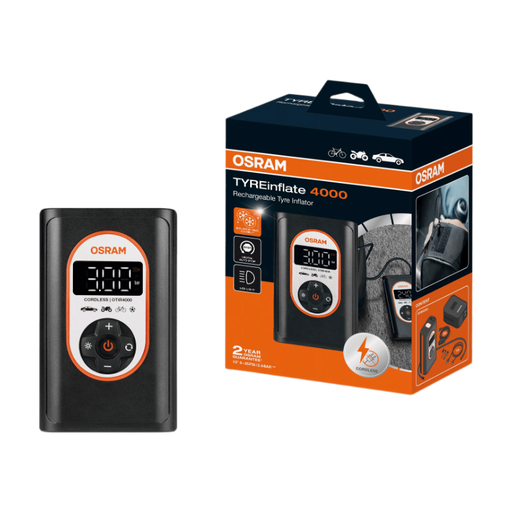
Why it suits this type of user: According to the product details, this model is designed for drivers who value digital controls, memory functions and an alternative power supply.
According to the stated specifications, the inflator has an automatic shut-off, pressure memory for up to four vehicles and a built-in valve for releasing pressure. If the battery is low, you can use the 12V cable.
Maximum working pressure of 8.3 bar, 15 L/min airflow, USB-C and 12V power, an LED light and three adapters.
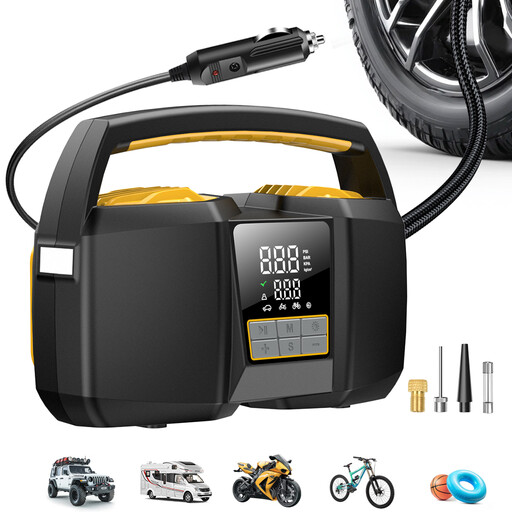
Why it suits this type of user: The wired 12V design is practical for drivers who want to top up several tyres without relying on a built-in battery.
The product description lists a 3-metre cable, so you won’t need to move the inflator as often. Check in advance that your vehicle has a suitable 12V socket.
Stated maximum of 150 PSI, 25-cylinder design, 12V power and LED lighting.
We’ve put together a complete, up-to-date list of products that meet these strict selection criteria and the applicable European safety regulations.
A portable tyre inflator is designed to restore or adjust tyre pressure. If a tyre is damaged, a valve is loose or the pressure keeps dropping, have it checked by a professional.
It depends on the model. Check that the product description specifically mentions car tyres, and look at the stated inflation time, airflow and power supply. A compact pump for bicycle tyres or balls isn’t automatically suitable for inflating car tyres.
Run time varies by model and workload. The Porbi Q19, for example, has a stated run time of 25 minutes and a 4,000 mAh battery. Inflating a flat car tyre requires considerably more power than a quick top-up. So make sure you charge the inflator before a long journey.
With a cordless model, you mainly pay to charge the battery; power consumption per charge is generally low. A 12V model uses the vehicle battery while inflating. Only leave the engine running if this is appropriate according to the vehicle and inflator manuals, and don’t use the inflator for longer than necessary.
