
Vandaag of morgen in huis

Kwaliteit gegarandeerd

Welkomstaanbiedingen ontgrendelen: GRATIS bezorging | Tot 80% korting | Gratis 30 dagen JoyPlus-proefperiode
Download de app
A flat or underinflated tyre rarely happens at a convenient time. Whether you’re at home, on your way to work or out on a bike ride, you want to be able to top it up quickly without relying on a garage. A portable tyre inflator for your car can be a practical solution, but not every compact device is suitable for car tyres.
Product titles often mention 150 PSI, fast inflation or a cordless design. That sounds appealing, but these claims don’t always tell you how long an inflator can run under load, how many tyres you can inflate on a single charge, or whether the supplied hose fits your valve. Use the checks below to avoid buying a product that offers little value after just a few uses.
A 150 PSI tyre inflator might look powerful on paper. However, the recommended tyre pressure for a typical car is usually much lower. The maximum pressure mainly indicates what the device can theoretically reach; it doesn’t necessarily tell you how quickly it can inflate a car tyre.
So, also check:
A device designed for bike tyres may reach a high pressure but still be impractically slow when used on a car tyre.
A cordless tyre inflator is easy to carry, but its battery needs to be charged beforehand. Battery life can also decrease in cold temperatures. Check whether the manufacturer lists the battery capacity and whether a USB-C or other charging cable is included.
A rechargeable tyre inflator is useful on the go, but don’t leave it unused for months without checking the battery in the meantime. For a longer journey, a 12V model is an alternative, as it works directly from your car’s power socket. To avoid putting unnecessary strain on the car battery, the engine often needs to be running when using one, according to the product instructions.
A tyre inflator with a digital pressure gauge makes it easier to set the pressure, especially if you switch between PSI, bar and kPa. However, always follow the vehicle manufacturer’s recommended pressure. You can usually find it on a sticker on the door pillar, in the owner’s manual or inside the fuel filler flap.
A display is most useful when it’s easy to read and supports the unit you need. An automatic shut-off car tyre inflator stops at the set pressure, according to the product description. If accuracy is important, check the tyre pressure with a separate gauge after using it.
Choose an inflator that suits what you want to inflate:
A tyre inflator for bikes and motorbikes can be versatile, but check the technical specifications for each use. An air pump rated at just 0.5 PSI, for example, is intended for low-pressure applications and not for car, SUV or motorbike tyres.
A USB-rechargeable inflator is compact and suitable for a bike bag, rucksack or glove compartment. A 12V tyre compressor doesn’t need a built-in battery, but you’ll need to rely on your car’s 12V socket.
For regular use away from the car, a cordless model is more practical. For inflating several car tyres in a row, a model with a direct power supply may be more suitable. Also check the length of the cable and air hose.
Automatic shut-off helps prevent the inflator from continuing to run after it reaches the set pressure. It’s no substitute for setting the correct pressure and keeping an eye on the device. Many compact compressors shouldn’t run continuously for more than about ten minutes. Let the device cool down when instructed to do so in the manual.
A CE mark means the manufacturer declares that the product meets applicable European requirements. It isn’t independent confirmation that an inflator is faster, more accurate or more durable than other models.
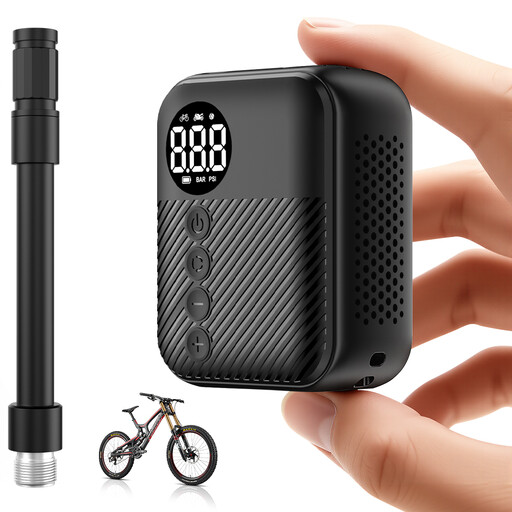
Why it suits this type of user: Its pocket-sized design and built-in battery make it a good choice for drivers, cyclists and motorcyclists who want to carry a compact emergency inflator.
The product description lists a digital gauge, rechargeable battery and maximum pressure of 150 PSI. Make sure the battery is sufficiently charged before using it on your car tyre.
Cordless design, digital pressure display and supplied USB charging cable; according to the product information, it’s suitable for bike, motorbike and car tyres.
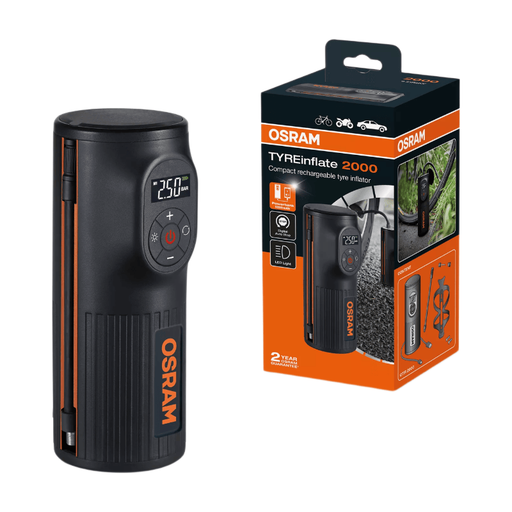
Why it suits this type of user: This model is aimed at users who value digital controls, a memory function and extra lighting when dealing with a breakdown or carrying out maintenance in the dark.
The product description lists automatic shut-off, pressure memory and three units: bar, kPa and PSI. The stated maximum pressure is 5.5 bar; compare this with the requirements of your intended use.
USB charging, an illuminated digital display, built-in LED light, storage bag and adapters for cars, bikes, scooters and motorbikes, according to the product specifications.

Why it suits this type of user: The 12V connection is ideal for drivers who don’t want to recharge a battery and plan to keep the inflator in their car.
The product information lists presets for cars, motorbikes, bikes and balls, automatic shut-off and a range of 3 to 150 PSI. Don’t use the inflator for longer than the stated run time.
No need to charge it in advance, 12V power supply, five modes, LED lighting and a stated inflation time of 40 seconds from 29 to 33 PSI for a specific tyre size.
A jump starter with a compressor combines an air pump with a battery for starting a 12V vehicle, a power bank and sometimes emergency lighting. It’s a good option for drivers who want to keep one multi-purpose device in the boot.
Bear in mind the extra weight and maintenance requirements. The device needs to be charged regularly, even if you don’t use the compressor. Also check:
The stated capacities and starting currents are product specifications or brand claims. Don’t treat them as a guarantee that every vehicle will start in all conditions.
We’ve put together a full, up-to-date list of products that meet these strict selection criteria and the applicable European safety requirements.
You can, provided the product specifications say it’s suitable for car tyres and it offers sufficient pressure and run time. Also check the battery charge, hose length and maximum operating time. A small bike pump or low-pressure air pump isn’t automatically suitable for a car.
Its lifespan depends on the battery type, charging habits, heat build-up and how often you use it. Follow the manual, avoid prolonged continuous use, and store the inflator somewhere dry and away from extreme heat. If you won’t be using it for months, recharge it periodically as instructed.
Automatic shut-off helps prevent the tyre pressure from unnecessarily exceeding the set level, but you still need to set the correct pressure and connect the valve properly. Ideally, check the tyre pressure again afterwards, and have a garage inspect any damaged tyre.
