
Vandaag of morgen in huis

Kwaliteit gegarandeerd

Welkomstaanbiedingen ontgrendelen: GRATIS bezorging | Tot 80% korting | Gratis 30 dagen JoyPlus-proefperiode
Download de app
A soft car tyre, flat bicycle tyre or underinflated motorbike tyre usually happens at the worst possible time. A portable tyre inflator can be a practical solution, but not every compact model is suitable for every situation. Some inflators only work via a 12V connection, while others have a rechargeable battery that needs charging first. The stated maximum pressure does not automatically tell you how quickly the inflator works either.
If you only look at a high PSI rating or a low price, you could end up with an inflator that works slowly, overheats quickly or does not fit the valve properly. Below, you will find the key points to check, along with a selection of products for different users in the Netherlands.
A portable compressor rated at 150 or 160 PSI may sound powerful. However, this figure mainly indicates the maximum theoretical pressure. The recommended tyre pressure for an ordinary car is usually much lower. That is why you should also consider the airflow, motor power and stated inflation time.
A compressor that is suitable for car tyres may still work slowly when you need to inflate a completely flat tyre. For regularly adjusting tyre pressure, a compact electric tyre inflator is often sufficient. For inflating several large tyres in succession, capacity and heat dissipation are more important.
A cordless tyre inflator is easy to carry and works without a cable connected to the car. However, the battery needs to be charged when you need it. Check the charging port, charging time, runtime and whether you can continue using it via USB-C or a 12V connection.
The battery may slowly discharge during long-term storage. Do not leave a cordless inflator unchecked in the car for months, and check the charge level before a long journey.
An LED light, power bank function and several attachments are useful, but they cannot replace accurate pressure measurement or a suitable hose. First check whether the tyre inflator for cars, motorbikes and bicycles supports the correct valve. For bicycle tyres, for example, a Presta adaptor is relevant; balls require a needle nozzle.
Also consider the runtime. A small inflator may be suitable for a quick pressure adjustment, but less practical for inflating four completely flat car tyres.
A 12V tyre inflator connects to the car’s cigarette lighter or 12V socket. This means you do not have to rely on a built-in battery, but you will need a cable. When using it, start the engine in accordance with the product instructions to reduce unnecessary strain on the vehicle battery.
A cordless model is more flexible for bicycles, motorbikes, scooters and camping equipment. A combination of battery and 12V power gives you more options, especially when the battery is nearly flat.
Choose a digital tyre inflator that lets you set the pressure in PSI, bar or kPa. In the Netherlands, tyre pressure is often given in bar. You can usually find the recommended value on the door pillar, fuel flap or in the car’s handbook. Do not automatically use the maximum pressure shown on the inflator.
A tyre inflator with automatic shut-off stops when the set pressure is reached. This reduces the risk of overinflating unnecessarily, but check the tyre pressure afterwards when accuracy is important.
A long cable is useful for larger cars. A hose of sufficient length means you do not have to keep moving the compressor. Also check whether the manufacturer states a maximum continuous operating time. Allow a car tyre compressor to cool down if it becomes hot, and do not use it continuously for longer than specified.
A metal or reinforced housing can be practical for regular use, but the material alone does not prove how long a product will last. Also look at the warranty, accessories and whether a clear instruction manual is available.
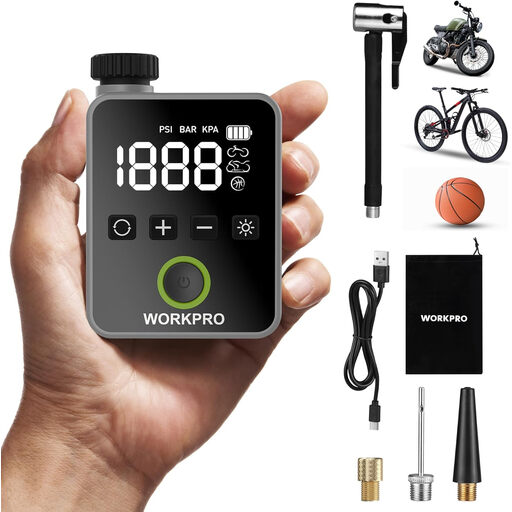
Why it suits this user profile: According to the product description, the compact cordless design weighs 270 grams and fits in a glove compartment or rucksack. The four modes are designed for bicycles, motorbikes, balls and a free setting.
The display shows the set pressure and, according to the product information, the inflator stops automatically when the target pressure is reached. Please note: this model is not intended for lorry or trailer tyres.
Adjustable from 3 to 140 PSI, support for bar and kPa, four nozzles, LED display and three light modes.
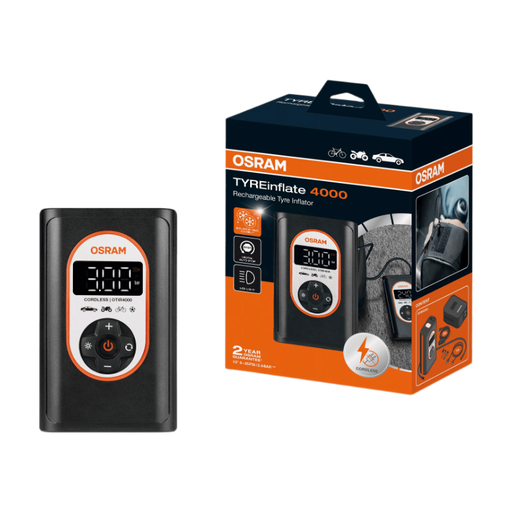
Why it suits this user profile: This model combines a built-in battery with direct 12V power. That is practical for motorists who want both cordless convenience and an alternative when the battery is flat.
The dual power option reduces reliance on the battery alone. The product description also mentions automatic shut-off and a valve for releasing some of the pressure.
Type-C charging, 12V cable, pressure memory for up to four vehicles, LED lighting, three adaptors and a stated working pressure of up to 8.3 bar.
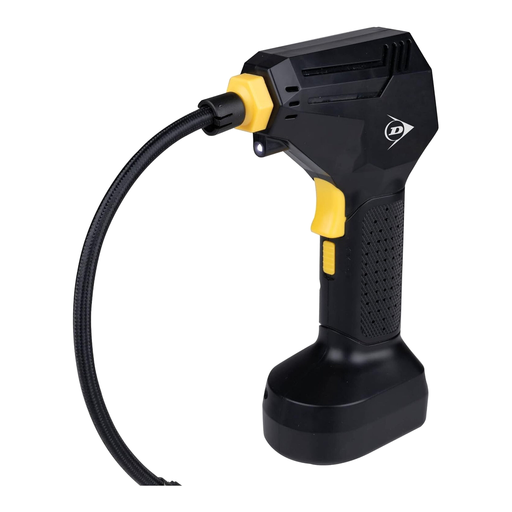
Why it suits this user profile: The 12V/120W model is designed for use with cars, bicycles and inflatables. The 3.5-metre cable provides extra reach around a passenger car.
The digital settings, pressure gauge and automatic stop make operation easier to control than with a model without an adjustable target pressure. Always use the stated pressure as a technical upper limit, not as a recommendation for your tyre.
Up to 150 PSI according to the product information, digital display, LED lighting, 30.5 cm hose, 3.5-metre cable, bag and valve adaptors.
We have put together a complete, up-to-date list of products that fully meet these strict selection criteria and the applicable European safety regulations.
Use the value given in the vehicle documentation, on the door pillar or on the fuel flap. For bicycles and motorbikes, the recommended pressure is often shown on the tyre, in the manual or by the manufacturer. PSI, bar and kPa are different units; choose the unit you are familiar with and check that the inflator supports it.
This depends on the battery capacity, runtime, storage conditions and the number of tyres you inflate. A quick pressure adjustment requires less energy than inflating a completely flat car tyre. Follow the recommended breaks to prevent overheating, and charge the battery before setting off.
A 12V model draws power from the car, while a cordless model is charged via USB or an adaptor. The cost per use depends on the power, inflation time and electricity tariff. For occasional top-ups, consumption is generally limited, but a long inflation time requires more energy than a quick adjustment.
