
Vandaag of morgen in huis

Kwaliteit gegarandeerd

Welkomstaanbiedingen ontgrendelen: GRATIS bezorging | Tot 80% korting | Gratis 30 dagen JoyPlus-proefperiode
Download de app
A flat or underinflated tyre is never convenient. With a portable tyre inflator in your car, cycle bag or motorbike luggage, you can top up the tyre pressure while on the move without driving to a petrol station. However, not every electric tyre inflator is suitable for car tyres. Some models are mainly designed for air beds and balls, while others draw a lot of power or heat up quickly.
Joybuy Product Recommendation Officer highlights the most important points to consider. This helps you compare a battery-powered tyre inflator, 12V tyre inflator or cordless tyre inflator using verifiable specifications rather than vague marketing claims.
A 150 PSI tyre inflator may appear powerful, but the maximum pressure does not tell you how much air the pump moves per minute. For a car tyre, both maximum pressure and airflow, expressed in L/min, for example, are important. A compact pump may reach a high final pressure yet still be slow when inflating a completely flat car tyre.
Also, do not use the maximum pressure as your target value. Check the recommended tyre pressure for your car, motorbike or bicycle. This is usually shown in the manual, on a sticker inside the door frame or on the sidewall of a bicycle tyre.
A cordless tyre inflator runs on a built-in battery. This is convenient at the roadside, but only while the battery has enough charge. Therefore, check:
A 12V tyre inflator with a cable does not require a built-in battery. You connect it to the car’s 12V socket. This avoids having a flat pump battery, although the cable can be less convenient. When using it, start the engine according to the product instructions to avoid putting unnecessary strain on the vehicle battery.
Pay close attention to the difference between high pressure and high air volume. An air pump for air beds, toys or swimming inflatables may move a lot of air, but provide insufficient pressure for a car or motorbike tyre.
For example, the Baseus PocketGo lists a pressure of 3.5 kPa, or approximately 0.5 PSI. According to the product information, this model is intended for low-pressure applications such as air beds and inflatable toys, and not for car, SUV or motorbike tyres. Misinterpreting the unit could therefore lead to an unsuitable purchase.
A digital tyre inflator can display pressure in PSI, bar or kPa. For users in the Netherlands, bar is often the easiest unit to read, but PSI is common on international products. Check that the inflator offers a range suitable for your intended use.
For cars and motorbikes, a model with a range up to 150 PSI is generally well above normal operating pressure. This does not mean that you may inflate the tyre to that level. The correct setting remains the value specified by the vehicle or tyre manufacturer.
An electric car tyre inflator with a 12V plug is suitable for use with a vehicle that has a compatible socket. A battery-powered tyre inflator offers greater flexibility for bicycles, motorbikes and emergencies away from the car. With electric cars, check whether the 12V socket is available and suitable when the vehicle is stationary. “Suitable for electric vehicles” is a product claim made by the brand; always check your vehicle’s manual.
For cyclists, a USB-rechargeable electric bicycle pump can be a convenient option. However, pay attention to the connector: road bike tyres often use a Presta valve, while cars and many city bikes use a Schrader valve. A set of adapters prevents you from needing to buy additional accessories later.
An air pump with automatic shut-off stops when the preset pressure has been reached. This makes inflation easier to manage, but you should still check the pressure afterwards with a reliable gauge. The feature does not replace setting the correct target pressure.
When inflating several tyres one after another, cooling time and operating duration are relevant. A compact pump that builds up a lot of pressure can become hot during prolonged use. Follow the safety instructions and allow the device to cool whenever instructed.

Why it suits this profile: This compact 12V tyre inflator runs directly from the car and has presets for cars, motorbikes, bicycles and balls. It is practical for everyday use without needing to charge a battery in advance.
The specified settings and range of 3 to 150 PSI make the intended applications clearer than a general claim of “universal” use.
12V power supply, five preset modes, automatic shut-off and a cable for use without waiting for the battery to charge.
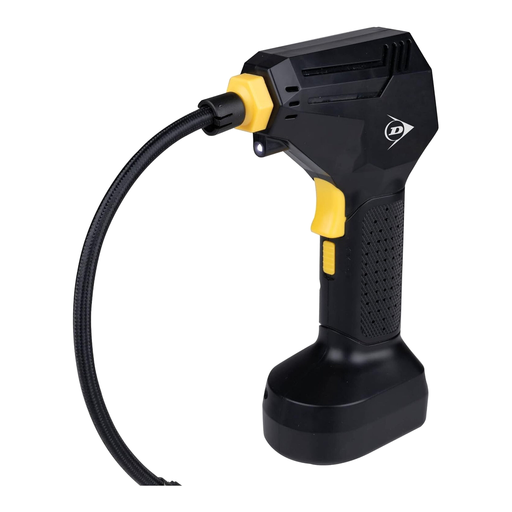
Why it suits this profile: This model is aimed at motorists who value a wide range and straightforward operation, for example for regular use in the car.
The product information explicitly lists a 3.5-metre power cable, a 30.5 cm hose and automatic shut-off. You therefore do not have to rely on the PSI figure alone.
Digital pressure setting up to 150 PSI/10 bar, LED lighting, storage bag and adapters for various inflatables.
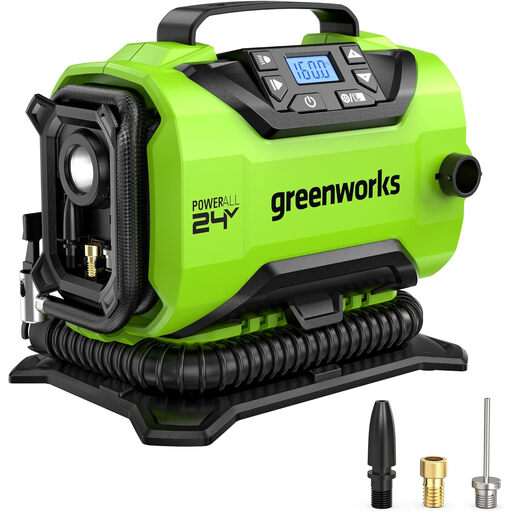
Why it suits this profile: Campers, cyclists and users with Greenworks 24V batteries can benefit from cordless operation and the combination of high- and low-pressure modes.
The product information clearly states that the 24V battery and charger are not included. It also lists a noise level of 94 dB, allowing you to take its use in a quiet environment into account.
Up to 11 bar/160 PSI, digital pressure display, automatic shut-off, three adapters and a low-pressure mode for air beds and other large inflatables.
We have put together a complete, up-to-date list of products that fully meet these strict selection criteria and the applicable European safety regulations.
If a tyre is damaged, loses pressure quickly or has a visible defect, do not keep topping it up. Have the tyre checked at a garage or bike shop.
This depends on the airflow, maximum pressure and operating time. Some compact models are mainly suitable for topping up pressure. Check the stated performance for car tyres and allow for a longer inflation time when the tyre is completely flat.
Its service life depends on battery capacity, charging habits, temperature and frequency of use. Do not store the inflator completely discharged for long periods, and follow the manufacturer’s charging and temperature instructions. A 12V model avoids reliance on a built-in battery, but it does require a suitable power connection.
With a battery-powered tyre inflator, you mainly pay for charging the battery. With normal occasional use, this is generally a small part of the total cost. The purchase price, any battery replacement and the included accessories have a greater impact on the overall cost of use. Therefore, do not look only at the price of the device; also check what is included in the package.
