
Vandaag of morgen in huis

Kwaliteit gegarandeerd

Welkomstaanbiedingen ontgrendelen: GRATIS bezorging | Tot 80% korting | Gratis 30 dagen JoyPlus-proefperiode
Download de app
A portable tyre inflator is useful for motorists, motorcyclists, cyclists and campers. You can use one for a soft car tyre, a bicycle tyre while out and about, a sports ball or an airbed. However, not every compact air pump is suitable for every purpose. A small device with an impressive pressure rating may deliver too little air in practice for a car tyre, while a powerful 12V tyre inflator can be inconvenient if there is no socket nearby.
Joybuy Product Recommendation Officer filters the most important product specifications and compares them with the most common buying pitfalls.
A rating such as 150 PSI sounds impressive, but it does not tell you how much air the pump actually moves per minute. For a small adjustment to your tyre pressure, a compact car tyre compressor is often sufficient. A completely flat car tyre, SUV tyre or caravan tyre requires more time and motor power.
As well as the maximum pressure, check:
A high PSI rating does not necessarily mean that the pump is suitable for airbeds or SUPs either. For those, you generally need a higher airflow and a suitable low-pressure setting.
A cordless tyre inflator runs on a built-in battery. This is practical at the roadside or on a bike ride, but the battery must be charged beforehand. When inflating several tyres, in low temperatures or during a lengthy inflation session, the available operating time may be limited.
A corded 12V tyre inflator works via the vehicle socket and does not need to be charged in advance. The trade-off is that you need to remain within the cable’s reach. Also check whether the engine needs to be running during extended use, to prevent the vehicle battery from going flat.
Some models are designed for airbeds, balloons and inflatable toys. For example, the Baseus PocketGo specifies a pressure of 3,5 kPa, or approximately 0,5 PSI, and according to the product specifications it is not intended for car, SUV or motorbike tyres. Such a device can be useful when camping, but it is not a suitable mini car air compressor.
So first check what you want to inflate. An electric bicycle pump, car air pump and SUP air pump may look similar, but they have different pressure and airflow requirements.
Choose a 12V tyre inflator if you mainly want to top up car, motorbike or bicycle tyres while out and about. A corded model is suitable for use by the car, provided that the cable is long enough to reach all the wheels.
A battery-powered version is better suited to cyclists, motorcyclists and people who do not have a vehicle within reach. Check the battery capacity, charging time and whether it can be recharged via USB-C or a 12V connection.
A tyre inflator with a digital pressure gauge generally makes the set pressure easier to read than a simple analogue gauge. Check that the pump supports pressure values suitable for your vehicle or bicycle. For the correct tyre pressure, always follow the information provided by the vehicle manufacturer, tyre manufacturer or the vehicle itself.
Automatic shut-off stops inflation when the set value has been reached. This reduces the risk of over-inflating, but still check the pressure afterwards with a reliable gauge if the specified pressure is important.
Pay attention to the valve adapters supplied. Cars and motorbikes generally use a Schrader connection; road bikes may require a Presta adapter. A ball needle is useful for sports balls. Airbeds, boats and SUPs require wider nozzles.
An integrated hose holder, storage bag, LED lamp and long power cable can make use on the go easier. Also consider the noise level and weight, particularly if you are taking the pump on a bike or camping trip.
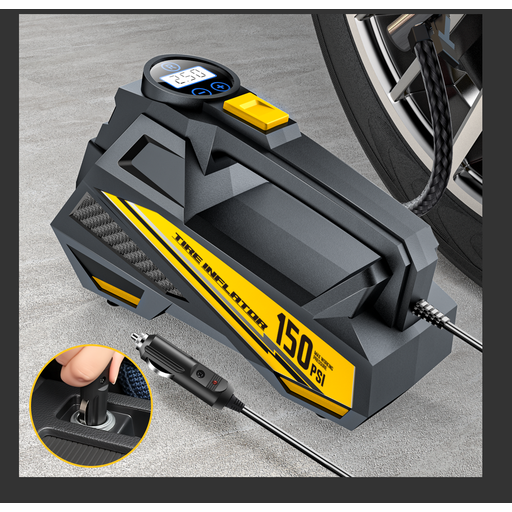
Why it suits this profile: This corded 12V pump is designed for cars, motorbikes, bicycles and balls. That makes it suitable for anyone looking for one simple device for several vehicles and smaller inflatables.
The product description mentions a 12V connection and an easy-to-read gauge. You therefore do not need to charge a battery in advance; just check that the cable length suits your car.
According to the product information: 12V power supply, maximum 150 PSI and adapters for cars, motorbikes, bicycles and balls.
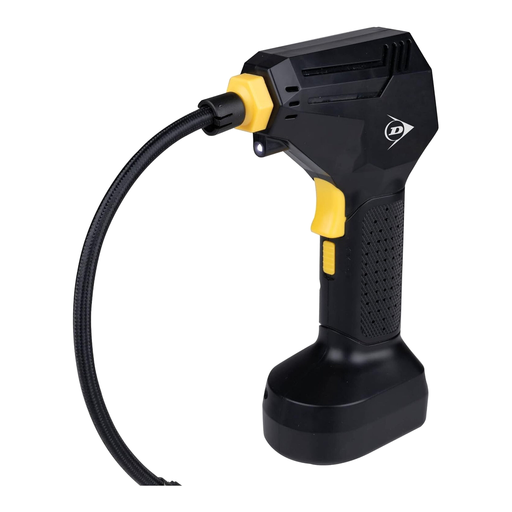
Why it suits this profile: The combination of digital settings, a long cable and accessories is ideal for motorists who want to keep the pump in their car regularly.
The product specification lists a digital display, automatic shut-off and a 3,5-metre cable. This makes the pressure settings and reach easier to assess beforehand.
According to the product information: 12V/120W, maximum 150 PSI, LED lighting, storage bag and a stated statutory warranty of at least two years.
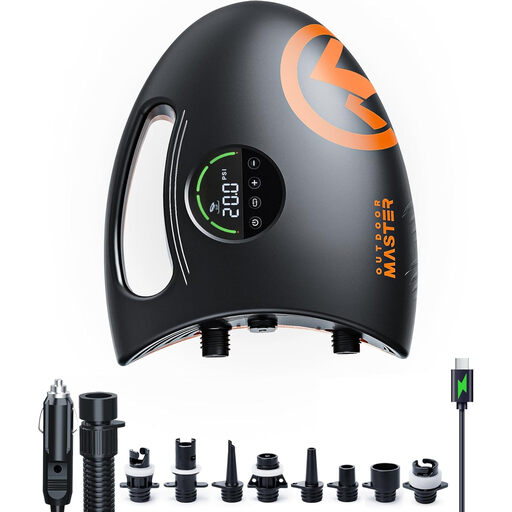
Why it suits this profile: SUP users who inflate several boards per outing will benefit more from a pump with a battery, multiple nozzles and a deflation function than from a standard car air pump.
The specification states a range of 0,5 to 20 PSI, automatic shut-off and two operating stages. This is better suited to SUPs than a pump that only supports high tyre pressures.
According to the product description: 88,8 Wh battery, maximum 20 PSI, USB-C charging, 12V/15,8V input and eight nozzles.
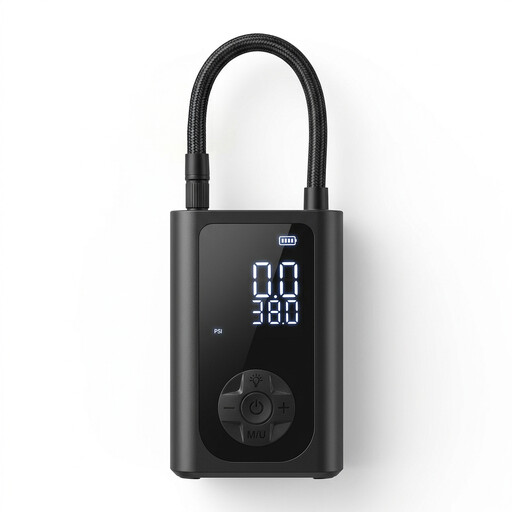
Why it suits this profile: Its compact battery-powered design and five modes are practical for cyclists, motorcyclists and motorists who want to keep a pump in a bag or glove compartment.
The stated battery capacity is 4000 mAh and, according to the product information, the operating time is up to 25 minutes. This makes the battery limitation clear in advance.
According to the product specification: maximum 150 PSI, digital pressure detection, USB-C, LED light and modes for cars, motorbikes, bicycles, balls and custom settings.
We have put together a complete, up-to-date list of products that fully meet these strict selection criteria and the applicable European safety regulations.
No. Check the maximum pressure, airflow and recommended applications. A low-pressure pump for airbeds or toys is not suitable for car tyres. For cars, choose a model specifically designed for vehicle tyres, such as a 12V compressor or a battery-powered version with digital pressure settings.
The lifespan depends on frequency of use, load, storage and cooling. Do not run a car tyre compressor for longer than specified by the manufacturer, and allow the device to cool down between inflating several tyres. Store a battery-powered version in a dry place and charge the battery according to the product instructions.
A cordless tyre inflator mainly uses energy while inflating and charging. Running costs are generally limited, but the battery may run down more quickly during extended use. A 12V model draws its power from the vehicle battery, so when pumping for a long time, run the engine if the manual specifies this.
