
Vandaag of morgen in huis

Kwaliteit gegarandeerd

Welkomstaanbiedingen ontgrendelen: GRATIS bezorging | Tot 80% korting | Gratis 30 dagen JoyPlus-proefperiode
Download de app
A flat or underinflated tyre is never convenient. Yet many motorists, motorcyclists and cyclists choose a portable tyre inflator based on one big number on the packaging. A rating such as 150 PSI sounds impressive, but it doesn’t automatically tell you how quickly the inflator will inflate a car tyre or how long it can run continuously.
The right choice depends on your vehicle, the power supply and how often you use the inflator. Below, you’ll find the key things to check, common pitfalls and a selection of products with different strengths.
An electric tyre inflator with a range of up to 150 PSI may be suitable for various tyres and inflatables. However, its maximum pressure rating doesn’t tell you how quickly it will inflate a car tyre. Check the airflow, motor power and stated inflation time too.
A compact inflator is often enough for a bicycle tyre or ball. A tyre inflator for cars, SUVs or campervans needs more capacity and may get hotter during use.
A cordless tyre inflator works without a 12V cable, but it has a built-in battery that needs charging. So check:
Cordless operation is handy for occasional use around town. For long journeys or inflating several tyres one after another, a 12V tyre inflator may be more reliable, as the car provides a continuous power supply.
Inflation times are usually based on specific conditions, such as a particular tyre size and a limited increase in pressure. According to Baseus product specifications, for example, the GoTrip VA1 can inflate a 175/65 R14 tyre from 29 to 33 PSI in around 40 seconds. That’s not the same as inflating a completely flat tyre.
Also check the duty cycle or recommended cooling time. A compact compressor is designed for topping up and occasional use, not necessarily for inflating several large vehicle tyres without a break.
A digital tyre inflator makes it easier to set a target pressure. Check whether the display shows PSI, bar or kPa, and whether you can switch between these units. In the Netherlands, tyre pressures are often given in bar, while many products use PSI.
A tyre inflator with automatic shut-off stops when it reaches the set pressure, according to the product description. This reduces the risk of overinflating your tyre, but after use, check the pressure with a separate gauge if the recommended pressure is important.
A 12V tyre inflator plugs into the cigarette lighter or another 12V socket. Check the cable length. A cable several metres long is useful if you need to reach all four tyres without moving the inflator.
A cordless tyre inflator is more compact and handy for journeys, bike rides and camping. The downside is that the battery can run flat. If you’ll be using it more often, choose a model with enough battery capacity or more than one power option.
A tyre inflator for cars, motorbikes and bicycles doesn’t always need the same connection. Check whether the set includes adapters for:
An LED light is also useful if you want to use the inflator in a dark garage or by the roadside. A tyre inflator with LED lighting helps you connect it, but it doesn’t replace proper lighting or reflective safety gear.

Why it suits this type of user: This compact 12V compressor is a practical choice for motorists who mainly want to top up a tyre at home or on the road, without having to charge a battery.
The 12V connection means you don’t have to rely on a small internal battery. According to the product description, this model has a plug-and-play design with no separate on/off switch.
22 cylinders, a compact size and low weight, according to the product specifications.
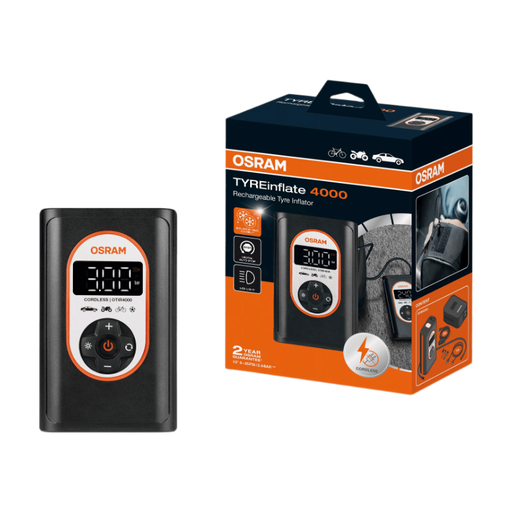
Why it suits this type of user: A good fit if you want cordless operation alongside a 12V backup option, pressure memory and accessories for different valves.
According to the product specifications, the inflator works with both a built-in battery and a 12V cable. This makes a flat battery less of a problem on a car journey.
Automatic shut-off, pressure memory, LED lighting and selectable units: PSI, kPa and bar.

Why it suits this type of user: A sensible choice for motorists and travellers who want a wired inflator with presets for cars, motorbikes, bicycles and balls.
The manufacturer lists five selectable modes, a range of 3 to 150 PSI and automatic shut-off. The 12V power supply means you don’t have to rely on charging it in advance.
Pressure can be adjusted in 0.5 PSI increments, with three light modes and three air nozzles included, according to the product information.
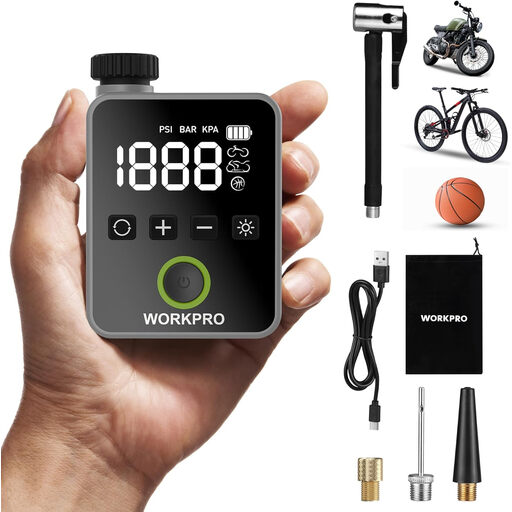
Why it suits this type of user: Weighing just 270 grams and featuring a cordless design, this inflator fits easily in a rucksack, cycle bag or glove compartment.
The set pressure is shown on the LED screen and the inflator switches off automatically, according to the product description. Note that this model isn’t designed for lorry or trailer tyres.
A range of 3 to 140 PSI, four modes, three lighting functions and a power bank function, according to the product specifications.
We’ve put together a complete, up-to-date list of products that meet these strict selection criteria and the applicable European safety regulations.
First, check the recommended tyre pressure in your vehicle’s handbook, on the sticker inside the door frame or on the fuel flap. Then set the correct unit and target pressure. Connect the hose straight to the valve to minimise air loss.
Let a compact compressor cool down when instructed to do so in the manual. Store a cordless tyre inflator in a dry place and recharge the battery regularly, even if you rarely use it. Before you start, also check the cable, hose and adapters for damage.
Not necessarily. 150 PSI is usually a maximum pressure rating, not a recommendation for everyday use. Check your vehicle’s recommended tyre pressure, as well as the inflator’s inflation time, airflow and maximum run time.
It depends on the battery capacity, temperature, tyre size and how many times you top up your tyres. Battery capacity can decrease over time. If you use the inflator regularly or need to inflate several car tyres, a model with a 12V backup is a practical option.
A 12V tyre inflator draws power from your car and generally doesn’t need any consumables. With a cordless model, your main running cost is charging it, and you’ll need to allow for wear to the built-in battery. The purchase price, warranty and included accessories account for a large part of the overall cost of ownership.
