
Vandaag of morgen in huis

Kwaliteit gegarandeerd

Welkomstaanbiedingen ontgrendelen: GRATIS bezorging | Tot 80% korting | Gratis 30 dagen JoyPlus-proefperiode
Download de app
A portable Type 2 EV charger might seem simple at first: plug it into a socket, connect the Type 2 connector to your car and start charging. In practice, the electrical installation, charging current, vehicle compatibility and cable construction all affect how easy and safe it is to use.
There are a few common pitfalls to watch out for when buying a portable electric car charger. A high power rating doesn’t automatically mean your car or socket can make use of that power. And a long cable or clever app won’t make a product suitable if your home connection can’t support it.
As Joybuy Product Recommendation Officer, I focus on verifiable specifications and practical use cases, not just marketing claims.
A 3.5 kW charger can theoretically deliver a maximum of around 3.5 kW at 230 volts and 16 amps. That doesn’t mean every electric car can accept this level of power. The car’s on-board charger, battery status and electrical installation determine the actual charging speed.
A plug-in hybrid also often has a smaller battery and a lower internal charging capacity. In that case, a more powerful charger won’t necessarily reduce charging time.
A Schuko EV charger uses a domestic Type F socket. This is handy for occasional or temporary charging, but the circuit, wiring, plug and socket must all be suitable for a sustained load.
Plug a portable charger directly into a suitable, correctly earthed 230V socket. Avoid unapproved adapters, multi-socket extensions and extension leads. If you’re unsure about the installation, it’s best to have it checked by a qualified electrician. You could start with 8 or 10 amps rather than going straight to 16 amps.
An IP66 or IP65 rating indicates protection against dust and water under the specified test conditions. It doesn’t mean you can submerge the charging unit or leave it in standing water for a long time.
A smart EV charger with Wi-Fi also needs a suitable network connection and the correct configuration to work. Check whether you can also start charging with a button or Plug & Charge when Wi-Fi isn’t available.
A Type 2 charging cable is the standard AC connection for many electric cars and plug-in hybrids in Europe. Always check your vehicle’s manual or specifications. “Type 2-compatible” refers to the connector standard, but it doesn’t mean the car supports every charging power level or charging function.
Look out for this combination:
An adjustable charging current makes the charger more flexible, but it doesn’t override the limits of your consumer unit, cables or socket.
A 5-metre cable is often long enough for a driveway or garage, but measure the distance between the socket and charging port first. Also consider the weight of the control box, the storage bag and whether the unit can be mounted on a wall.
Before each charging session, check the Type 2 connector, mains plug and cable for damage, loose parts or unusual heat. After charging, let the unit cool for a few minutes before putting it away.
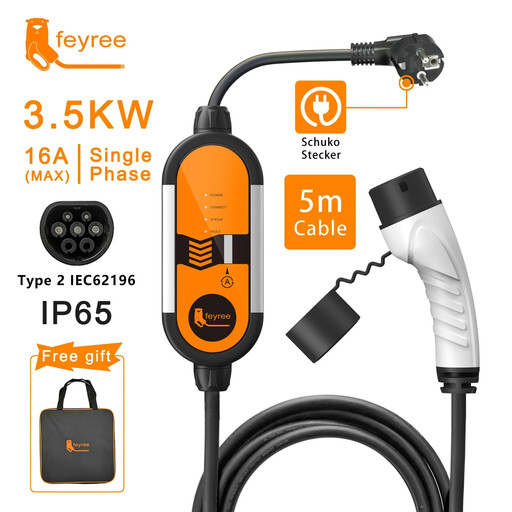
Why it suits this user: This portable charger is designed for use with a standard 230V socket and offers a straightforward choice of 8, 10, 13 and 16 A. It’s a good fit for drivers who want to get started at home or on the go without rushing.
The charging current isn’t fixed at 16 A. You can adjust the setting to suit the circuit available, and the manual explains that the actual power depends on the car and the installation.
Type 2 connector, 5-metre cable, Schuko plug, OLED display and a memory function for your chosen charging current.
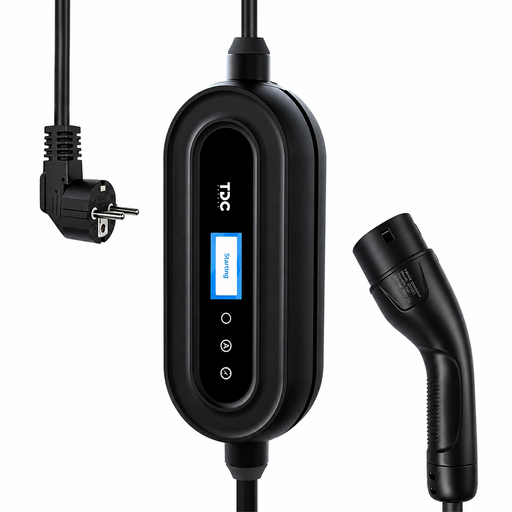
Why it suits this user: The SNK03 combines portable charging with control via Wi-Fi, Bluetooth, buttons and Plug & Charge. It’s a good choice if charging schedules and clear status information matter to you.
The charger doesn’t rely on marketing claims to describe its power: the specifications state 230 V, a maximum of 16 A and four charging current settings. The app does require a suitable network connection.
1.9-inch LCD screen, 5-metre cable, IP66 rating, wall mounting and stated protection against issues including overload and overheating.
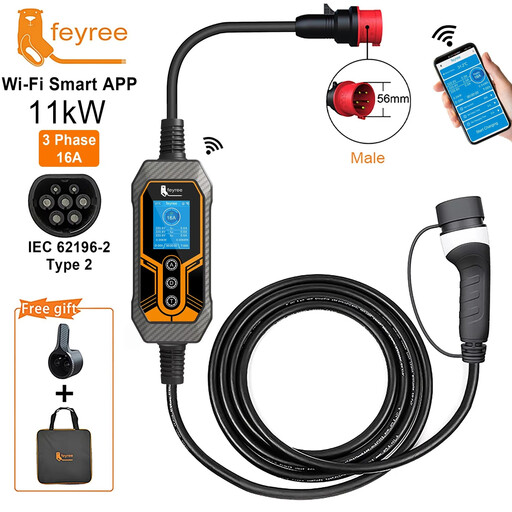
Why it suits this user: This version is designed for users with a suitable three-phase connection and CEE plug. It may suit a fixed location or a trip where this type of connection is available.
The product specifications explicitly state that it supports three-phase charging, with a maximum output of 11 kW. This makes clear that it isn’t a standard Schuko charger for use with any socket.
Adjustable from 8 to 16 A, app or button control, 2.8-inch LCD screen and a 5-metre cable. Check the required connection in advance.
For charging an electric car at home, a dedicated, suitable circuit is often more practical than repeatedly using the same general-purpose socket. A portable charger is especially handy if you want to take it to family, a holiday home or another parking spot.
Don’t use a cable reel between the charger and the socket. If you’re using an unfamiliar installation, choose a lower charging current and check that the plug and socket don’t become warm. Stop immediately if you notice discolouration, a loose connection, a damaged cable or an unusual smell.
A charging schedule can help you charge at a time that suits you. Make sure the app stays connected and check whether your car has its own timer function. For occasional plug-in hybrid charging, simple button controls may be enough.
We’ve put together a complete, up-to-date list of products that meet these strict selection criteria and the applicable European safety regulations.
No. Only use a suitable, correctly earthed 230V socket and follow the manufacturer’s instructions. The charging current you choose must be suitable for the circuit and wiring. Don’t use an unsuitable adapter or extension lead.
As a rough guide, calculate your energy costs using: kilowatt-hours charged × your electricity tariff. A 3.5 kW charger doesn’t determine the total cost by itself; charging time, charging losses, battery and electricity price all play a part. Charging at 8 A generally takes longer than at 16 A, but puts less load on the socket.
Its lifespan depends on how often you use it, how it’s stored, exposure to moisture and heat, and the quality of the electrical connection. Store the cable somewhere dry, keep the connector contacts clean and don’t use the charger if any parts are damaged or unusually warm. Also check the warranty terms and your statutory consumer rights when you buy.
