
Vandaag of morgen in huis

Kwaliteit gegarandeerd

Welkomstaanbiedingen ontgrendelen: GRATIS bezorging | Tot 80% korting | Gratis 30 dagen JoyPlus-proefperiode
Download de app
A portable tabletop extractor hood is useful if you cook in a studio flat, rented home or small kitchen without a fixed outlet to the outside. You place the appliance next to or behind your hob, plug it in and use it as a recirculating unit. This reduces cooking odours and grease particles without drilling or installing an extraction duct.
However, not every tabletop extractor hood is suitable for every cooking set-up. Pay particular attention to these common pitfalls.
A small mobile extractor hood has limited airflow. This may be sufficient for frying, simmering or cooking with one pan, but when using several cooking zones, a wok or deep-frying for extended periods, its capacity may not be enough.
So check the stated airflow and switch the extractor on a few minutes before you start cooking. Also make sure the room has additional ventilation. A recirculating extractor hood does not discharge air outside.
An extractor hood without an outlet uses filters. A grease filter traps grease particles, while an odour filter, often containing activated carbon, is designed to reduce cooking smells. Saturated or dirty filters restrict airflow and may be less effective at dealing with odours.
Before buying, check:
Some models state that the filter module can be maintained without replacement parts. Always check this in the manual and on the product page, as filter maintenance varies from model to model.
A noise level is usually specified at a particular fan speed. The lowest setting may be quiet, while the highest setting is clearly audible. For a studio flat or open-plan living room, it is therefore sensible to check both the maximum noise level and the number of settings.
First measure the available space next to your hob. A tabletop model must stand securely and must not block air inlets or outlets. Keep the appliance away from naked flames, splashing water, tea towels and other flammable materials.
According to the product information, the Ciarra Portable Tabletop Air Extraction Unit measures 165 × 343 mm and has a net weight of 1,5 kg. This makes the model easy to move, but its relatively narrow footprint means that it needs a flat, sturdy surface.
Do not rely solely on terms such as “powerful extraction”. Compare the technical data. The white Ciarra tabletop unit has two speeds, a stated maximum noise level of less than 65 dB and a product listing with airflow figures of 77,8 m³/h on the low setting and 108 m³/h on the high setting. The description also states a maximum airflow of more than 2 m³ per minute. As these figures are presented differently, it is advisable to check the current product specifications and manual before buying.
Higher airflow is not the only consideration. The distance from the pan, the position of the unit and the condition of the filters also affect the practical results.
A multi-layer filter system may consist of a metal grease filter and a polymer or carbon filter. Check which part can be washed and which part needs replacing. Allow washed filters to dry completely before putting them back.
Do not use a tabletop extractor hood as a replacement for general room ventilation. Additional ventilation is essential when there is a lot of steam, smoke or grease. Also follow the manufacturer’s safety instructions and unplug the appliance before cleaning it.
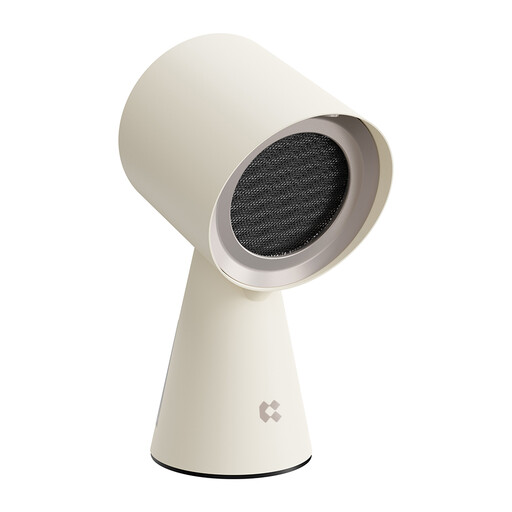
Why it suits this profile: This freestanding model is designed for studio flats, rented kitchens and temporary cooking spaces where no wall outlet is available. The unit operates in recirculation mode and, according to the product information, requires no structural alterations.
The product specifications list two speeds and a multi-layer filter module. This allows you to adjust the setting and maintain the filter rather than relying solely on marketing terms.
Compact size, net weight of 1,5 kg, two speeds and a stated maximum noise level of less than 65 dB.
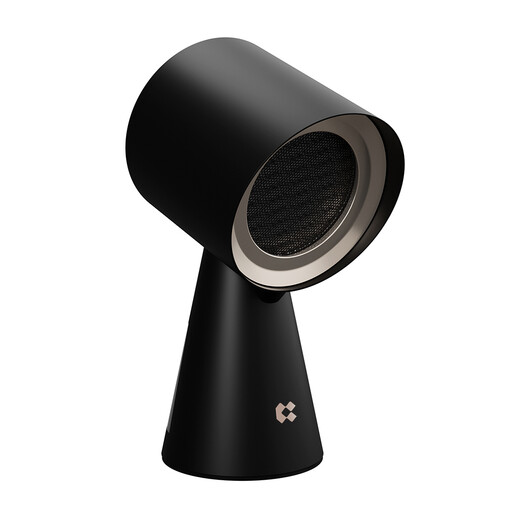
Why it suits this profile: This mobile extractor hood follows the same compact design concept, with a black finish to suit a dark or modern kitchen. It is suitable for users who want to avoid a fixed installation.
The product description explicitly mentions recirculation, no wall duct and cleanable multi-layer filtration. This makes the installation requirements clearer than with a model that only mentions “extraction”.
Freestanding design, two fan speeds, filter maintenance without structural alterations and a 24-month warranty according to the product information.
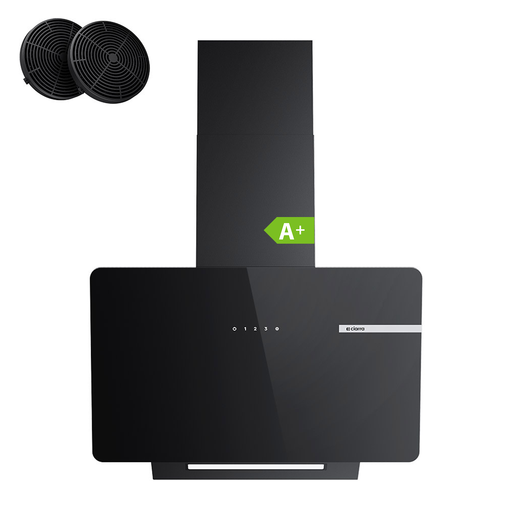
Why it suits this profile: If you cook frequently and are able to install a fixed wall-mounted solution, you may want to consider a larger extractor hood. This is not a portable tabletop model, but an alternative for a permanent cooking set-up.
The installation options are clear: according to the product information, this model supports both external extraction and recirculation. Check the installation requirements and obtain your landlord’s permission beforehand.
Width of 60 cm, maximum airflow of 580 m³/h according to the specifications, washable aluminium filter and LED lighting.
We have put together a complete, up-to-date list of products that fully meet these strict selection criteria and the applicable European safety regulations.
Yes, a tabletop model can work as a recirculating extractor hood. The air passes through filters and is released back into the room. This reduces cooking odours and grease particles, but does not fully remove moisture and heat. So ventilate the kitchen through a window or mechanical ventilation as well.
Switch off the appliance and unplug it. Clean the grease filter according to the manual and allow washed parts to dry completely. Wipe the housing with a slightly damp cloth. Do not use water on electrical components and do not place the appliance next to an uncovered pan or sink.
Consumption depends on the power rating and how long it is used. According to the product information, the white Ciarra unit has a power rating of 36 W. Daily use therefore generally results in limited electricity consumption, but check your local electricity tariff and the number of hours of use for an accurate calculation.
