
Speaker owners with one charging point
You mainly want the plug, cable and power supply to work with your existing speaker, without choosing ports you don’t need.


Choose a charger based on your speaker’s charging port and power requirements; a high wattage or wireless charging pad won’t necessarily be suitable. Then decide how many devices you want to connect at once and compare the available power for that combination of ports. The fire service advises placing the charger in a clear space and not charging devices under a pillow or duvet.
You mainly want the plug, cable and power supply to work with your existing speaker, without choosing ports you don’t need.
You’re looking for a spot where your speaker and charger can sit in the open, with cables kept clear of the bedding. Safe placement is part of your decision.
You might want to charge your speaker and phone at the same time. In that case, both the port types and the power available when using them together matter.
First, check your speaker’s charging input and power requirements. Then choose the number of ports you need for the devices you want to charge at once, and check how much power is available for that use.
| What to consider | What to look for | Who is this important for? |
|---|---|---|
| Connection and compatibility | Check the charging input and power requirements for your speaker model. Make sure the charger and cable are suitable. | If I want to connect my speaker without a cable or port mismatch, compatibility comes first. Around 36% of consumers put a suitable connection and power supply at the top of their list. |
| Safe placement | Choose a stable, clear surface. Keep the charger and speaker away from pillows and duvets. | I want to charge my speaker by the bed without the charger or device being covered. Around 29% of consumers prioritise clear, safe placement. |
| Ports and power | Count the devices you want to charge at once. Compare the power specified for that particular combination of ports. | If I want to charge my phone and speaker at the same time, I look for enough suitable ports and check the shared power output. Around 21% of consumers make simultaneous charging their main priority. |
| Cables and simplicity | Check which cable fits your speaker and whether it’s included. Consider whether you’ll actually use the extra ports. | I don’t want to buy unnecessary connectors or extra cables after checking my speaker’s input. Around 14% of consumers prioritise simplicity and avoiding extra purchases. |
With multi-port chargers, the power output at each port can change when you connect more devices. So the total wattage doesn’t automatically tell you how much power is available for your speaker.
Compare the output of the ports you actually want to use at the same time with your devices’ power requirements.
A wireless charging pad will only work if the speaker itself supports wireless charging.
Check your speaker model’s manual. Otherwise, choose a wired connection and cable that are suitable for your speaker.
The fire service advises placing chargers in the open so heat can escape, and not charging devices under a pillow or duvet.
Choose a clear, stable surface and don’t use a damaged cable or charger.
The chargers listed differ mainly in port type and the stated power output when using one or more connections.
The BoostCharge WCC002vfWH has three USB-C outputs, making it an option if you want to connect several devices with USB-C cables.
According to UGREEN, the Nexode 10335 has two USB-C ports and one USB-A port for different cable types.
According to CUKTECH, the A15CEU listed here is a 65W charger with two USB-C ports and one USB-A port.
This selection on Joybuy includes wired chargers and charging stations with USB-C and/or USB-A connections. Check your speaker’s connection, the suitable cable and the power available when charging several devices at once.
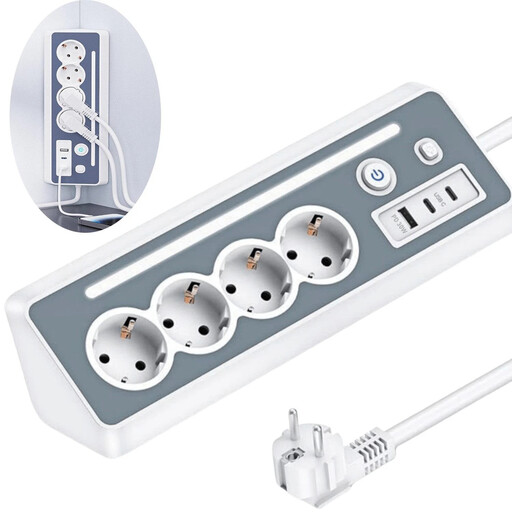 No image available
A wired option to compare if your speaker charges via a suitable USB-C or USB-A cable.
The product information lists four sockets, two USB-C ports, one USB-A port and 30 W total. It also says that both USB-C ports can’t be used for fast charging at the same time.
The angled design and LED night light are mentioned in the product name; check that the connections and placement suit your bedside setup.
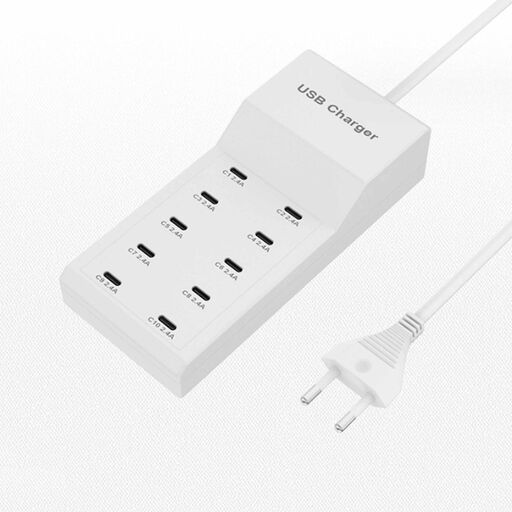 No image available
Worth considering if you want to connect several devices with different USB cables.
The product name lists ten ports, including USB-C and USB-A. Charging speed depends on the port you use, the connected device and the total power available.
Check the product information to see which port works with your speaker’s cable.
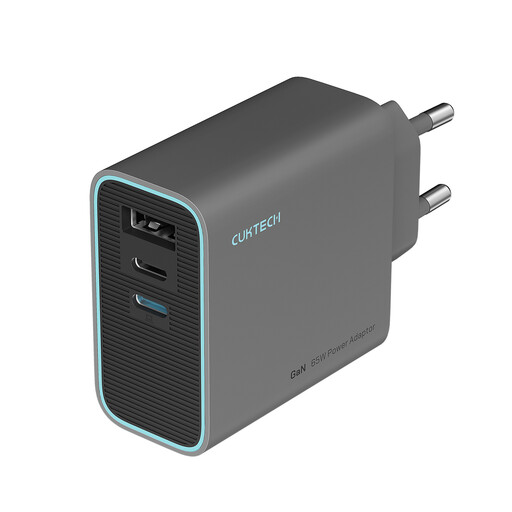 No image available
A wired option to compare if your speaker charges via USB-C and you want to connect more than one device.
The product name lists a maximum output of 65 W and three ports. Check that your speaker’s charging input and power requirements are suitable for this charger.
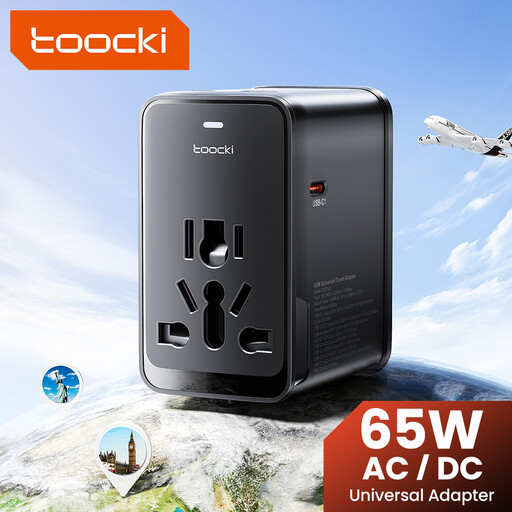 No image available
Worth comparing if you want to connect several devices using USB-C and USB-A cables.
The product name lists a maximum output of 65 W and plug options for the EU, UK, US and Australia, among others. Check which plug option you’ve selected and how the power is distributed for your setup.
Also check that your speaker’s charging input and power requirements match the connection you’ve chosen.
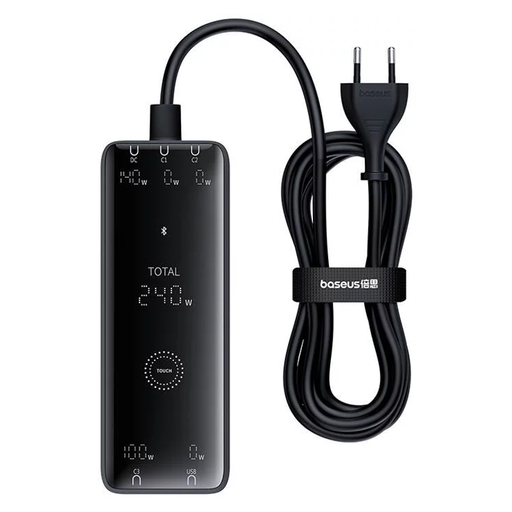 No image available
Worth comparing if you want to connect several other devices as well as your speaker.
The product information lists a maximum output of 240 W, three USB-C ports, one USB-A port, one DC output and a digital display. It also says that up to four devices can be charged at once.
Only use the DC output if your speaker’s manual explicitly confirms that it supports this connection and the required power supply.
No. Don’t assume a speaker can charge wirelessly just because a charging station has a wireless charging pad for phones. Check the supported charging method in your speaker model’s manual.
The fire service advises against charging devices under a pillow or duvet, and recommends placing chargers in the open so heat can escape. Choose a clear, stable surface and follow your speaker’s instructions.
You can’t tell from the total wattage alone. First, check your speaker’s power requirements. With a multi-port charger, the power available at each port can change when you connect other devices.
No, those rules don’t automatically make an existing model USB-C-compatible. The European Commission states that, since 28 December 2024, the rules have applied to portable speakers that fall within their scope.
For a mains-powered electrical charging station sold in the Netherlands as an electrical product, the Netherlands Food and Consumer Product Safety Authority states that CE marking is compulsory. CE marking alone doesn’t prove that the specific item has been independently tested.