
Listeners with a regular spot near a wall
You place the radio close to a wall and want to enjoy listening from your usual spot. The Consumentenbond explains that positioning and direction can affect how music sounds.


First, choose a radio that can receive the programme you want where you plan to use it. Then consider how the speaker is positioned in relation to your listening spot and how the radio sounds there. Digital Radio NL recommends extending the aerial and running a scan where you intend to use the radio; the Consumentenbond points out that positioning and direction can affect the sound. DAB+ or FM may be all you need if you can get a good signal, while internet radio is another option when you have a working internet connection. If you want to listen without a mains socket, check which rechargeable battery or standard batteries are compatible with the exact model.
You place the radio close to a wall and want to enjoy listening from your usual spot. The Consumentenbond explains that positioning and direction can affect how music sounds.
You check whether you can receive your preferred station via DAB+ or FM where you plan to put the radio. Digital Radio NL notes that indoor reception also depends on buildings and structures; internet radio can be an additional option.
You want to move the radio between rooms or take it outside, so you check what power supply the model uses and whether a rechargeable battery or standard batteries are included. JBL, Pure and Denver list different power options for their models.
The Consumentenbond highlights positioning and speaker direction as factors that can affect sound. Digital Radio NL notes that indoor DAB+ reception also depends on buildings and structures. Power requirements vary by model.
| What to consider | What should you check? | Who is this important for? |
|---|---|---|
| Sound near a wall | Check the speaker direction, the space available by the wall and how the radio sounds on the surface where you plan to put it. | I’m putting the radio on a fixed shelf close to the wall and want to be able to point the speaker towards my listening spot. Around 34% of consumers would prioritise placing a radio by a wall and sound quality. |
| Receiving your preferred station | Check how the station broadcasts and test DAB+ or FM with the aerial extended where you plan to use the radio. Try another spot if necessary. | If I mainly want to listen to my preferred music station, I’ll first check that I can receive it there. Around 33% of consumers would prioritise receiving their preferred station. |
| Listening without a mains socket | Check the power supply for the exact model and find out which rechargeable battery or standard batteries are included or available separately. | I want to move the radio around without having to keep looking for a mains socket, so I’ll check what I need to use it without mains power. Around 20% of consumers would prioritise power options for moving a radio around. |
| Changing stations | Compare how easy the screen is to read and how you save and select presets. | If I often switch between stations, I want to be able to select my favourites quickly. Around 13% of consumers would consider easy station controls the most important feature. |
The stated power output doesn’t tell you how the radio will sound on your shelf. Speaker direction and positioning can also make a difference.
Consider the speaker direction, the space available and how it sounds where you plan to listen.
According to Digital Radio NL, indoor reception also depends on buildings and structures.
Extend the aerial and run a scan where you plan to use the radio. If you can’t receive your preferred station clearly, move the radio and scan again.
Power options vary by model. Pure says that the ChargePAK for battery use with the Evoke Play is sold separately.
Check the power supply and what’s included with the exact model before you choose.
You may need to buy a ChargePAK separately to use the Pure Evoke Play without a mains socket.
Portable DAB+/FM radios for use in and around the home, including the TAR5600/00, with Bluetooth and a built-in replaceable battery.
The Tuner 3 combines DAB/DAB+/FM with Bluetooth for use at home or on the go.
The Evoke Play combines DAB+/FM with internet radio and Bluetooth.
The DAB-36 is a portable tabletop radio with DAB+, FM, Bluetooth and AUX.
This selection includes portable FM radios, including models with emergency radio features. The product details don’t tell you how they sound in a spot close to a wall.
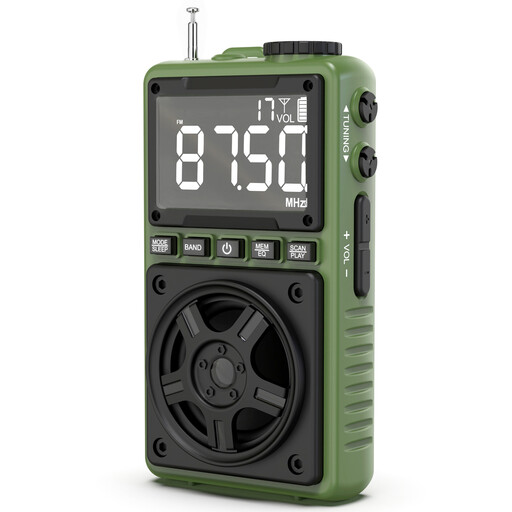 No image available
A good option if you’re looking for an FM radio and want to use Bluetooth too.
FM radio; rechargeable battery; USB-C charging; TF card playback; LED lighting.
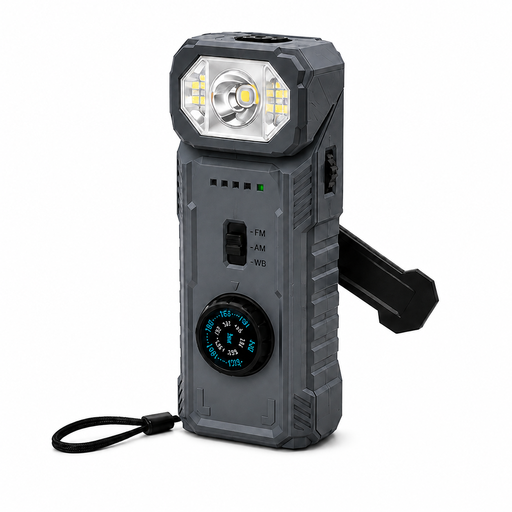 No image available
A good option if you’re looking for FM reception and the emergency features listed in the product name.
AM/FM/SW; 2000 mAh battery; hand crank; USB power; power bank function; SOS alarm.
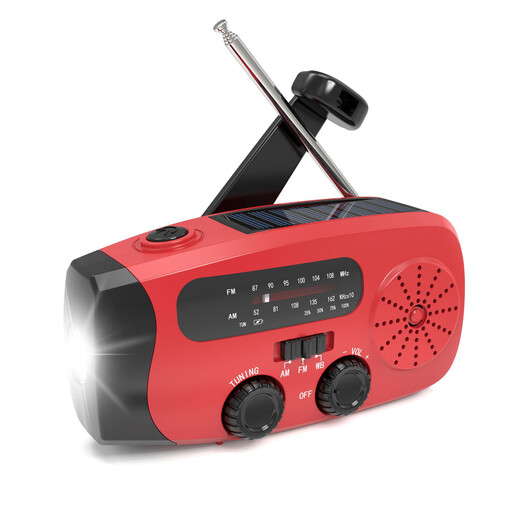 No image available
A good option if you’re looking for FM reception and the listed charging options.
AM/FM/WB; 2000 mAh battery; solar and hand-crank charging; IPX-3; LED lamp.
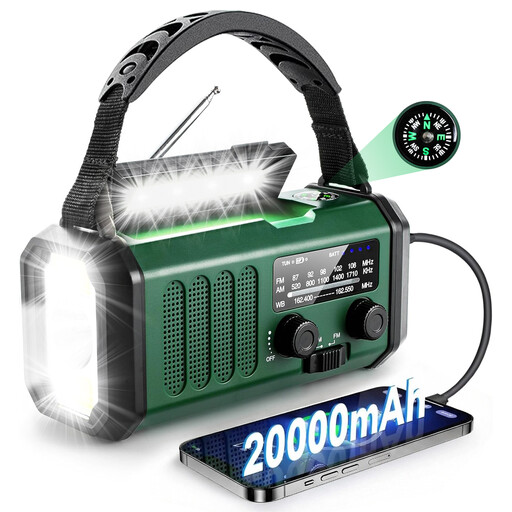 No image available
A good option if you’re looking for FM reception and the listed solar and hand-crank charging options.
AM/FM; 20000mAh battery; automatic frequency tuning; NOAA reception; 14 W LED lamp.
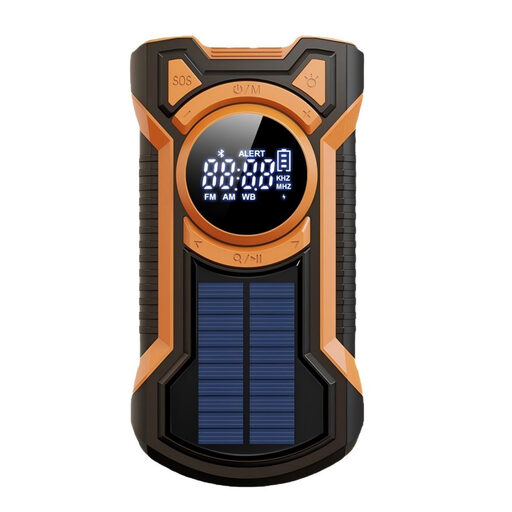 No image available
A good option if you’re looking for FM reception and want to use Bluetooth too.
AM/FM/SW; Bluetooth; 5000 mAh power bank; hand crank; solar and USB-C charging; LED lamp.
Extend the aerial, put the radio where you plan to use it and run an automatic scan. If reception is poor, try another spot and scan again. Digital Radio NL notes that indoor reception also depends on buildings and structures.
No. According to Digital Radio NL, you don’t need a subscription or registration to receive DAB+ over the air. A separate internet radio function does require an internet connection.
It depends on the model. JBL lists a rechargeable battery for the Tuner 3; the ChargePAK for battery use with the Pure Evoke Play is sold separately. Before buying, check the power supply and what’s included with the exact model.
When you buy online from a business, you usually have a statutory 14-day cooling-off period after delivery, subject to applicable exceptions. You also have statutory rights against the seller if the product is faulty. ACM ConsuWijzer explains that a problem arising during normal use must be resolved free of charge, for example through repair, replacement or a refund. This isn’t the same as a fixed warranty period for every radio.