
Listener with tricky indoor reception
You want reliable reception for your news station in a fixed spot next to a wall, and the option to move the radio if you need to test reception.


Choose DAB+/FM if you want to try digital stations while keeping FM as a back-up; if your preferred news station is available on FM, an FM radio may be all you need. Test reception where you plan to listen, with the aerial upright, and check that voices are clear there: the stated speaker output or the direction of a bass port won’t tell you that. Lenco recommends pointing the aerial vertically for DAB+; Digital Radio NL advises rescanning if you have reception problems.
You want reliable reception for your news station in a fixed spot next to a wall, and the option to move the radio if you need to test reception.
You listen while getting on with other things and want voices to be clear. Check the sound where you’ll actually use the radio.
You take the radio between rooms or sometimes use it away from a mains socket. Check the power options and what’s included with the version you choose.
Start with your preferred station and reception. Then consider speech clarity and placement, controls and power.
| What to consider | What to look for | Who is this most important for? |
|---|---|---|
| Reception for your preferred news station | Check whether the radio receives DAB+, FM or both. Test the aerial upright and scan for stations where you plan to use it. | I want to be able to receive my regular news station next to the wall first, and move the radio if needed to test again. Reception is the top reason for buying a radio for around 33% of consumers. |
| Clear speech next to the wall | Check the dimensions and connections and, if possible, listen to speech audio in the intended spot. | When I listen over breakfast, I want to follow voices at a normal volume without having to position the radio awkwardly. Around 27% of consumers put clear speech and suitable placement first. |
| Quick access to the news | Compare direct preset buttons with stations you have to select from a menu, and check that the display is easy to read. | I want to switch on my regular station quickly in the morning without searching through menus. Ease of use is the top reason for buying a radio for around 20% of consumers. |
| Power and portability | Check the battery type, charging options and which adapter or cable is included with each version. | When I move the radio or don’t have a mains socket nearby, I want to know what power source it needs. Power and portability are the top reason for buying a radio for around 20% of consumers. |
A DAB+ signal may come through clearly in one spot but break up or disappear in another.
Test your preferred station with the aerial upright where you plan to listen. Rescan if necessary, and consider FM as a back-up if the model supports it.
The stated speaker output or the direction of a bass port alone won’t tell you whether speech will be clear next to a wall.
Check that the radio fits in the space available and, if possible, listen to speech audio where you plan to use it.
Power options and included accessories vary by version. If a model uses replaceable batteries, you may need to buy them separately.
Before you buy, check the exact version, battery type and what’s in the box.
The DAB-46W and DAB-18LW are examples of portable DAB/FM radios with different features and power options.
The range spans a portable FM radio with a CD player, compact DAB+/FM radios and a radio with internet radio.
The Tuner 3 combines DAB/DAB+/FM with Bluetooth and direct preset buttons.
The portable TAR5600/00 combines DAB+/FM with Bluetooth, a clock display and a kitchen timer.
The Play 11 is a compact DAB/DAB+/FM radio that runs on batteries or via a USB-C cable.
Below are portable FM devices, including emergency radios and an MP3 player with a built-in speaker. Check whether your preferred news station comes through where you plan to place the radio, and whether speech is clear there.
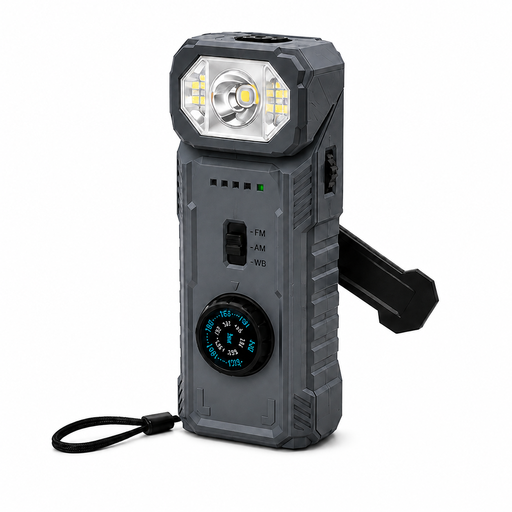 No image available
FM reception and a hand crank may suit anyone who wants to listen to the news and use the radio without a mains socket.
The product name lists AM/FM/SW, a 2000 mAh battery, a hand crank and USB power. Check reception and speech clarity where you plan to listen.
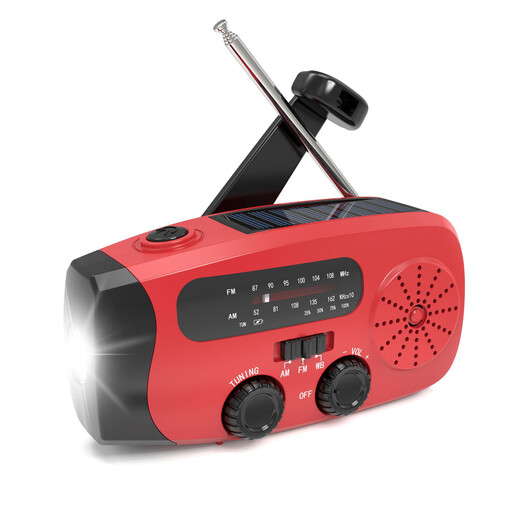 No image available
This portable FM model may suit anyone who wants to use a radio without a mains socket. Check whether your preferred station comes through where you plan to listen.
The product name lists AM/FM/WB reception, a 2000 mAh battery, a hand crank, solar charging and IPX-3.
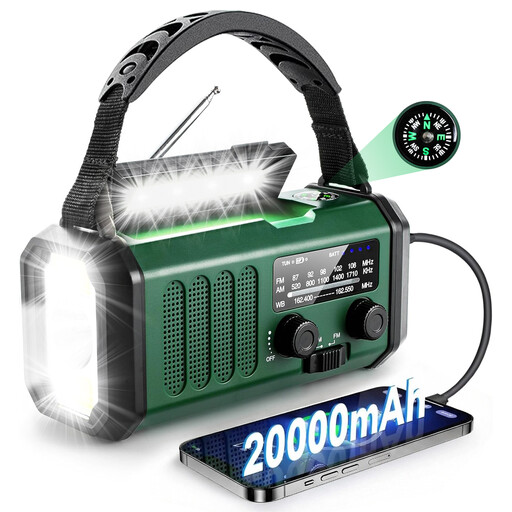 No image available
FM reception and the various listed charging options may be useful if you want to move the radio around or avoid relying on a mains socket.
The product name lists AM/FM reception and a 20,000 mAh battery. The description also mentions solar charging and a hand crank. Test reception where you usually listen.
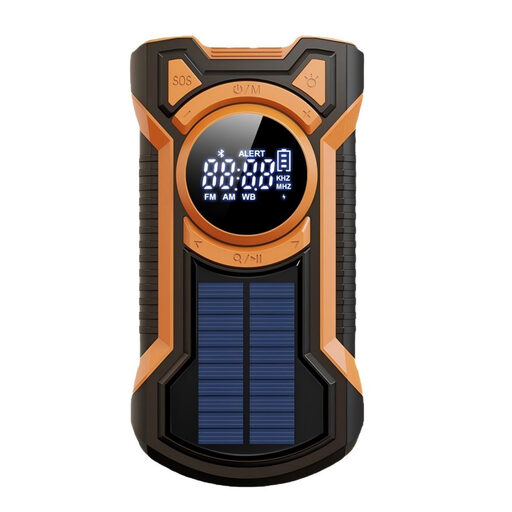 No image available
This model may suit anyone who wants to listen to FM news and use Bluetooth too. The product name doesn’t tell you how clear speech will sound next to a wall.
The product name lists AM/FM/SW, Bluetooth, a 5000 mAh power bank, a hand crank, solar charging and USB-C.
 No image available
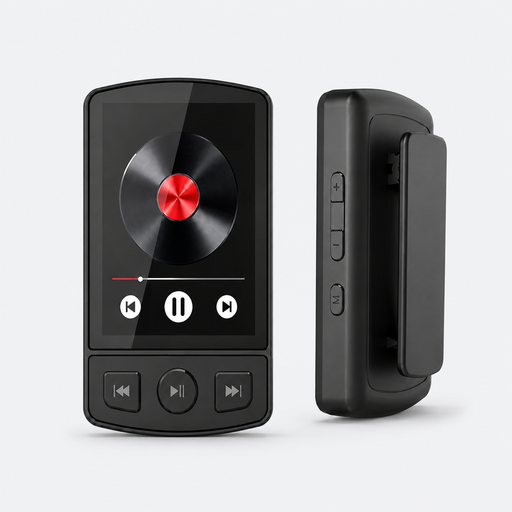
This player may be worth considering if you’re looking for a portable device with FM radio and a built-in speaker. Check whether the controls suit your morning routine.
The product name lists Bluetooth 5.2, 64 GB storage, a clip, a built-in speaker and FM radio. Reception and speech clarity depend on where you listen.
First, point the aerial upright and run a full scan. Then try the radio in another spot, away from potential sources of interference. Lenco recommends pointing the aerial vertically; Digital Radio NL advises rescanning if you have reception problems. Also check whether your preferred station is available on FM; that doesn’t guarantee good FM reception in the same spot.
When you buy online from a business, you’ll generally have a 14-day cooling-off period, according to the Dutch government. If a product is faulty, your right to a product that works as it should still matters. Check the terms and conditions of the specific seller and any manufacturer’s warranty.
Electrical and radio equipment sold in the Netherlands must meet applicable European product requirements and carry a CE marking. The Dutch Authority for Digital Infrastructure advises checking the marking on the device; seeing a product on a league table doesn’t verify the specific item you’re buying.
According to Lenco, the plug must be removed from the radio for battery use, not just unplugged from the socket. This is an instruction for this specific model and doesn’t automatically apply to other portable radios.