If you want to receive the Netherlands Coastguard weather report directly, choose a receiver that supports the relevant maritime VHF channels; DAB+ and FM alone aren’t enough. An internet radio or Bluetooth radio may be suitable if the report you want is already available as a stream, recording or audio on your phone. Test direct reception where you plan to listen in your hobby room, as supported channels or frequencies don’t guarantee an indoor signal.
Which radio is right for you?
Listening directly to the Coastguard
If you want to follow the Netherlands’ spoken weather report on the announced maritime channels, you’ll need a receiver that supports those channels. The Netherlands Coastguard lists VHF channels 23 and 83; Icom Europe notes that the IC-R6’s frequency range varies by version.
Playing an audio source you’ve found
If you’ve already found a specific stream or recording, you could consider an internet radio or a radio that plays audio from your phone via Bluetooth. Check that the report you want is available from your chosen source.
Listening at a fixed workbench
If you want to follow spoken broadcasts from a fixed spot, it’s worth testing reception there and checking whether speech is clear at your usual listening volume. Which? highlights indoor reception and sound quality as factors to consider when choosing a radio.
What should you look for when choosing?
Direct VHF reception
Choose this if: you want to follow the Coastguard broadcast directly on the maritime transmission channels.
Bear in mind: the receiver must support the required channels and pick up a signal where you plan to listen.
Internet radio
Choose this if: you’ve found a specific stream or podcast of the report you want that you can access.
Bear in mind: listening over the internet requires a working network connection and the audio source to be available.
DAB+/FM radio with Bluetooth
Choose this if: the report is already playing on your phone and you want to use the radio as a speaker.
Bear in mind: Bluetooth plays audio from your phone, but doesn’t receive maritime VHF channels directly.
| Consideration |
What should you check? |
Who is this important for? |
| Direct reception |
Check the channels supported by the exact version and test reception where you plan to listen. |
If you want to hear the Coastguard broadcast directly, support for the right maritime channels is essential. Around 40% of consumers prioritise direct reception. |
| Audio availability |
Find the specific report first, then check whether the radio can play it on its own or receive Bluetooth audio from your phone. |
If you have a stream or recording in mind, you’ll want to know whether that source is actually accessible using your chosen playback method. Around 30% of consumers prioritise playing an audio source they’ve found. |
| Clarity in your usual listening spot |
Try the radio in your hobby room and assess spoken audio at your usual listening volume. |
If you mainly listen at your workbench, you’ll want good reception and clear speech there. Around 20% of consumers prioritise clarity in their regular listening spot. |
| Power and portability |
Check the power options for the exact model and what’s included with that version. |
If you also want to use the radio somewhere without a mains socket nearby, check whether it runs on batteries. Around 10% of consumers prioritise portability and power over the other considerations. |
Common mistakes
-
Confusing DAB+ or FM with maritime VHF
The Netherlands Coastguard lists maritime channels for direct broadcasts. A radio with DAB+ and FM only won’t receive those broadcasts just because it’s a regular radio.
Decide in advance whether you want to listen directly or play an audio source that’s available separately. Then check how the exact model receives it.
If your aim is direct reception, you may need a separate receiver if your current radio only offers DAB+ or FM.
-
Assuming internet radio carries every maritime broadcast
Internet connectivity doesn’t guarantee that a specific Coastguard broadcast is available as a stream or recording. Wi-Fi or Bluetooth support also says nothing, on its own, about whether that audio is available.
Find and try the specific audio source first. Then choose between playing it directly over the internet and streaming it from your phone via Bluetooth.
-
Treating a transmitting marine radio as a scanning receiver
A marine radio can also transmit. The steps for using one described by the Dutch Authority for Digital Infrastructure relate to marine radio use on board, and don’t automatically apply to a device that only receives.
If you only want to listen, compare receivers first. If you also want to use transmitting equipment, check separately which RDI steps apply to that use.
Brands to compare
Icom
The IC-R6 is a portable wideband receiver worth considering if direct maritime reception is your priority.
- Icom lists a wide tuning range, memory channels and power options including Ni-MH cells, alkaline batteries or an adapter.
- Icom says the frequency range varies by version; these details don’t guarantee reception in a particular hobby room.
Sangean
The WFR-28BT combines internet, DAB+, FM and Bluetooth features for anyone wanting to play a specific audio source using one of these options.
- For this model, Sangean lists Wi-Fi, a headphone socket, mains power and operation with four D batteries.
- The listed features don’t confirm that a particular Coastguard broadcast is available as an internet station; DAB+ and FM aren’t a substitute for direct maritime VHF reception.
Philips
The TAR5505/10 is a portable DAB+/FM radio with Bluetooth, worth comparing if the report is already playing from a phone.
- Philips lists front-panel controls and operation from a mains socket or batteries.
- The stated reception options are DAB+ and FM; Philips doesn’t specify direct reception of Coastguard channels for this model.
Roberts
The Revival iStream 3L combines internet, DAB+/FM and Bluetooth features for playing an audio source you’ve found in advance.
- Roberts lists internet radio and podcast features that require Wi-Fi; the brand says DAB+/FM and Bluetooth can also work independently.
- The product information doesn’t confirm that a specific Dutch maritime broadcast is included in the radio catalogue.
Joybuy product selection
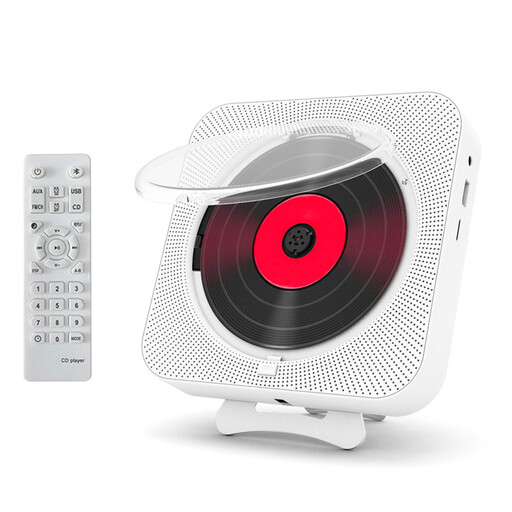
This Joybuy selection suits the Bluetooth option: playing a report that’s already available on a phone through a portable radio. This product isn’t a direct maritime VHF receiver.
 No image available
Portable CD player with wall mount
Suitable for playing a report that’s already on your phone via Bluetooth; this won’t receive Coastguard channels directly.
FM radio; Bluetooth 5.0; built-in speaker; headphone socket; remote control.
View at Joybuy
Frequently asked questions
When does the Netherlands Coastguard broadcast its weather report?
According to the Netherlands Coastguard, the report is broadcast on maritime VHF channels 23 and 83 at 08.05, 13.05, 19.05 and 23.05 Netherlands local time. The Coastguard also lists MF broadcasts on 1890 and 3673 kHz at 09.40 and 21.40 UTC. Broadcast times don’t guarantee indoor reception.
Is a regular DAB+/FM radio enough to hear the Coastguard directly?
No. DAB+ and FM alone aren’t enough for direct reception of the maritime channels listed. The Netherlands Coastguard lists VHF and MF as transmission methods, so check whether the exact device supports the one you want. Bluetooth can play audio that’s already running on a phone.
What can I do if reception at my workbench is poor?
Try the receiver and aerial in different spots around your hobby room, and assess the spoken broadcast at a normal listening volume. A stated frequency range or portable design doesn’t prove that you’ll get reception everywhere indoors.
What should I check about power and running costs?
Check which batteries or adapter the exact version uses and what’s included. Batteries may need replacing. Internet features also require a working network connection.
What steps apply to using a transmitting marine radio on board?
For marine radio use on board, the Dutch Authority for Digital Infrastructure describes steps relating to the relevant operator’s certificate, registration of transmitting equipment and programming before use. This information applies to that specific use and isn’t a general conclusion about devices that only receive.


