
Quiet listening in a shared space
If you want to listen to a music programme without disturbing others through the speaker, look for a headphone socket and suitable volume controls. Sony, Panasonic and Sangean list a socket on specific models.


Start with the station and where you plan to listen: choose a radio that can receive the programme there via FM or DAB+. If you don’t want to disturb others, a confirmed headphone socket is important. If you’ll be listening through the speaker, check for yourself whether the lowest volume setting sounds comfortable. Then choose a battery or mains power option to suit how often you move the radio.
If you want to listen to a music programme without disturbing others through the speaker, look for a headphone socket and suitable volume controls. Sony, Panasonic and Sangean list a socket on specific models.
If you already know which programme you want to hear, first check whether it’s broadcast via FM, DAB+ or both, and whether you can get reception where you plan to listen. In 2023, the Dutch Public Broadcasting organisation reported improvements at certain DAB+ locations, but this doesn’t guarantee reception at every address.
If you use your radio in different places, consider the battery type, size and controls. Sony specifies two AA batteries for the ICF-P27, while Denver lists four C batteries or mains power for the DAB-18.
First check whether you can receive your programme where you want to listen. Then decide whether you’ll use headphones or the speaker, and compare the power options and controls.
| What to consider | What to look for when buying | Who will find this important? |
|---|---|---|
| Quiet or private listening | Check whether the exact version has a headphone socket and whether your headphones are compatible. Sony lists mono output through the headphone socket for the ICF-P27. | If I’m listening in a shared space, I don’t want to disturb others, so I need to know whether private listening is possible; around 36% of consumers prioritise quiet or private listening. |
| Receiving the station you want | Check which band the programme is broadcast on and whether you can get reception where you plan to listen. A DAB+ label doesn’t guarantee reception at every address. | If you want to listen to a specific programme, you first need to be sure about the station and reception where you’ll be listening; around 29% of consumers prioritise this. |
| Portability and power | Compare the battery type, stated power options and weight of the exact version. Also check whether batteries are included. | If I move my radio around regularly, I want a size and power option that suit the way I use it; around 21% of consumers prioritise portability and power. |
| Easy retuning | Check whether the radio has station presets or a timer if you need these features. Don’t confuse Bluetooth streaming with radio reception. | If you often listen to the same programme, being able to find it again quickly and use the radio easily may matter more than extra features; around 14% of consumers prioritise ease of use. |
A stated power rating doesn’t tell you how usable the lowest volume settings are. Denver lists two 2 W speakers for the DAB-18, but this isn’t a measure of how it sounds at a low setting.
Try the lowest volume setting yourself if you plan to use the built-in speaker. If private listening is essential, check that the exact radio has a headphone socket.
The Dutch Public Broadcasting organisation’s 2023 report covered improvements at certain locations; it doesn’t guarantee reception for every station in every room.
Check which band your programme is broadcast on and assess reception where you plan to use the radio. Keep FM in mind if the programme is also available on that band.
Philips and Denver describe Bluetooth as a way to stream music to the radio. This doesn’t confirm that the device can send audio to Bluetooth headphones.
If you want to listen privately, check the explicit audio outputs on the exact version. Don’t assume this is possible just because Bluetooth is listed.
According to Sony, the ICF-P27 is a compact AM/FM radio with a speaker and headphone socket.
According to Panasonic, the RF-D10 combines DAB+/FM, a built-in speaker, direct station selection and a headphone socket.
Philips describes the TAR5505/10 as a portable kitchen radio with DAB+, FM and Bluetooth.
Denver describes the DAB-18 as a DAB+/FM tabletop radio with Bluetooth that can also run on batteries.
According to Sangean, the PR-D7 is a portable AM/FM radio with digital tuning, a headphone socket and a sleep timer.
This selection from Joybuy includes portable radios with FM reception, including versions with AM or SW reception and models with extra features such as a headphone socket, CD player or emergency functions. For each model, check whether your programme is broadcast on the listed band and whether the exact version carries the required CE marking.
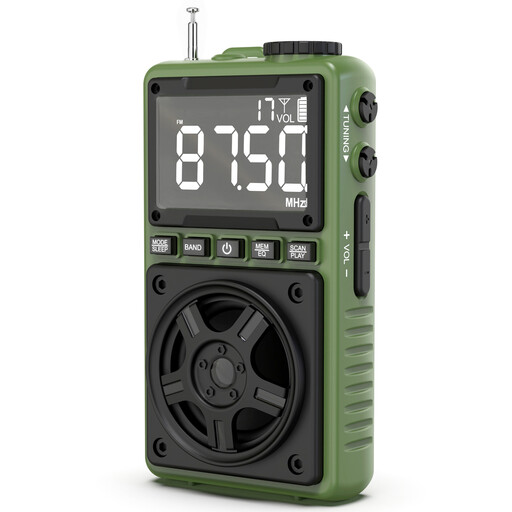 No image available
Could suit you if your programme is broadcast on FM, AM or SW and you want to listen privately; the product description lists a headphone socket.
The product name mentions a rechargeable battery, USB-C charging, LED lighting and TF card playback. Check that the socket and features suit the way you plan to use it.
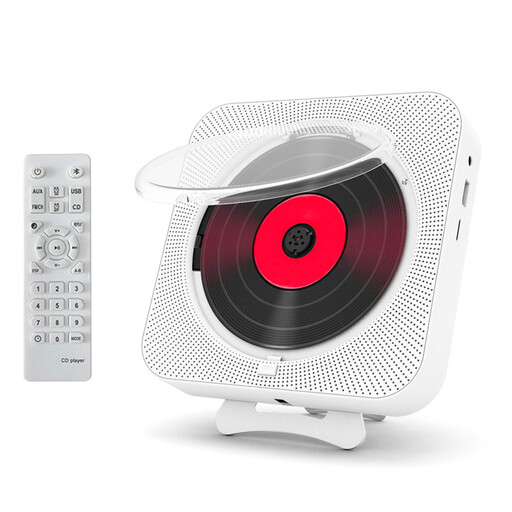 No image available
Could suit you if you want to combine FM radio with CD playback and private listening; the product name lists a headphone socket.
The product name also mentions a built-in speaker, remote control and wall-mounting option. Check that the mounting and controls suit the place where you plan to use the player.
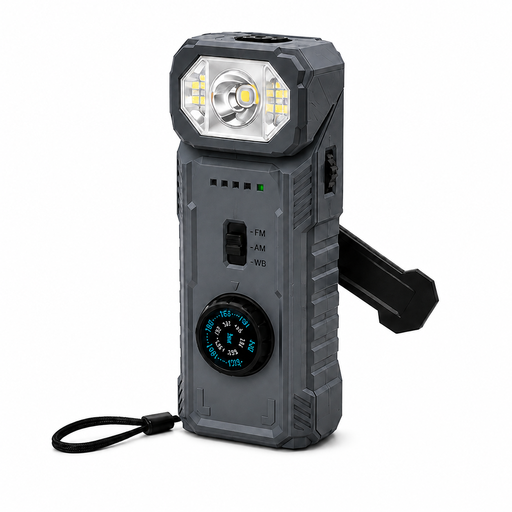 No image available
Could suit you if your programme is available on AM, FM or SW and you also want emergency features; the product name mentions a hand crank and USB power.
The product name also lists a power bank function, SOS alarm, magnetic base and LED lighting with a 180° beam. Check which features are relevant to the way you plan to use it.
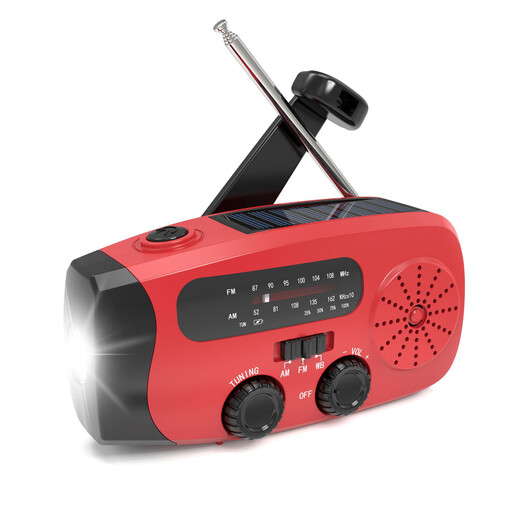 No image available
Could suit you if your programme is broadcast on AM or FM and you also want emergency features; the product name mentions battery power, a hand crank and solar charging.
The product name also lists an LED torch, power bank function and IPX-3 water resistance. Check that the listed reception bands and features meet your needs.
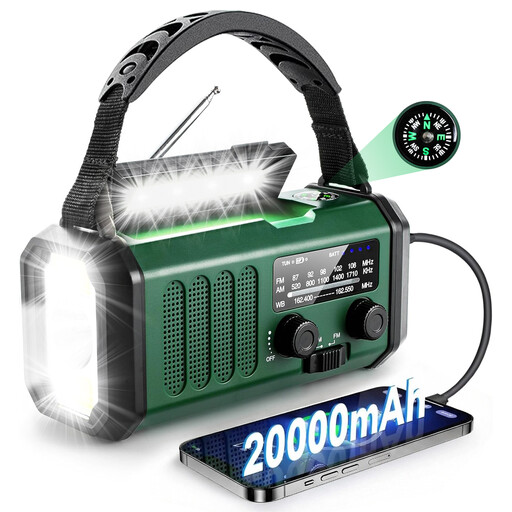 No image available
Could suit you if your programme is available on AM or FM and you want a radio with extra outdoor features; the product name mentions hand-crank and solar charging.
The product name also lists USB-C, a power bank function, NOAA reception, a compass, SOS alarm and LED lighting. Check which features the exact version offers and whether they suit the way you plan to use it.
Only if the programme is broadcast via DAB+ and you want to receive it that way. Check the broadcast band and reception where you plan to listen. In 2023, the Dutch Public Broadcasting organisation reported additional DAB+ transmission sites, but this doesn’t guarantee reception at a specific address.
Check whether the exact version has a headphone socket and whether it’s compatible with your headphones. Sony lists mono output through the headphone socket for the ICF-P27; don’t assume wireless headphone support just because a radio has Bluetooth.
Check the specified battery type and whether batteries are included. According to Sony, the Sony ICF-P27 uses two AA batteries; Denver specifies four C batteries for the DAB-18. Without battery life and battery prices measured on the same basis, you can’t compare running costs directly.
Follow the instructions for the exact radio to scan for stations. For example, Panasonic lists a full scan in the menu for the RF-D10; the controls may work differently on other models.
The RDI’s information about licences for local digital radio applies to broadcasters, not to listeners receiving a broadcast. Radios sold in the Netherlands must meet the applicable equipment requirements, including CE marking; check this for the exact version.