
Listeners who mainly tune in to one local station
If you mainly want to listen to one particular station, first check which band it broadcasts on. The broadcast band matters more than simply how many stations a radio can receive.


First, check whether your local station is available on FM, DAB+ or as an internet stream, then test reception where you plan to put the radio. Next, choose a model with a built-in speaker and a power supply that suits how you’ll use it. DAB+ does not guarantee reception indoors, and advice about positioning a rear-facing bass port only applies if your chosen model has one.
If you mainly want to listen to one particular station, first check which band it broadcasts on. The broadcast band matters more than simply how many stations a radio can receive.
If you want to put your radio on a shelf or table by the wall, consider both reception in that spot and the direction and position of the speaker.
If you want to use your radio in different places, look for a built-in speaker, a power option that doesn’t need a mains socket, and reception in each spot where you plan to listen.
A good fit if: your local station broadcasts on FM and you want a straightforward radio with a built-in speaker.
Bear in mind: an FM model without DAB+ can’t receive stations that are only available on DAB+; test FM reception where you plan to use it.
A good fit if: your chosen local station is actually available on DAB+, or you want to be able to search for digital stations as well as FM ones.
Bear in mind: local DAB+ and indoor reception depend on the station, your location and the surrounding buildings. Digital Radio NL explains that buildings and other structures can affect indoor reception.
A good fit if: your chosen station also offers a suitable stream and you have an internet connection at home.
Bear in mind: listening online requires a working internet connection. Pure says the battery for portable use with the Evoke Play is optional.
Find out which band your chosen station broadcasts on and test the radio where you want to listen. The Dutch Authority for Digital Infrastructure describes local DAB+ broadcasts by geographical area; this alone doesn’t tell you whether a station can be received indoors where you plan to listen.
| What to consider | What to check before buying | Who should pay extra attention? |
|---|---|---|
| Receiving your chosen local station | Check whether the station is available on FM, DAB+ or as an internet stream, and whether the model supports that option. | I mainly want to listen to my local station, so I’ll first check which band it broadcasts on. Around 36% of consumers prioritise receiving that particular station. |
| Reception in the spot by the wall | Test the radio where you plan to put it. If reception is poor, move the radio or aerial and scan again. | I want to use the radio on a particular shelf or table and be able to listen there. Around 29% of consumers prioritise reception in that fixed spot. |
| Listening without a mains socket | Check the power options and whether batteries or a required rechargeable battery are included with the version you’ve chosen. | I want to move the radio between rooms without always needing a mains socket. Around 21% of consumers prioritise cordless use. |
| Speaker sound by the wall | Check whether the radio has a built-in speaker, where any openings are and what the manual says about positioning. | I mainly want to listen through the built-in speaker with the radio by the wall. Around 14% of consumers prioritise speaker positioning and sound in that spot. |
Local DAB+ stations are organised by area, and indoor reception is also affected by surrounding buildings. So a DAB+ label alone doesn’t tell you whether your chosen station is available where you plan to listen.
Check which services the station offers and test the radio where you want to listen.
With a speaker that has a rear-facing bass port, the wall can affect the bass sound. This doesn’t apply to every radio model.
Check the manual for the exact model and keep any openings clear as instructed.
Power options vary by model. For example, Pure says the battery for portable use with the Evoke Play is optional.
Check what power supply your chosen version needs and whether batteries or a rechargeable battery are included in the box.
The TAR2509/10 and TAR5505/10 are examples of two different portable radio options.
The PDR-040BAMBOOBK is a compact portable DAB+/FM radio with Bluetooth.
According to Sangean, the DPR-76BT combines DAB+, FM and Bluetooth.
Pure says the Evoke Play offers FM, DAB+, internet radio and streaming.
According to Roberts, the Play 11 is a DAB+/FM radio with a choice of battery power or USB-C.
The Joybuy products below focus on FM radio, with portable and emergency radio options. Check that your chosen local station broadcasts on FM and test the radio where you plan to use it.
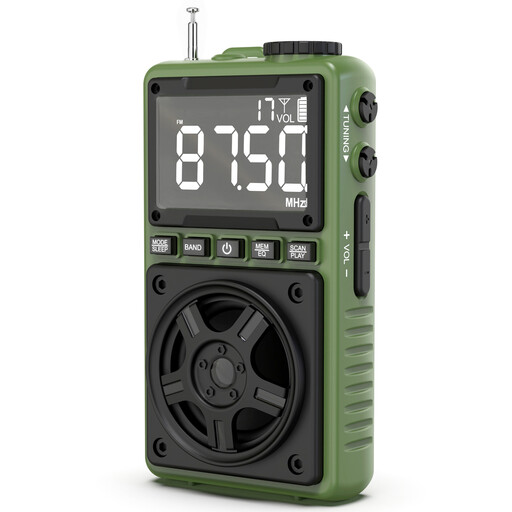 No image available
FM reception and a rechargeable battery are listed, making it suitable for listening to an FM station and using the radio without a mains socket.
Bluetooth, USB-C charging and TF card playback are also listed.
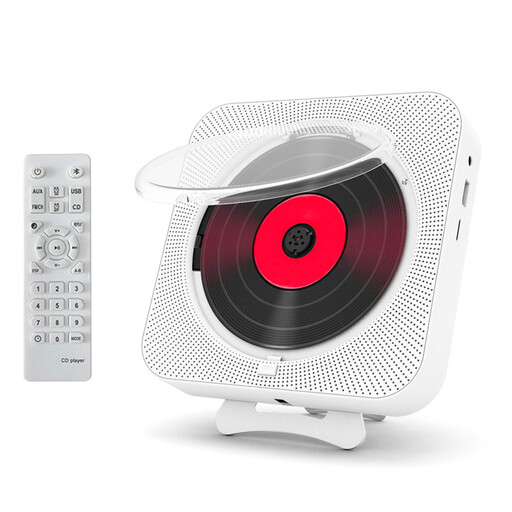 No image available
The title lists FM radio and a built-in speaker, so you can listen without a separate speaker.
Also listed: wall mount, remote control and headphone socket.
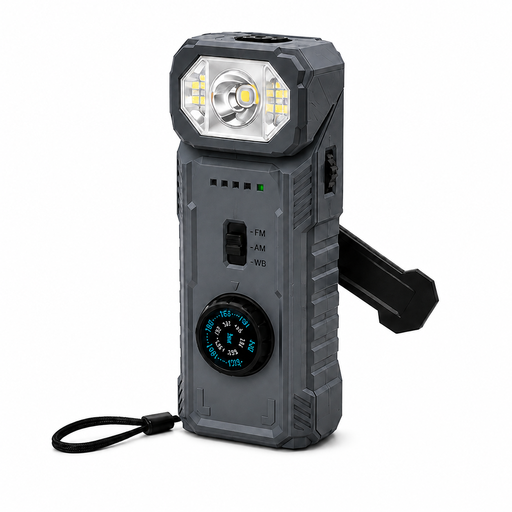 No image available
FM reception and a battery are listed; the title also mentions a hand crank as a power option.
Also listed: USB power, power bank function, SOS alarm and LED light.
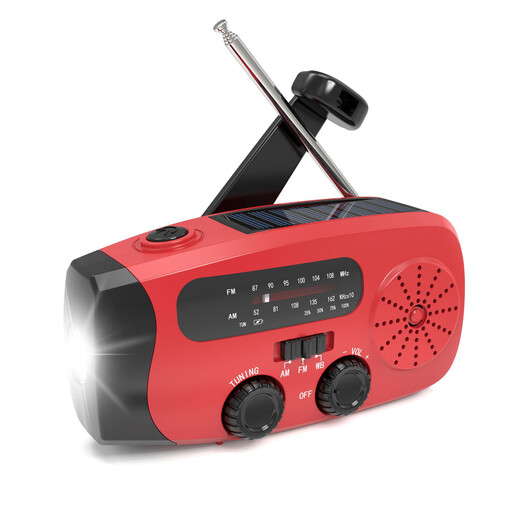 No image available
The title lists FM reception and battery power, as well as a hand crank and solar charging.
Also listed: LED light and IPX-3 water resistance.
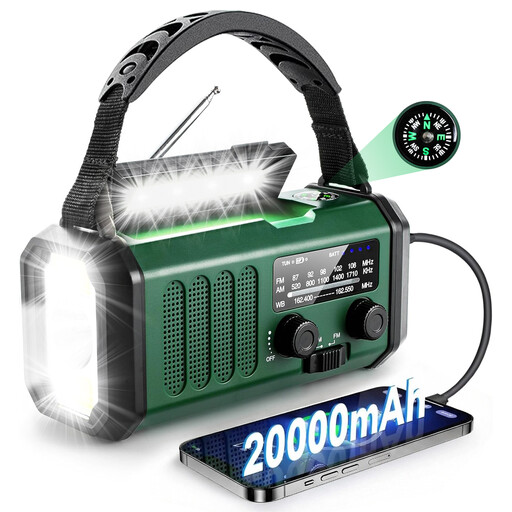 No image available
The title lists FM reception and a hand crank, with solar charging as an additional power option.
Also listed: NOAA reception, LED light, SOS alarm and compass.
No. Also check whether the station broadcasts on DAB+ and test reception where you plan to put the radio. Local DAB+ broadcasts are organised by area, and indoor reception is also affected by surrounding buildings. If necessary, move the radio and scan again.
Move the radio slightly, adjust the aerial if possible, then scan for stations again. Roberts Radio recommends this as a troubleshooting step, but it doesn’t guarantee reception everywhere.
That depends on the design. If it has a rear-facing bass port, the wall can affect the bass sound. Check the manual for the exact model rather than assuming the same clearance applies to every radio.
First check whether the required batteries or rechargeable battery are included with the version you’ve chosen. Many online consumer purchases come with a cooling-off period; ACM ConsuWijzer says this ends 14 days after delivery. Your statutory guarantee is separate from the manufacturer’s warranty, and the retailer is your point of contact if a product is faulty.
According to the Dutch Authority for Digital Infrastructure, local public and commercial broadcasters need a licence to transmit local digital radio. This requirement for broadcasters doesn’t mean that someone listening with a consumer radio needs a licence.