
Private listener
You want to follow the results as they come in without disturbing anyone else at home. A headphone socket matters more than a large speaker.


Start by checking whether you can receive your chosen station where you want to listen. NPO Radio 1 lists FM frequencies by location and DAB+ coverage across almost all of the Netherlands, but that doesn’t guarantee reception indoors at every listening spot. For private listening, you’ll need a headphone socket or explicit Bluetooth TX support. For listening quietly through the speaker, the controls and how clear the sound is in your chosen spot matter more than the stated speaker power alone. A radio with both FM and DAB+ gives you two reception options to try, while an FM-only model may be enough if the station comes through clearly.
You want to follow the results as they come in without disturbing anyone else at home. A headphone socket matters more than a large speaker.
You want to listen without headphones and be able to adjust the station and volume quickly. Check reception and how clear the sound is where you plan to put the radio.
You move the radio between rooms or take it with you. Size, power options and how easily you can find the station again are all important considerations.
First, check whether you can receive your chosen station where you’ll be listening. Then compare the listening options, power supply and controls to find what suits the way you’ll use it.
| What to consider | What to look for | Who is this important for? |
|---|---|---|
| Private listening at low volume | Check for a headphone socket or explicit Bluetooth TX support. Bluetooth alone doesn’t necessarily mean the radio can transmit audio to headphones. | If I listen late or don’t want to disturb others, I want to be able to follow the broadcast privately. Around 36% of consumers put private listening first. |
| Reception of your chosen station | Check the FM frequency for your location, or run a DAB+ scan and test reception where you’ll be listening. NPO Radio 1 lists FM frequencies by location and DAB+ coverage across almost all of the Netherlands. | I want to be able to find the election coverage where I’ll be listening; around 29% of consumers put station reception first. |
| Portability and power | Compare the power options for the specific version, such as a rechargeable battery, replaceable batteries or additional power options. | If I take the radio between places or want to use it away from a mains socket, the power supply is a major consideration. Around 21% of consumers prioritise this. |
| Easy-to-use controls | Check the volume control, preset buttons and display on the exact version. If possible, try setting the volume to a level that feels comfortable and quiet. | I want to choose a station and adjust the volume quickly while a broadcast is on, without having to navigate lots of controls. This is the top priority for around 14% of consumers. |
Bluetooth may be designed to send audio from a phone to the radio. That’s different from transmitting radio audio wirelessly to headphones.
Check the specifications for the exact version for Bluetooth TX, or choose a model with a headphone socket.
A general description of DAB+ coverage doesn’t tell you whether the signal will reach the spot where you’ll be listening.
Test your chosen station where you plan to use the radio, and consider FM as an alternative if the model supports both.
The NPO pages mentioned referred to the 2025 Dutch general election and the municipal elections on 18 March 2026. Those dates have passed and don’t tell you what will be broadcast during the next election.
Check the latest schedules and your chosen station once the date of a specific election has been announced.
The XDR-P1DBP is a pocket-sized DAB+/FM radio designed for private listening.
The DPR-39 and DPR-35BT are DAB+/FM models with different listening and power options.
The RF-D15 is a portable DAB+/FM radio, with its controls and presets among the key features to consider.
According to Pure, the Elan Move combines DAB+/FM reception with a speaker and a headphone socket.
The TAR1609/00 is an FM/AM model for anyone who doesn’t need DAB+ and wants a choice of power options.
This selection includes portable radios with FM reception, including models with additional power features. Check reception, controls and how clear the sound is at low volume separately for your chosen listening spot.
 No image available
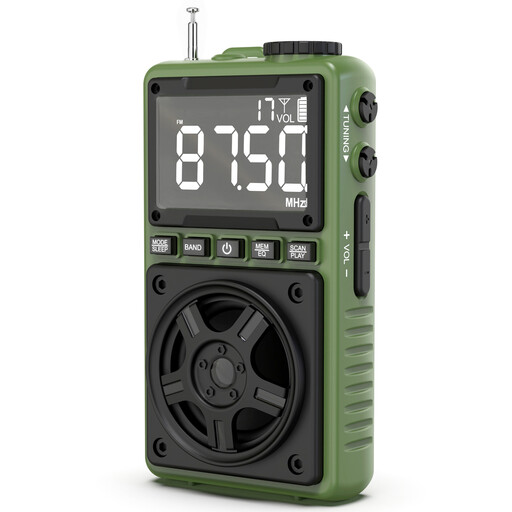
If you want to listen privately, check whether the version you order has a headphone socket.
The product title lists a speaker, LED lighting, a rechargeable battery and USB-C charging.
 No image available
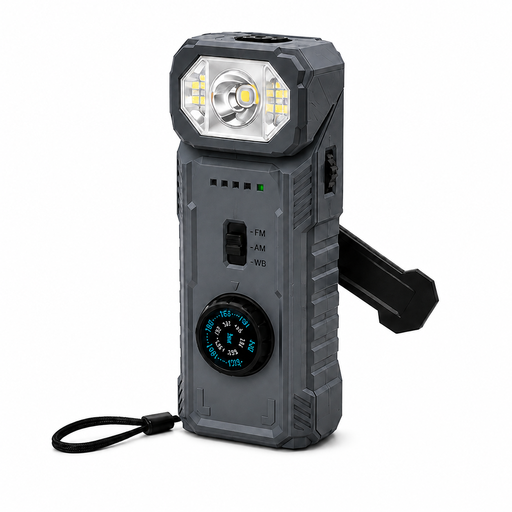
This type is worth considering if you want extra power features as well as radio reception. Check separately that the controls suit your listening spot.
The product title lists AM/FM/SW, a 2000 mAh battery, a hand crank, USB power, a power bank function and an LED light.
 No image available
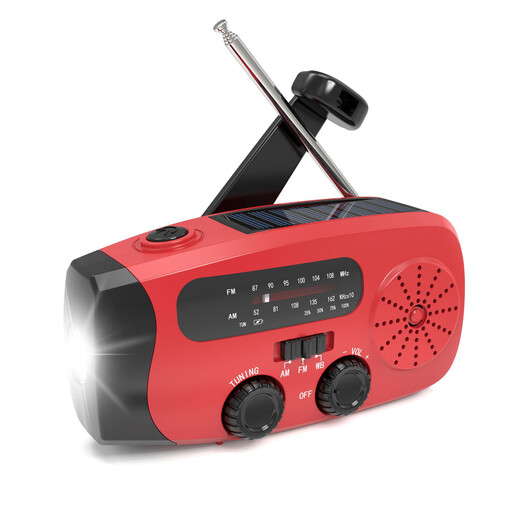
If alternative power options matter to you, compare which ones you’ll actually use and check that the controls work for everyday listening.
The product title lists a 2000 mAh battery, AM/FM/WB reception, solar charging, USB-C, a hand crank, IPX-3 water resistance and an LED torch.
 No image available
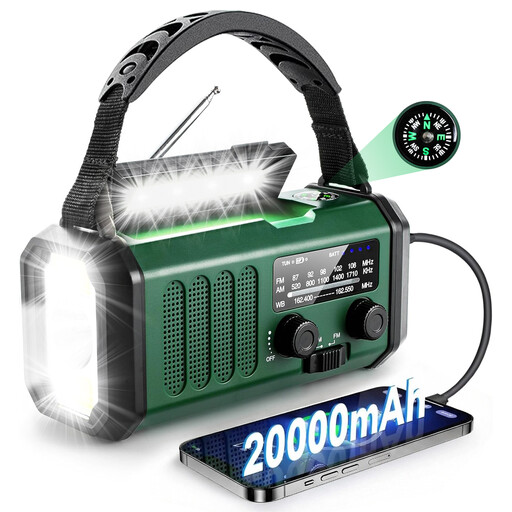
Consider this type if the additional features listed suit the way you’ll use it. They don’t replace checking station reception in your chosen listening spot.
The product title lists a 20000mAh battery, solar power, a hand crank, USB-C, AM/FM, automatic frequency scanning, NOAA reception, a 14W LED light and a compass.
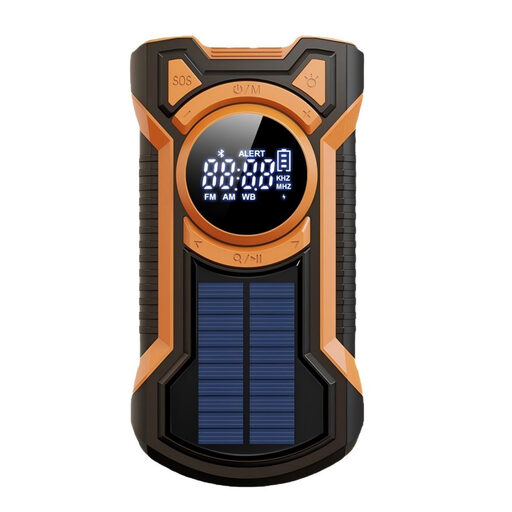 No image available
If you want a choice of power options, check whether this version’s features and controls suit the way you usually listen.
The product title lists AM/FM/SW, Bluetooth, a 5000 mAh power bank, a hand crank, solar power, USB-C, SOS and an LED light.
Look up the current FM frequency for your location, or run a full scan on a DAB+ radio. Try the station where you want to listen, as reception can vary from one place to another.
No. Check explicitly whether the version supports Bluetooth TX or a similar transmitting function. Sangean lists Bluetooth TX for the DPR-35BT; Pure describes Bluetooth on the Elan Move as input from a phone.
Not on its own. Judge how clear speech sounds at the volume and in the place where you want to listen. A stated speaker power doesn’t prove that you’ll be able to understand spoken news there.
You may be entitled to a statutory guarantee if a radio breaks down during normal use sooner than you could reasonably expect. According to ACM ConsuWijzer, the seller must provide a free solution in that case; there isn’t one fixed statutory guarantee period for every radio.
Radio equipment placed on the market is covered by the European Radio Equipment Directive; the relevant CE marking forms part of the product’s conformity assessment. This product regulation doesn’t guarantee that a radio will receive a good signal where you listen, or that speech will be clear at low volume.