What should you look for when choosing one?
Start by checking how much space you have next to your laptop. Then check the video connection and power requirements. Only after that should you compare extra screen space or features such as touch control.
| What to consider |
What should you check? |
Who should consider this most? |
| Space and portability |
Compare the screen and stand dimensions with your workspace. Also check the weight of the model you plan to take with you. |
If I take the monitor with me often, I want it to fit next to my laptop without making my setup awkward. Around 31% of consumers who see this as their top priority say the same. |
| Video connection |
Check that your laptop supports video output through the USB-C port in question; consider HDMI as a separate connection option. |
I want to know before I set off that my laptop can actually send a picture to the second screen. Around 25% of consumers who prioritise a working video connection say the same. |
| Power during your journey |
Check how the screen is powered with your setup, whether you need a charger and the conditions under which any stated battery life applies. |
If charging on the way is uncertain, I want to know in advance whether the screen can keep working as needed. Around 25% of consumers say power is their top priority. |
| Space for slides and text |
Compare the resolution and aspect ratio of the exact models. Decide whether one extra window is enough or whether you need separate work areas. |
I want to view slides and notes at the same time without carrying more than I need. Around 19% of consumers who are mainly looking for this extra screen space say the same. |
Portable monitors at Joybuy
This selection includes portable screens and laptop extenders for anyone looking for extra workspace alongside a laptop while travelling.
 No image available
Blackview DCM6 PRO 14-inch dual-screen laptop extender
An option for adding extra screen space to your laptop setup; check that your laptop falls within the stated size range.
The product title lists Full HD 1920 × 1080 and compatibility with 13–17.3-inch laptops.
View at Joybuy
 No image available
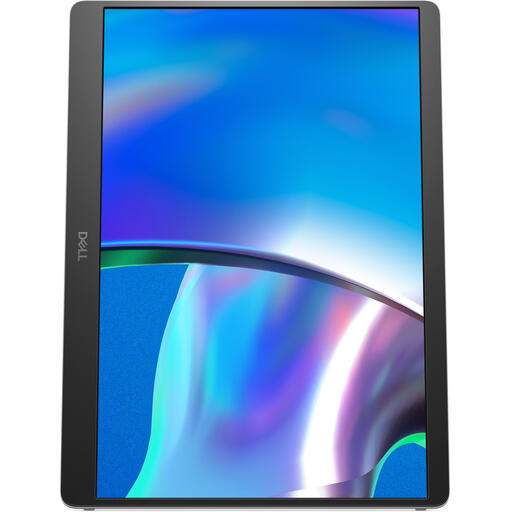
Dell Pro Plus P1425, 14 inches
A compact single screen to use alongside a laptop; check in advance that your laptop supports the video connection you want to use.
Dell specifies 1920 × 1200, a 16:10 aspect ratio and a tilting stand for the P1425. According to Dell, this model doesn’t have a touchscreen.
View at Joybuy
 No image available
Arzopa A1S, 14 inches
A portable second screen with a built-in stand; check which connection is compatible with your laptop’s video output.
The product title lists Full HD 1080p, USB-C and mini-HDMI.
View at Joybuy
 No image available
TECLAST V16H, 16 inches
The larger screen may need more room to set up than a compact model, so measure your usual workspace.
The product title lists Full HD, IPS, 16:10, 144 Hz, USB-C and mini-HDMI.
View at Joybuy
 No image available
TECLAST V16Q, 16 inches
A portable screen with the stated 16:10 aspect ratio; check that its size suits your seat and the way you work.
The product title lists 2.5K, IPS, 144 Hz, 16:10, USB-C and mini-HDMI.
View at Joybuy
Frequently asked questions
Will every USB-C monitor work with my laptop’s USB-C port?
No. The shape of the port alone doesn’t tell you whether it supports video. ASUS says that, for USB-C video on the MB16AHP, the connected device must support DisplayPort Alternate Mode. Check the specifications for your laptop port and the cable you need.
How should I prepare to use a monitor on the train?
Test your setup at home with your laptop, stand and cable, and charge your devices in advance. NS recommends charging beforehand because it may not be possible to do so on the way. Don’t assume that every train will have Wi-Fi either.
How should I carry and protect a portable monitor?
Follow the instructions for the exact model and check whether a case is included if you need one. HP lists a carrying case for the E14 G4; this doesn’t tell you what protection is included with other models.
What if a monitor I bought online doesn’t fit or breaks too quickly?
Online consumer purchases generally come with a cooling-off period of up to 14 days after delivery, subject to legal exceptions. If a product doesn’t perform as you could reasonably expect under normal use, you’re also entitled to a legal guarantee; the retailer is your point of contact. ACM ConsuWijzer makes clear that a manufacturer’s warranty doesn’t replace your statutory rights.
When is CE marking relevant for a monitor?
According to the European Commission, CE marking is required for products covered by specific harmonised EU rules. Check which rules apply to the exact product; a visible mark alone isn’t an independent performance test of the monitor.


