
Student with limited table space
Takes lecture notes on train journeys and wants a screen that’s easy to handle in a small workspace. Size and weight matter more than extra features.


First, choose a screen that can receive a video signal from your laptop and has a power setup that suits your usual journey. A compact 14-inch screen takes up less space; a larger one may give you more room for documents, but it also takes up more room. Don’t assume there’ll be a power socket on the train: NS says availability varies by train type and route.
Takes lecture notes on train journeys and wants a screen that’s easy to handle in a small workspace. Size and weight matter more than extra features.
Wants to keep lecture notes open on a second screen while writing on a laptop. So it’s worth checking the video connection and how much room the screen gives you to read.
Wants to read on the go without assuming there’ll be a usable power socket. It’s therefore important to check how both the laptop and monitor are powered.
Check the connection and power requirements first, then compare the screen size with the space available to you on your train journey.
| What to consider | What to look for | Who is this important for? |
|---|---|---|
| Laptop compatibility | Check which video output your laptop supports and whether it’s compatible with the monitor. Also check which cable and power connection you’ll need. | If I want to connect the screen to my laptop, I need to know that the port can transmit video too. Around 29% of consumers put compatibility at the top of their list. |
| Portability and space | Compare the dimensions and weight, including anything you’ll need to position the screen. Bear in mind the space available at your seat. | If my workspace on the train is small, I want a screen that’s easy to carry and set up. Around 29% of consumers give portability and space top priority. |
| Reading space | Compare the screen diagonal, aspect ratio and resolution. Think about how much of a document you want to be able to see at once. | When I’m reading lecture notes, I want enough room to view the document without automatically opting for the largest screen. Around 24% of consumers put reading space first. |
| Power on the go | Check the power requirements of the exact model and your laptop. If you’re relying on a power socket, check what’s available on your specific train journey. | If there’s no power socket available on the way, I want to know how the laptop and monitor will be powered together. Around 18% of consumers consider power their main buying concern. |
A USB-C connector alone doesn’t confirm that your laptop and monitor can transmit video through that connection. The video capabilities required vary by model.
Check the port specifications for both devices and find out which cable you need. Philips requires DP Alt Mode for video over USB-C on the 16B1P3302D/00; ASUS lists HDMI with separate USB-C power as an alternative for the MB16FC.
Extra reading space is only useful if you can use the screen at your seat without taking up space another passenger needs. Under NS’s house rules, hand luggage must not occupy a seat that another passenger could use.
Compare the dimensions and stand with the space where you want to position the screen, and keep the seat free for other passengers.
ACM ConsuWijzer explains that your statutory rights depend on what you can reasonably expect from the product with normal use, and may last longer than the manufacturer’s warranty.
Consider what any additional warranty cover offers beyond your statutory rights. If a product doesn’t meet what you can reasonably expect from it, contact the seller.
An additional warranty may cost extra without offering any extra cover for your situation.
The ThinkVision M14d is a compact 14-inch option; the M14t Gen 2 is designed for those looking for touchscreen functionality.
The ZenScreen MB16FC is a 16-inch model with several connection options, for those looking for a larger view of their documents.
The Business Monitor 16B1P3302D/00 is a 15.6-inch Full HD model with two USB-C ports.
The VG1655 is a 15.6-inch model with a folding stand and two USB-C connections.
This selection includes 14- and 16-inch portable monitors for viewing lecture notes on a second screen. When using one on the train, pay particular attention to the connection and the space available.
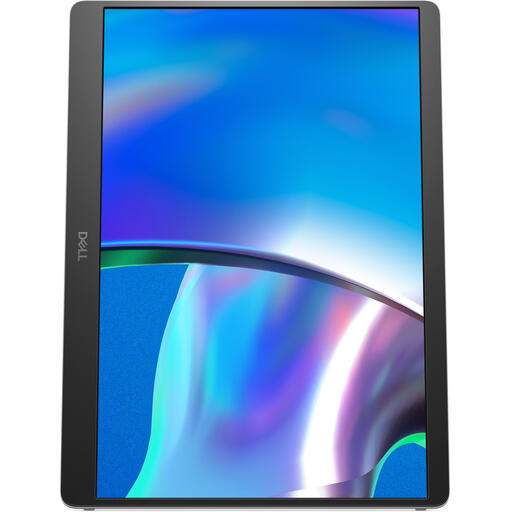 No image available
A compact 14-inch option if you want to keep the space needed at your train seat to a minimum. Check in advance that the connection matches your laptop’s video output.
14 inches; 1920 × 1200 pixels; WUXGA LCD; silver.
 No image available
A larger screen for anyone who wants more physical reading space and has enough room to set it up at their train seat.
16 inches; FHD IPS; 16:10; USB-C and Mini HDMI; built-in stand.
 No image available
This 16-inch option is suited to anyone looking for a larger view of their documents and able to make room for the screen.
16 inches; 2.5K IPS; 16:10; 144 Hz; two USB-C ports and Mini HDMI; stand.
 No image available
A 16-inch screen for anyone who values space for documents. Compare the room it needs with the space available at your usual seat.
2560 × 1600 pixels; 16:10; QLED; 144 Hz; Type-C and Mini HDMI.
 No image available
A larger 16-inch screen for viewing lecture notes with more space on screen, if you have enough room to set it up.
2560 × 1600 pixels; 16:10; IPS; USB-C and HDMI; built-in stand.
No. Check whether your laptop’s port supports the video mode required by the exact screen. Philips lists DP Alt Mode as a requirement for USB-C video on the 16B1P3302D/00. For the ASUS MB16FC, ASUS lists HDMI with USB-C power as an alternative if your laptop doesn’t support suitable USB-C video.
Not without checking what’s available on your specific journey. NS says that the availability of power sockets and USB charging points varies by train type and route.
Under NS’s house rules, hand luggage must not occupy a seat that another passenger could use. So only position the screen where it won’t take up someone else’s seat.
For a standard online consumer purchase, you’ll generally have a statutory cancellation period of up to 14 days after delivery, subject to applicable exceptions and conditions. If the product doesn’t work as you can reasonably expect it to with normal use, your statutory rights are separate from any manufacturer’s warranty and you can contact the seller. ACM ConsuWijzer explains these consumer rights.
The Dutch Government states that electronic devices placed on the EU market must carry a CE marking. Check the marking and product information for the specific item; this general rule doesn’t confirm that a particular model or individual listing has already been checked.