
Travellers checking account details
You want to check amounts and account numbers, while also considering what fellow passengers might be able to see from their seats.


A portable monitor can be useful for comparing household bills on the train, provided your laptop can output video through the connection you choose and you have a stable place to set up the screen. A compact model takes up less room; a larger screen can give you more space to see everything, but also needs more room and may make financial details more visible to fellow passengers. Check which EU product rules apply to the specific model: according to the European Union’s Your Europe website, CE marking is mandatory when the relevant harmonised rules require it.
You want to check amounts and account numbers, while also considering what fellow passengers might be able to see from their seats.
You’re looking for a second screen you can take with you and set up in a confined space, without assuming there’ll be a power socket at every seat.
You want to view a bill alongside your household budget and decide whether a compact screen will do or whether you need more room to read.
Best for: regular travel, limited space to set up and viewing documents side by side. Lenovo and Dell describe 14-inch models with different resolutions.
Trade-off: you get less physical screen space than with a larger model. Also check that your laptop supports the video connection.
Best for: regularly viewing longer bills and a spreadsheet at the same time, if you have enough room to set up the screen. ASUS describes the ZenScreen MB16AHV as a 15.6-inch Full HD model.
Trade-off: bear in mind that it needs more room and that others may be able to see your financial details. A larger screen isn’t a privacy feature.
Best for: situations where you don’t have a stable place to set up a screen or can’t keep account details out of sight of others.
Trade-off: you’ll have less to view at the same time, but won’t need to set up or power an extra screen while travelling.
| What to consider | What should you check? | Who is this important for? |
|---|---|---|
| Privacy when viewing account details | Check from which seats the screen is readable and whether a privacy filter fits the exact screen size. 3M says its filters obscure the screen from certain viewing angles; they can’t guarantee that nobody will be able to see it from every position. | When I look at amounts or account numbers, I want to know who might be able to see them from neighbouring seats. Around 24% of consumers say privacy when viewing account details is their top priority. |
| Portability and setup | Compare the dimensions, including the stand or case, with the space available where you’ll be sitting during your journey. Lenovo lists an adjustable stand for the ThinkVision M14. | When space is limited, I want to be able to take the screen with me and set it up without it taking over my workspace. Around 19% of consumers say compactness for travelling and setup is their top priority. |
| Connecting to your laptop | Check whether the USB-C port can output video and which cable and power supply the setup requires. ASUS Support highlights the port’s video function; Lenovo lists DP 1.2 Alt mode and PD 2.0 support as requirements for the ThinkVision M14. | When I use my own laptop, I want to know before setting off that the monitor will actually receive a video signal. Around 24% of consumers say knowing the connection will work is their top priority. |
| Room to read documents | Compare the diagonal size, aspect ratio and resolution, and check whether two windows remain readable at your chosen scaling setting. Dell lists 1920 × 1200 for the P1425; ASUS describes the MB16AHV as a 15.6-inch Full HD model. | When I want to see a bill alongside my household budget, having both in view matters more to me than choosing the smallest possible setup. Around 14% of consumers say room to read documents is their top priority. |
| Power during your journey | Check how the monitor is powered and test the setup using your laptop battery. NS lists power sockets in first class on ICM trains; this doesn’t mean there’s a socket at every seat or on every train. | When I can’t use a power socket while travelling, I want to know in advance how my laptop and screen will work together. Around 19% of consumers say having a usable power supply during the journey is their top priority. |
USB-C ports can have different functions. Without the right video support, the intended connection won’t work.
Before buying, compare the full specifications of your laptop and monitor, including the cable and power supply required.
You may need a different cable or connection solution.
A bigger screen can be useful for documents, but it takes up more room and may make financial information more visible to others.
First, work out where you can set up the screen and from which direction fellow passengers might be able to see it.
A suitable privacy filter may be an extra accessory; check whether one is available for the exact screen size.
Power socket availability varies by train and seat. A screen powered through your laptop will use power from that setup.
Test the screen and laptop together without a power socket before relying on them during your journey.
The Joybuy product listing for the ARZOPA A1S gives two different weights: 600 g and 500 g.
Don’t let weight determine your choice while the details for the exact model remain inconsistent.
Lenovo describes the ThinkVision M14 and M14d as two 14-inch options for working with documents on the move.
The Dell Pro 14 Plus P1425 is a documented 14-inch model for anyone weighing up portability and extra vertical screen space for documents.
The ZenScreen range includes various portable screens; the MB16AHV is one example, with a 15.6-inch display.
HP describes the E14 G4 as a portable 14-inch USB-C monitor with a case and stand.
The A1S and Z1RC illustrate the different sizes available: ARZOPA describes the A1S as a 14-inch Full HD model and the Z1RC as a 16-inch 16:10 model.
This selection includes portable laptop monitors from 14 to 16 inches. Compare the space they need and their connections with your laptop and the place where you plan to use the screen while travelling.
 No image available
A compact option for viewing documents alongside another window on your laptop.
Joybuy lists a 14-inch Full HD display with 1920 × 1080 pixels. The product information states that it’s compatible with 13–17.3-inch laptops; check your laptop’s connection.
 No image available
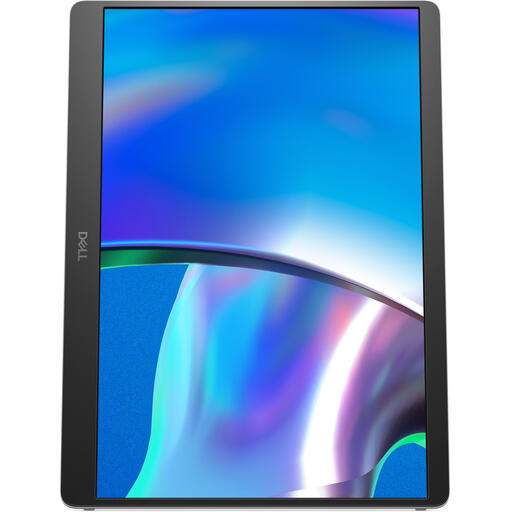
A 14-inch option for anyone looking for a compact second screen with extra vertical pixels.
Joybuy’s product information lists 1920 × 1200 pixels, an adjustable stand and USB-C for video and power. Check that your laptop port supports the required video function.
 No image available
A compact option for laptop use if you’re looking for a built-in stand and several connection options.
Joybuy’s product information lists a 14-inch Full HD screen, USB-C, HDMI and a built-in stand. Check the connection and product specifications for the exact model.
 No image available
A larger screen for anyone who wants more physical workspace and has enough room to set it up.
Joybuy lists a 16-inch screen with a 16:10 aspect ratio, a built-in stand, USB-C and mini-HDMI. Check which cables you need and how it connects to your laptop.
 No image available
A larger option for viewing a bill alongside your household budget if you have room for a 16-inch screen.
Joybuy lists a 2.5K screen with a 16:10 aspect ratio, USB-C, HDMI and a built-in stand. Check which input and cable will work with your laptop.
No. Check whether your laptop port can output video and whether the monitor and cable support that connection. ASUS Support points out that some USB-C ports only supply power; Lenovo also lists DP 1.2 Alt mode and PD 2.0 support for the ThinkVision M14.
You can’t tell from the train type alone. For example, NS lists power sockets in first class on ICM trains. Check the details of your specific journey and test how long you can use your laptop and screen without an external power supply.
Choose your seat and screen position carefully, and check that a privacy filter fits your exact screen. 3M says its filters obscure the screen from certain viewing angles, but they don’t guarantee that nobody will be able to see it from another position.
For a standard online consumer purchase, you’ll generally have a 14-day cooling-off period from delivery, with some exceptions. You’re also covered by the statutory guarantee if the product doesn’t meet what you could reasonably expect. ACM ConsuWijzer explains that, in the Netherlands, there isn’t a fixed two-year period that applies to all monitors.
Check which harmonised EU product rules apply to the specific monitor. According to the European Union’s Your Europe website, CE marking is mandatory when those rules require it; a product listing on its own doesn’t confirm that the relevant requirements have been met.