
Student who wants notes alongside flashcards
Wants to keep course materials or notes on a second screen while writing. Focus on a reliable video connection and enough space to read comfortably.


Start by checking that your laptop can actually send a video signal to the monitor through the port you plan to use; a USB-C connector alone is no guarantee. Then compare a compact 14-inch screen with a larger 15.6-inch model, and only opt for touch or a built-in battery if those features suit your setup. The features mentioned are manufacturer specifications, not measurements of study performance.
Wants to keep course materials or notes on a second screen while writing. Focus on a reliable video connection and enough space to read comfortably.
Regularly moves their setup and needs a screen size, case and stand that fit the space available.
Needs to decide whether power from the laptop will be enough, whether a socket is available or whether a monitor with a built-in battery is a better fit.
First, check the video connection and power supply. Then compare the screen space you need with the room the monitor will take up on your table and in your bag.
| What to consider | What to look for when buying | Who is this important for? |
|---|---|---|
| Video signal and connection | Check that your exact laptop port supports video, that it is compatible with the monitor and which cable you need. If using HDMI, check the power supply separately. | If I want to see source material alongside my flashcards, my laptop needs to send a video signal to the second screen. Around 36% of consumers put this compatibility first. |
| Screen space | Compare screen size, native resolution and aspect ratio; also consider what text size you find comfortable. | When I want to use documents and flashcards side by side, I check how much screen space will fit on my table. Around 29% of consumers make this the most important factor in their choice. |
| Table space and portability | Compare the dimensions, weight and stand; check whether a case is included with the exact model. | At a shared table, I want to be able to set up the screen and then pack it away without cluttering my workspace. Around 21% of consumers prioritise a compact setup. |
| Power available | Check how the monitor is powered and whether that power option is available from your laptop or at your workspace. | If I often study without access to a usable power socket, the monitor needs to stay powered throughout my session. Around 14% of consumers therefore prioritise a power supply that does not depend on a socket. |
USB-C can support a range of functions. The fact that a connector fits does not confirm that your laptop can send a video signal to the monitor.
Check the video capabilities of your exact laptop port, the monitor’s requirements and the cable. If using HDMI, also check how the screen is powered.
You may need a different compatible cable or connection solution, so check before buying.
An extra panel gives you more screen space, but it also takes up more room. ASUS lists two panels and a net weight of around 1.2 kg for the ZenScreen Duo MB14FCD.
Measure the space available, including room for the stand and laptop. Choose two extra panels only if you will actually use the extra screen space.
A manufacturer’s or retailer’s warranty is separate from your statutory rights. The Dutch government states that if there is a problem with a product, the retailer must provide a solution.
If you are considering paid extra cover, compare the rights or services it offers on top of your existing rights. If there is a fault, contact the retailer.
The ZenScreen models mentioned vary in size, connections, power supply and number of panels.
According to Lenovo, the ThinkVision M14t Gen 2 is a compact 14-inch touchscreen with a 16:10 aspect ratio.
The HP E14 G4 mentioned is a 14-inch Full HD monitor.
According to MSI, the PRO MP165 E6 mentioned is a 15.6-inch Full HD model.
According to Dell Netherlands, the Dell Pro 14 Plus P1425 is a 14-inch portable monitor.
This selection includes portable second screens for laptops: compact 14-inch models and larger 15.6-inch options, including touchscreen versions. Check that your laptop supports the video connection required for each model.
 No image available
A compact option for viewing source material alongside your flashcards.
1920 × 1200 pixels, 16:10, USB-C and mini-HDMI. Video and power over a single USB-C cable work only with supported devices. The product description lists a protective case.
 No image available
A larger option for viewing laptop content and flashcards side by side, if you have enough room on your table.
Full HD, touchscreen, USB-C and mini-HDMI. The product description lists a smart cover that doubles as an adjustable stand.
 No image available
Well suited to anyone who wants to view documents on a larger portable second screen.
Full HD (1920 × 1080), IPS panel and anti-glare display. The description lists a 360° stand and USB-C for compatible devices.
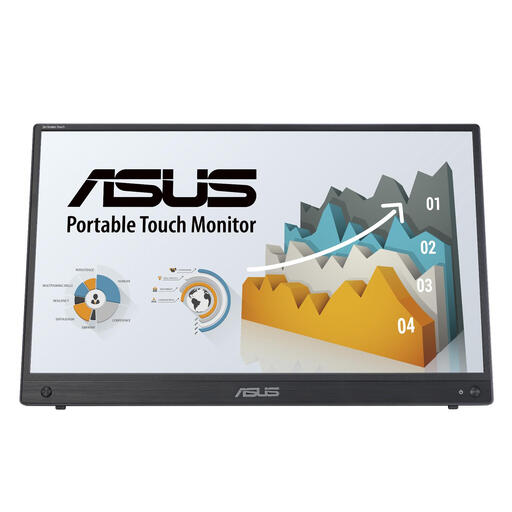 No image available
A touchscreen option for anyone who uses touch controls as part of their workflow.
IPS, Full HD, with HDMI and USB-C connections. The product description lists a stand for use on a flat surface.
 No image available
A portable second screen for anyone who wants to move a 15.6-inch panel between workspaces.
Full HD, IPS and a stated weight of 0.83 kg. According to the product description, video and power over USB-C depend on having a compatible device.
No. Check that your exact laptop port supports the video function the monitor requires, such as DisplayPort Alt Mode. Also check that the cable is suitable and how the monitor is powered.
Position the monitor securely, connect it using a suitable video connection and arrange the power supply it needs. Select an extended desktop on your computer if you want to show source material and flashcards on separate screens; the exact steps vary by computer.
You do not need a touchscreen to read text on a second screen; choose one only if touch controls suit the way you work. Consumer purchases in the Netherlands are also covered by statutory rights: the Dutch government states that the retailer must provide a solution if there is a problem with a product. Consider what paid extra cover offers on top of that.
CE rules may apply to electrical and electronic equipment; according to the European Union, whether they apply depends on the rules relevant to the product. The manufacturer must assess which requirements apply. CE marking is not a performance certificate issued by a central EU body.