Start with the video output on your source device. For a separate HDMI source, a monitor with a matching HDMI input is a practical choice. With a laptop, USB-C may be enough if it supports video over DP Alt Mode and provides sufficient power. Then decide whether you mainly want to keep an eye on the picture, chat or a dashboard, and check there’s room for the stand and cables. A higher refresh rate alone is no proof of lower livestream latency.
Who is a portable monitor suitable for?
Stream monitor with a separate video source
You want to view the picture directly from a source device. So check that the video output, cable, monitor input and power supply are compatible. ASUS lists a mini-HDMI input among the features of the ZenScreen MB16AHG.
Laptop user who needs chat or a dashboard
You want to see messages, controls or status information alongside the stream without cluttering a shared desk with unnecessary cables. Lenovo and Philips list USB-C connections; also check that your laptop can output video over that port using DP Alt Mode.
Flexible worker who often changes location
You regularly set up and pack away your equipment. Screen size, weight, stand and protection during transport all help determine how well a monitor suits your working style. For example, HP lists a soft sleeve for the E14 G4.
What should you look for when choosing one?
First check the connection and power supply. Then decide how much screen space you need and where the monitor will sit on the shared desk.
| What to consider |
What should you check? |
Who is this important for? |
| Connection and power supply |
Compare the video output on your source device with the input on the exact monitor model. For USB-C, check whether the source supports DP Alt Mode and whether the power supply is suitable. |
If I want to view the picture directly from a camera or another source device, the connection to my screen needs to be compatible. Around 33% of consumers prioritise connection and power. |
| A clear monitoring display |
Decide whether you’ll be viewing video, small chat text or a dashboard, and check the model’s screen size and resolution. |
If I want to keep track of details or multiple windows during a stream, the available screen space matters. Around 27% of consumers prioritise the monitoring display. |
| A stable position on the desk |
Measure the available space and check the stand, viewing angle and cable routing. Also check whether a separate stand or tripod is included if you need one. |
If I want to place a monitor alongside other equipment on a shared desk, the stand needs to fit in the available space. Around 20% of consumers prioritise the setup. |
| Portability and setting it up again |
Check the weight and screen size, as well as the sleeve and cables included with the exact version. |
If I often change workspaces, I want to be able to carry the screen easily and connect it again. Around 20% of consumers prioritise portability. |
Common purchasing mistakes
-
Assuming every USB-C port supports video output
A USB-C plug fitting the port doesn’t guarantee that the source device can output video to the monitor. Philips specifies DP Alt Mode as a requirement for USB-C video on the Philips 16B1P3302D/01.
Check the specifications for the exact source port and monitor before ordering.
Otherwise, you may need a different connection solution or monitor.
-
Confusing a high refresh rate with low livestream latency
The 144 Hz specified by ASUS describes the refresh rate of the ZenScreen MB16AHG, not the total latency across the source, processing and stream.
Don’t treat a high refresh rate as proof of lower stream latency; first check what your source device can actually output.
-
Choosing a screen for protected video without checking the software connection
According to DisplayLink, some protected video may not play on macOS when a DisplayLink display is connected. This doesn’t automatically apply to every portable USB-C monitor.
Check whether your setup uses DisplayLink and test the video service you need to use while working.
Relevant brands to consider
ASUS
The ZenScreen MB16AHG is worth considering if you’re looking for flexible positioning and a mini-HDMI input as well as USB-C.
- ASUS specifies a 15.6-inch Full HD screen, two USB-C ports with DP Alt Mode, mini-HDMI and an adjustable stand.
- A tripod isn’t included. The specified 144 Hz doesn’t show that a livestream will have less latency.
Lenovo
The ThinkVision M14t Gen 2 is designed for a compact laptop setup where touch functionality or extra workspace could come in handy.
- For version 63FDUAT6WL, Lenovo specifies a 14-inch screen with a resolution of 2240 × 1400 and two USB-C ports.
- Check the source connection before choosing this model for an HDMI device; the listed connections include USB-C.
Philips
The Business Monitor 16B1P3302D/01 is a second screen for a laptop that outputs compatible USB-C video.
- Philips lists two USB-C ports and a stand that tilts from 0 to 90 degrees.
- The source device must support DP Alt Mode for USB-C video. Check your source’s connections before choosing.
HP
The E14 G4 is a compact 14-inch option for a second display controlled by a laptop.
- For version 1B065AA#ABB, HP lists Full HD, an anti-glare screen, a specified brightness of 400 nits and a soft sleeve.
- Check that the USB-C video connection is compatible with your source before choosing this model for a livestream setup.
AOC
The 16T3EA is a 15.6-inch option for a USB-C setup, with an integrated stand.
- AOC specifies Full HD, USB-C with DP Alt Mode and a fold-out stand.
- Before buying, check the specifications for the exact regional version.
Portable monitors at Joybuy
These models are relevant to a livestream setup using a direct HDMI connection or a second screen via USB-C. Check which video connections are supported by each model and source device.
 No image available
TECLAST V16H 16-inch portable monitor
The mini-HDMI connection makes this model a relevant choice if you’re looking for a direct connection to a compatible video source.
16 inches, FHD IPS, 144 Hz, 16:10, two USB-C ports, mini-HDMI and built-in stand.
Joybuy
 No image available
MSI PRO MP165 E6 15.6-inch monitor
HDMI and USB-C are listed for this monitor. For USB-C, check whether your source outputs video over DP Alt Mode.
Full HD IPS, HDMI, USB-C with DP Alt Mode, specified weight 0.78 kg and a stand that tilts up to 90°.
Joybuy
 No image available
ARZOPA Z1RC 16-inch 2.5K monitor
The 16-inch screen and HDMI connection make this a relevant option if you want a larger picture and a direct connection to a compatible video source.
IPS, 2560 × 1600, 60 Hz, HDMI, two USB-C ports, specified weight 810 g and built-in stand.
Joybuy
 No image available
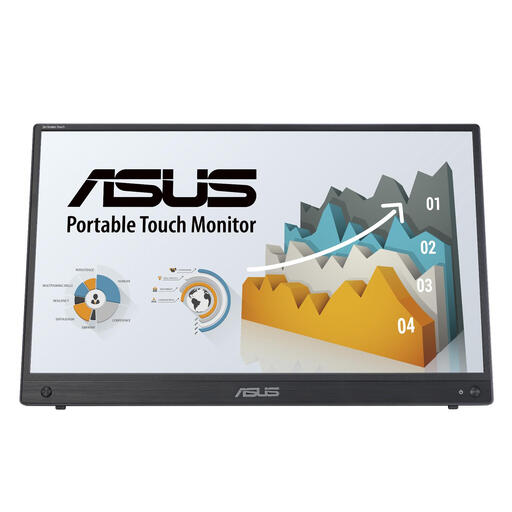
ASUS ZenScreen MB16AHT 15.6-inch touchscreen
This model is worth considering if you want a second touchscreen at a shared workspace. Check your source’s video output before connecting it.
15.6 inches, Full HD IPS, touchscreen, HDMI, USB-C and an included stand.
Joybuy
 No image available
ARZOPA A1S 14-inch portable monitor
The compact 14-inch size and mini-HDMI connection suit a small setup with a direct video source. The screen offers less physical viewing space than larger models.
Full HD IPS, mini-HDMI, two USB-C ports, specified weight 600 g and built-in stand.
Joybuy
Frequently asked questions
Can I connect any laptop directly using USB-C?
No. Check that the laptop’s USB-C port supports video output over DisplayPort Alt Mode and that the power supply is suitable for the monitor. Philips lists both as requirements for the 16B1P3302D/01.
What should I check if a protected stream appears black on a Mac?
First check whether your setup uses DisplayLink. According to DisplayLink, protected video may not play on macOS when a DisplayLink display is connected. This warning doesn’t automatically apply to every portable USB-C monitor.
How can I position a monitor safely on a shared desk?
Place the stand on a stable, flat surface and allow room for the cables. The placement instructions in the Joybuy product information for the ASUS ZenScreen MB16AHG recommend a stable, flat surface when using the stand.
What are my rights when buying online in the Netherlands?
According to the Dutch government, many online consumer purchases generally come with a 14-day cooling-off period; exceptions and the type of seller may affect this. Any additional seller’s guarantee is in addition to your statutory protection.
What does a CE mark tell me about a monitor?
A CE mark is only required when the applicable harmonised EU rules stipulate it for the product. According to Your Europe, the mark isn’t an independent performance test of the monitor.


