What should you look for when buying?
First, check that your laptop can output video through the connection you want to use and how much table space is available. Then compare the screen size and resolution with the floor plans you use.
| What to consider |
What should you check? |
Who is this most important for? |
| Details on the floor plan |
Compare the screen size and native resolution of the exact model. Also view your own floor plan using the scaling setting you want. |
If I want to read small labels and lines, I consider both the pixels and the display scaling. Around 36% of consumers put detail first. |
| Video connection |
Check the video capabilities of your laptop’s port, the monitor’s inputs and which cable you’ll need. |
I want to know in advance whether my laptop can drive the screen through the available port. Around 29% of consumers prioritise connection compatibility. |
| Sharing the view |
Measure the free space on the table and check the screen size, stand and location of the connections. |
If others need to follow the floor plan, I look for a setup that gives everyone a clear view without blocking the shared table. Around 21% of consumers prioritise shared visibility and table space. |
| Portability and power |
Compare the weight of the complete setup and check whether your laptop can power the monitor or if you’ll need an adapter. |
I want to carry the screen easily between study spaces and be able to connect it to a power source there. Around 14% of consumers prioritise portability and power. |
Portable monitors on Joybuy
This selection includes portable monitors for viewing fine details, sharing the screen and setting up a compact workspace on a table.
 Image unavailable
ARZOPA Z1RC 16″ 2.5K
Worth comparing if you want to view fine details and value a built-in stand.
16-inch IPS screen; 2560 × 1600 pixels; built-in stand; USB-C and HDMI.
Joybuy
 Image unavailable
Lenovo L16 16″ WUXGA
A larger portable monitor to consider if you’ll be sharing the screen with others around the table.
16-inch IPS screen; WUXGA; USB-C; 65W Power Delivery.
Check that the USB-C video connection and power supply are compatible with your laptop.
Joybuy
 Image unavailable
MSI PRO MP165 E6
A 15.6-inch option worth comparing if you’ll be viewing a floor plan with others and want a tilting stand.
15.6-inch Full HD screen; built-in speakers.
Check that your laptop’s USB-C port supports video and that the connections suit your setup.
Joybuy
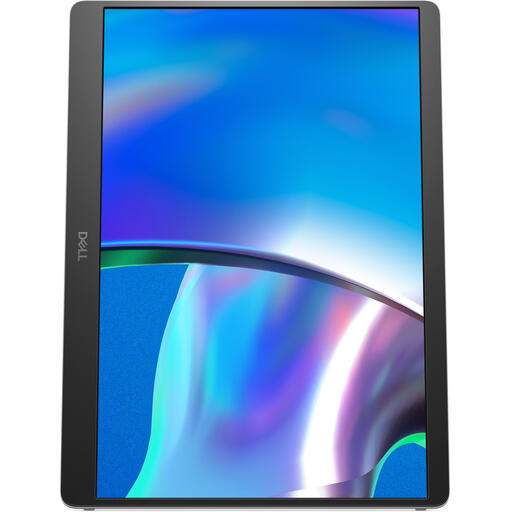 Image unavailable
Dell Pro Plus P1425
A more compact option to place beside your laptop when table space is limited.
14-inch IPS screen; 1920 × 1200 pixels; tilting. Dell lists these features for the P1425.
Check that the USB-C connection matches your computer’s video output.
Joybuy
 Image unavailable
ARZOPA A1S 14″ FHD
A more compact monitor to compare if you want to take it between study spaces.
14-inch FHD screen; 1080p; built-in stand.
Check in advance which connections and power supply your laptop and chosen monitor need.
Joybuy
Frequently asked questions
Does every USB-C port on a laptop send video to a portable monitor?
No. ASUS distinguishes between USB-C ports with DP Alt Mode for video and ports without video functionality. Check the specifications for both your laptop and the exact monitor model.
Will a higher resolution automatically make floor plan labels easier to read?
No, not automatically: resolution and the set size of text and apps are different things. Microsoft Support explains how to adjust screen resolution and the size of text and apps in Windows. Also test your own floor plan using the setting you want.
How can I use the extra screen alongside my notes?
If Windows recognises the screen, you can arrange the displays and adjust the scaling of text and apps for each one. Choose an extended display if you want to work with the floor plan and your notes in separate windows.
Can I return a monitor bought online in the Netherlands?
For a standard online consumer purchase, ACM ConsuWijzer says you generally have a statutory 14-day cooling-off period after delivery. Exceptions may apply. If the online shop clearly states in advance that you’ll pay the return costs, you may have to cover them.
Is a manufacturer’s warranty the same as a statutory guarantee?
No. ACM ConsuWijzer explains that statutory consumer rights apply alongside any manufacturer’s or seller’s warranty. If a product breaks sooner than you could reasonably expect with normal use, the seller is responsible for providing an appropriate solution at no cost. In the Netherlands, there isn’t one fixed statutory warranty period that applies to every monitor.


