
People reading long guides
You want to view text and diagrams without constantly switching between windows. Look at the screen aspect ratio, sharpness and anti-glare finish, and check whether the screen can be used in portrait orientation.


First, choose a monitor that can actually receive a video signal from your laptop, tablet or phone: a USB-C port alone doesn’t guarantee this. For long guides, a readable screen layout, an anti-glare display and a stable upright setup are important. A compact model takes up less table space, while a monitor with a built-in battery makes you less reliant on power from your device or a wall socket.
You want to view text and diagrams without constantly switching between windows. Look at the screen aspect ratio, sharpness and anti-glare finish, and check whether the screen can be used in portrait orientation.
You want to know in advance whether your laptop, tablet or phone can actually send a video signal to the monitor. Check the video specifications of both devices; HDMI may offer an alternative way to connect.
You take the monitor with you and can’t always count on a wall socket or plenty of table space. Its weight, stand and power options all affect how practical the setup will be.
First, check that your source device can send video to the monitor you’ve chosen. Then compare the reading space and setup with the table space available, and finally consider which power option suits your café visits.
| What to consider | What should you check? | Who is this important for? |
|---|---|---|
| How easy guides are to read | Compare the screen size, aspect ratio, resolution and anti-glare finish, and check whether the exact model supports portrait orientation. | If I’m reading long guides and diagrams, I want them to be comfortable to view; around 36% of consumers prioritise readability. |
| A working video connection | Check the video specifications for the port on your source device, the monitor’s input, and the cables and power supply required. | If I’m connecting my own device, I want to know in advance whether it can send a video signal; around 29% of consumers prioritise connection compatibility. |
| Carrying and setting it up | Check the weight of the exact version and make sure the case and stand suit your bag and café table. | If I’m taking the monitor with me often and using it at a small table, a compact setup matters more than the largest possible screen; around 21% of consumers prioritise this. |
| Power without a wall socket | Check how the monitor is powered and, for a model with a battery, the conditions under which its stated battery life applies. | If I don’t want to rely on my laptop’s power or a wall socket every time, I look for a power option that suits my needs; around 14% of consumers prioritise independent monitor power. |
A USB-C plug may fit, but that doesn’t automatically mean the device supports video output through that port. Philips states that the source device must support DP Alt Mode for USB-C video on the 16B1P3302D/00.
Look up the video specifications for the port on your own device and compare them with the connection requirements of the exact monitor.
The maximum battery life ASUS quotes for the ZenScreen Go MB16AHP is based on the stated usage conditions and won’t necessarily apply to every session.
Check the conditions attached to the battery life and think about how you’ll charge the monitor if you plan to work in the café for longer.
A foldable dual-screen monitor gives you two panels, but takes up more table space than a single-screen model. That extra setup may be unnecessary if you only want to read one guide.
Choose a dual-screen layout only if you genuinely want to keep other information visible alongside the guide and have room for it.
The ZenScreen range offers a variety of setups, from a single screen with USB-C and mini-HDMI to a model with a built-in battery and a fold-out dual screen.
The ThinkVision M14d is designed for a compact document setup, while the M14t Gen 2 also offers touch control.
The E14 G4 is a 14-inch portable display supplied with a stand and case.
According to Philips, the portable Business Monitor 16B1P3302D/00 has a 15.6-inch Full HD screen and two USB-C ports.
These portable monitors are for anyone who wants to read guides at a café table. Before buying, check that the connection and power options work with your source device.
 Image unavailable
An option if you’re looking for a larger portable screen for reading guides.
15.6 inch, Full HD and USB-C. USB-C video requires DP Alt Mode on the source device; HDMI 2.0b is also listed.
 Image unavailable
An option if you want a larger portable screen for reading guides.
16 inch, IPS, 2.5K and 2560 × 1600 pixels. The product name lists USB-C and HDMI; check which connection supports video on your source device.
 Image unavailable
An option if you’re looking for a 15.6-inch portable screen to view guides alongside your source device.
15.6 inch, Full HD, 1920 × 1080 pixels and LCD. Check that the USB-C connection is compatible with your device’s video output.
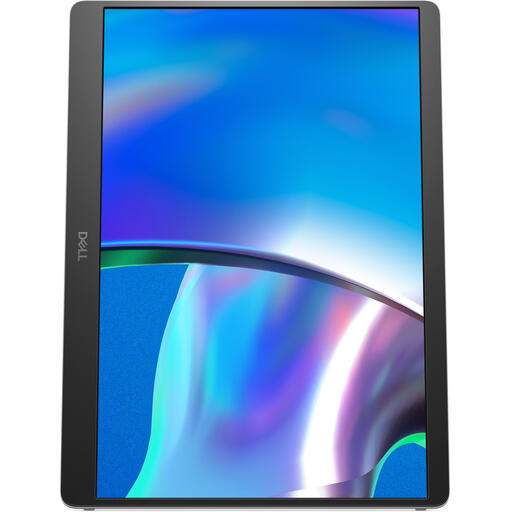 Image unavailable
An option if you’re looking for a 14-inch portable monitor for a smaller café table.
14 inch, 1920 × 1200 pixels, WUXGA and LCD. Check the video connection and make sure the supplied or required setup suits the way you’ll use it.
 Image unavailable
An option if you’re looking for a compact portable monitor for reading guides on the go.
14 inch, Full HD and 1080p. The product name mentions a stand; check that the video connection you need works with your source device.
No, it varies by device and port. For USB-C video on the Philips 16B1P3302D/00, Philips requires the source device to support DP Alt Mode; Lenovo also lists this requirement for the ThinkVision M14. Check the specifications of both your device and the monitor before choosing a connection.
It depends on the stand and settings of the exact model. ASUS lists portrait and landscape orientations for the ZenScreen MB16AHV; also check that your operating system supports the screen orientation you want.
Not always: some monitors are powered via USB from the source device. The ASUS MB16AHP has a built-in battery, but it still needs charging; the maximum battery life quoted by ASUS applies under the conditions it specifies.
In many cases, distance purchases come with a 14-day cooling-off period, according to the Dutch government. The Netherlands also provides a legal guarantee with no fixed statutory duration. If a product is faulty, contact the seller; what applies depends on the circumstances of the fault.
The Dutch government states that electronic devices in the EU must carry a CE mark. Check the product information for the exact version; this general rule doesn’t by itself confirm that a specific item being sold meets the requirements.