A screen with more pixels can fit into a compact size, making it useful for fine details in archive scans. A larger screen gives you more physical screen space. Test the scan itself, though: extra screen pixels cannot restore information that isn’t in the file. Also check that your laptop can output video through the connection you plan to use and provide enough power. None of these monitors reduces background conversation.
Who is a portable monitor suitable for?
Anyone inspecting fine scan details
You look at small text, lines or symbols on scanned maps and want to zoom in without losing sight of the overall image. The U.S. National Archives and Records Administration points out that details not captured clearly in a scan can be difficult to assess later.
Laptop users who need a second screen
You want to view scans alongside transcriptions or notes. Check first that your laptop can output video through the USB-C port you plan to use; ASUS notes that not every USB-C port supports this.
Researchers working in different places
You take the screen with you, so consider its size, weight, setup and how it handles reflections. Conversations around you call for a separate solution to help you concentrate: an extra screen won’t reduce background noise.
What should you look for when choosing?
Start with a representative scan, then check which video connection your laptop supports. Next, weigh the physical screen space and portability against the way you work.
| What to consider |
What to look for |
Who is this most important for? |
| Scan details |
View a representative scan from your intended viewing distance and compare readability at different zoom levels with how much of the map remains visible. |
If I want to assess small text or map lines, I need to know what my scan file actually shows. Around 36% of consumers put scan detail first. |
| Video connection and power |
Check the laptop port’s video output, the connection required and the monitor’s power needs. |
If I want to have scans and notes side by side, the screen needs to work with my laptop without any surprises. Around 29% of consumers put a reliable video and power connection first. |
| Portability and setup |
Compare the size and stated weight of the exact model; also consider its stand, viewing angle and reflections in your workspace. |
If I work in different places, I want to be able to carry and set up the screen easily. For around 21% of consumers, portability and setup are their main concern. |
| Working around conversations |
Decide whether you mainly need more screen space or a quieter workspace; don’t expect a monitor to reduce noise. |
If people are talking while I look at scans, concentration remains a separate workspace need. Working in a room where people are talking is the main concern for around 14% of consumers. |
Pitfalls to avoid
-
Assuming every USB-C port supports video output
A compatible plug doesn’t prove that your laptop and monitor can transmit video between them. The video function required depends on the port and screen.
Before ordering, check the specifications for the exact port on your laptop, along with the connection and power requirements of the screen you’ve chosen.
Depending on your laptop and the model you choose, you may need an extra cable or a different connection solution.
-
Confusing screen resolution with scan detail
More screen pixels can display details that are already there, but they can’t bring back lines or letters missing from a scan file.
Open one of your own representative scans at your preferred zoom level and viewing distance. Compare how much detail is readable and how much of the map remains on screen at once.
-
Assuming a brightness claim guarantees fewer reflections
A stated brightness doesn’t tell you exactly how the picture will look in your workspace. HP’s claim about use in direct sunlight is not an independent measurement.
Consider the position of windows, the screen surface and your setup, and assess the picture in the lighting conditions you actually work in.
-
Confusing an additional service contract with your statutory rights
An optional service contract is different from your statutory rights if a product is faulty. According to the Dutch government, the retailer is your point of contact if you have a problem with a product.
If you’re considering an additional contract, check exactly what service or damage it covers, separately from your statutory rights.
Brands to consider
Lenovo
The ThinkVision M14t Gen 2 is a compact option for viewing scans with plenty of screen pixels, with touch functionality as an optional extra.
- Lenovo lists a resolution of 2240 × 1400 pixels, a 16:10 aspect ratio, 10-point touch and USB-C with DisplayPort for this 14-inch model.
- Its physical screen is smaller than that of a 15,6-inch model. These specifications are not an independent test of readability.
ASUS
The ZenScreen MB16AHV is a 15,6-inch option with an anti-glare screen and several connection options.
- ASUS specifies Full HD, two USB-C ports with DP Alt Mode, mini-HDMI and a stand with a tripod socket.
- ASUS doesn’t list a built-in speaker or height adjustment. Check that your laptop can output video over USB-C.
Dell
The Pro 14 Plus P1425 is a compact second screen for anyone who wants to split scans and notes across their workspace without a touchscreen.
- Dell lists a 14-inch IPS panel with 1920 × 1200 pixels and a 16:10 aspect ratio.
- This model doesn’t have a touchscreen. Its specifications don’t prove that every archive scan will show enough detail.
HP
The E14 G4 is a 14-inch option for anyone weighing up portability and reflections when working in different places.
- For this model, HP lists Full HD, a weight of 640 g, an anti-glare screen and a stated brightness of 400 nits.
- The stated brightness and HP’s claim about use in direct sunlight are not independent tests of your workspace.
Portable monitors at Joybuy
This selection includes portable monitors for viewing scans and working with extra screen space, with a range of resolutions, connections and sizes.
 No image available
TECLAST V16Q portable monitor
An option for viewing fine scan details on a larger portable screen; the stated resolution is not a readability test of your scan file.
16 inches, 2560 × 1600 pixels, 16:10 aspect ratio, IPS, USB-C and Mini HDMI. The product information lists a built-in stand.
View at Joybuy
 No image available
UPERFECT 16-inch portable monitor
A screen with a stated resolution of 2560 × 1600 pixels for anyone looking for extra screen pixels when viewing scans; the source quality remains the deciding factor in how much detail you can see.
16 inches, 16:10, 2560 × 1600 pixels and QLED. The title lists Mini HDMI and Type-C; the product information mentions VESA compatibility.
View at Joybuy
 No image available
ARZOPA Z1RC portable monitor
A portable option for viewing scans on a second screen; try your own files to see whether the detail and overview work for you.
16 inches, 2560 × 1600 pixels and IPS. The product title lists USB-C, HDMI and a built-in stand.
View at Joybuy
 No image available
MSI PRO MP165 E6
A 15,6-inch second screen for anyone who wants scans alongside their notes; its stated Full HD resolution has fewer pixels than the 2560 × 1600 options in this selection.
Full HD (1920 × 1080), USB-C with DP Alt Mode and HDMI. The product information lists an anti-glare screen, a weight of 0,78 kg and a stand that tilts up to 90°.
View at Joybuy
 No image available
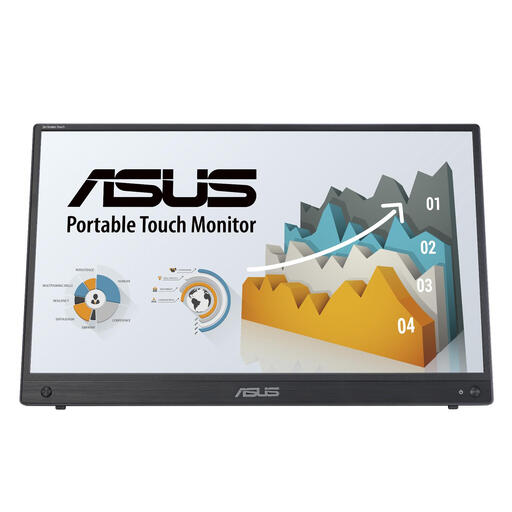
ASUS ZenScreen MB16AHT
A portable touchscreen for anyone who wants to use touch controls when viewing scans; check that they suit the way you work.
15,6 inches and Full HD (1920 × 1080). The product information lists a touchscreen, HDMI, USB-C and a stand for placing the monitor on a flat surface.
View at Joybuy
Frequently asked questions
Can every USB-C port on my laptop output video?
No. Check whether the laptop port in question supports video, then compare this with the requirements of the exact screen. A USB-C port that only supplies power or transfers data won’t work for a monitor that requires DP Alt Mode.
Will a higher screen resolution make a blurry archive scan readable?
Not necessarily. More screen pixels can display details that are already there, but the quality and information captured in the scan file remain the deciding factors. Test a representative file using the zoom setting you plan to use.
Can a portable monitor help with background conversation?
A portable monitor gives you more screen space, but the monitor specifications listed here offer no reason to expect it to reduce the sound of conversations. Consider whether you need a quieter workspace separately from your choice of screen.
What are my rights when buying online in the Netherlands?
According to the Dutch government, consumers buying from a business online generally have 14 days to change their mind, with some exceptions. You’re also entitled to a product that meets legal requirements; the Netherlands has no fixed statutory guarantee period. If a product is faulty, the retailer is your point of contact.
Does an electrical monitor sold in the Netherlands have to comply with product regulations?
Applicable European safety and conformity rules apply to electrical and electronic equipment sold in the Netherlands. The Dutch government describes, among other things, the CE marking and the EU declaration of conformity; a CE mark is not an independent quality certification.


