
Source comparer
You read archive scans while keeping local notes or project files visible at the same time. Extra screen space and comfortable positioning are important to you.


For viewing scans alongside local project files, a standard portable second screen is a sensible choice. Choose a more compact model if you often move between workspaces, or a touchscreen if you want to interact directly with the display. Before buying, check that your laptop can output video through the port you plan to use, how the monitor is powered, and whether the screen and stand will fit your workspace. A touchscreen won’t store your project files or notes.
You read archive scans while keeping local notes or project files visible at the same time. Extra screen space and comfortable positioning are important to you.
You move between reading rooms or workspaces, so you’re particularly interested in size, the stand, connectivity and available power.
You want to interact with or mark up source material on screen. The monitor, pen, laptop and app you use all need to support the way you want to work.
First decide whether you mainly need more reading space, a more compact travel setup or on-screen interaction. Then check connectivity and power.
| What to consider | What to look for | Who it’s mainly for |
|---|---|---|
| Reading sources and files | Compare screen size, resolution and aspect ratio. Also check whether the stand allows for stable portrait or landscape positioning. | I want to read scans and local project files at the same time; around 36% of consumers mainly need that extra reading space. |
| Video signal and power | Check the specifications for the exact laptop port and monitor. USB-C must support video; if you’re using HDMI, check how the monitor is powered too. | I want to make sure video and power will work with my own laptop in the reading room; around 29% of consumers prioritise connectivity and power. |
| Transport and positioning | Measure the space in your bag and on your desk. Compare sizes such as 14 and 15,6 inch, and see how the case or stand supports the screen. | I move between workspaces and want a setup that’s easy to carry and set up; around 21% of consumers mainly prioritise portability. |
| On-screen annotation | Check which pen you need and whether your laptop and annotation app support the interaction you want. | I want to mark up source material directly on screen, so I need to know whether my equipment and app support this; around 14% of consumers mainly need annotation features. |
A compatible connector doesn’t automatically mean your laptop can output video through that port. You may also need a suitable cable, adapter or separate power supply.
Before ordering, check the specifications for the exact laptop port and the power requirements of the monitor you’ve chosen.
Touch control, an included pen and support for handwriting input are different things. Lenovo lists a passive pen for the ThinkVision M14t Gen 2; the stated pressure levels require an active stylus.
Decide what you want to do in each app, then check that the pen, laptop and software support it.
ASUS states that the ZenScreen MB16AHP provides up to 4 hours of power in DP Alt mode at a brightness setting of 100%. Actual battery life depends on the conditions.
Compare the stated battery life with the length of your planned archive visit, and think about where you could recharge if needed.
The ZenScreen range includes models for use as a standard second screen, battery-powered use and a dual-panel setup.
The ThinkVision M14t Gen 2 is a 14-inch touchscreen for anyone who wants to interact with or annotate on screen while doing archive research.
The 16T20E2 is a 15,6-inch Full HD model for a standard second-screen setup.
The HP E14 G4 is a 14-inch Full HD monitor for a compact, portable workspace.
These product picks are designed for viewing archive material alongside local project files, with options for extra reading space, a portable setup or touchscreen control.
 No image available
An option if you’re looking for a larger screen to view archive scans alongside local files.
16 inch; 2,5K; 16:10; IPS; 144 Hz.
 No image available
A 16-inch second screen for anyone who wants to view documents and project files side by side. For USB-C video, your laptop must support DisplayPort Alt Mode.
16 inch; WUXGA; IPS; USB-C; 65 W Power Delivery.
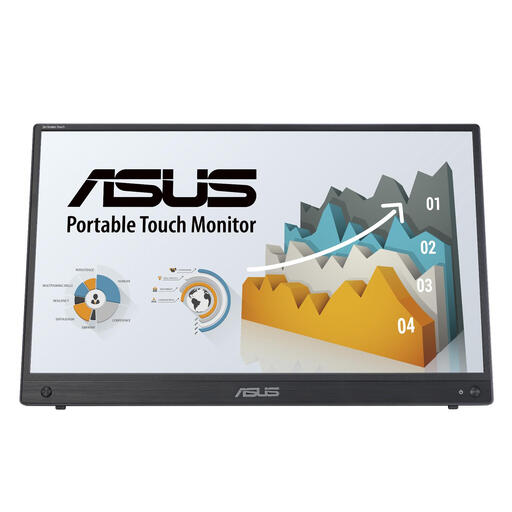 No image available
This portable touchscreen monitor is an option if you also want to interact directly with source material on screen.
15,6 inch; 1920 × 1080; Full HD; touchscreen.
 No image available
A 15,6-inch option for a second screen alongside scans and local files. Check that your laptop’s ports will work with the setup you have in mind.
15,6 inch; 1920 × 1080; Full HD; IPS.
 No image available
The 14-inch size is an option if you’re looking for a more compact second-screen setup for different workspaces.
14 inch; Full HD 1080P; built-in stand.
The monitor displays whatever you open on your laptop; it doesn’t replace file storage. Open the files on your laptop and set up an extended desktop if needed. First check that your laptop and monitor can share a video signal through the connection you plan to use.
Not unless you’ve checked that your laptop port supports video and that the monitor gets enough power through that connection. AOC lists USB-C with DisplayPort Alt Mode for video and power on the 16T20E2; the ASUS MB16AHP requires a device that supports DisplayPort Alt Mode to display video over USB-C.
Lenovo lists an included passive pen; the stated pressure levels require an active stylus. Check which pen is needed for the function you have in mind and whether your laptop and annotation app support the input.
ACM ConsuWijzer states that online product purchases generally come with a statutory 14-day cooling-off period after delivery, subject to legal exceptions. You’re also covered by the statutory guarantee if a product, when used normally, doesn’t meet the expectations you were entitled to have.
The Dutch government lists options including returning it to the shop or online retailer where you buy a similar device, taking it to a collection point or bringing it to your local council recycling centre.