Start with a key layout that feels comfortable for longer writing sessions. Then check that the keyboard fits in your bag, connects to your device and is suitable for a shared workspace. A compact model takes up little room, while a foldable one may be small in your bag but need more desk space when unfolded. Some manufacturers describe their keys as quiet, but the available information does not include comparable noise measurements.
Who is a portable keyboard suitable for?
Writer at a shared table
You update your travel journal alongside other people and want to type quietly without taking up much table space. Logitech and Trust describe compact models such as the Pebble Keys 2 K380s and Nado II as having keys that are quiet according to the manufacturers; there are no comparative noise measurements.
Traveller with limited bag space
You often take your keyboard with you and want to know how much room it takes up both packed away and in use. The dimensions listed for the foldable ProtoArc XK01 show why both measurements matter.
Writer using multiple devices
You switch between devices such as a phone, tablet and computer while writing, and want to check the connection and key layout in advance. Trust and Keychron list multiple connection options for the Lyra and B1 Pro respectively.
What should you look for?
Start with your main constraint: typing alongside other people, limited bag space, switching between devices or a familiar layout for longer pieces of writing.
| What to consider |
What should you look for? |
Who should prioritise this? |
| Quiet typing |
Look at the key mechanism and, if possible, try out the sound on a similar table. |
If I'm writing alongside other people, I want to cause as little distraction as possible. Around 33% of consumers put quiet typing at the top of their list of buying concerns. |
| Size in your bag and on the table |
Compare the packed size with the dimensions when the keyboard is in use. |
If I have limited space in my bag, I also want to know how much room the keyboard takes up when unfolded. Around 27% of consumers put packed size first. |
| Connecting devices |
Check whether your device works with Bluetooth, a USB receiver if included, or a cable. |
If I switch between devices while writing, I want the keyboard to work with their connections. Around 20% of consumers prioritise connection options. |
| Key layout |
Check the language and QWERTY layout of the exact version. |
If I write longer pieces, I want the keys and punctuation marks to be where I expect them. Around 20% of consumers make the layout their first selection criterion. |
Common mistakes when buying
-
Assuming a foldable keyboard is small when in use
A foldable model may fit neatly in your bag but still need a wide work surface. ProtoArc lists the XK01 as 119,70 mm wide when folded and 386,39 mm wide when unfolded.
Compare both its packed size and the amount of table space you have available.
-
Taking a ‘quiet’ description as proof of lower noise
Logitech, Trust and ProtoArc describe certain models as quiet, but these descriptions are not comparable noise measurements.
Use the description as one factor in your selection, not as a noise ranking. If possible, try the feel and sound of the keys for yourself.
-
Assuming every QWERTY version has the same layout
The position of punctuation marks can vary between language versions, which matters if you write longer pieces.
Check the specific language and layout details for the version you want to buy.
Brands to consider
Logitech
The Pebble Keys 2 K380s is a compact option for a small workspace and writing across multiple devices.
- Logitech lists flat keys, quiet keystrokes and Easy-Switch for three devices as features of this model.
- The description of the keys as quiet is not an independent noise measurement. Check the layout of the version on offer.
Trust
The compact Lyra and Nado II are worth considering if switching between devices and typing in a shared space matter to you.
- Trust lists two Bluetooth connections and a USB receiver for the Lyra. For the Nado II, the brand lists compact, low-profile scissor keys.
- These features apply to the models mentioned, not necessarily the entire range. Check the layout of the version you’re considering.
Keychron
The B1 Pro is a compact option to compare if you’re looking for several connection methods and a specified key layout.
- Keychron lists a 75% layout with 77 keys, a weight of 425 g, and Bluetooth, 2.4 GHz and wired connectivity for the B1 Pro.
- Check that the layout and connection options suit your devices and writing habits.
ProtoArc
The foldable XK01 is an option to consider if packed size is important to you.
- ProtoArc lists a tri-fold design, 105 keys and scissor keys. Its stated width when unfolded is 386,39 mm.
- A small packed size doesn’t mean the keyboard takes up little desk space. Check the language layout on offer too.
Portable keyboards at Joybuy
This selection includes compact and foldable keyboards, as well as larger wireless models for those who want more keys or more space while writing.
 No image available
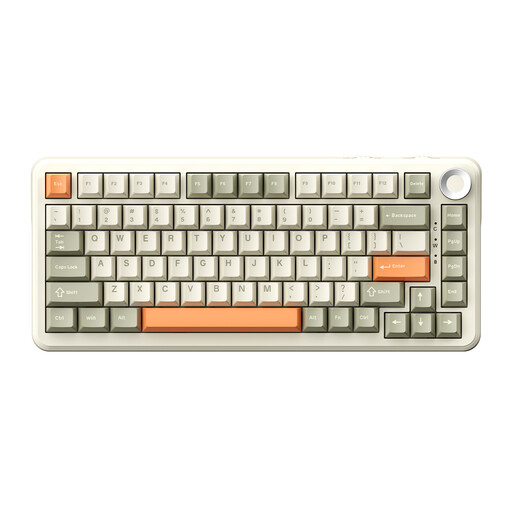
AJAZZ AK820 MAX 75% Wireless Mechanical Keyboard (US QWERTY)
An option to compare if you’re looking for a compact layout and several connection options.
The product name lists a 75% layout, tri-mode connectivity and US QWERTY. Check that this layout suits the language you use.
View at Joybuy
 No image available
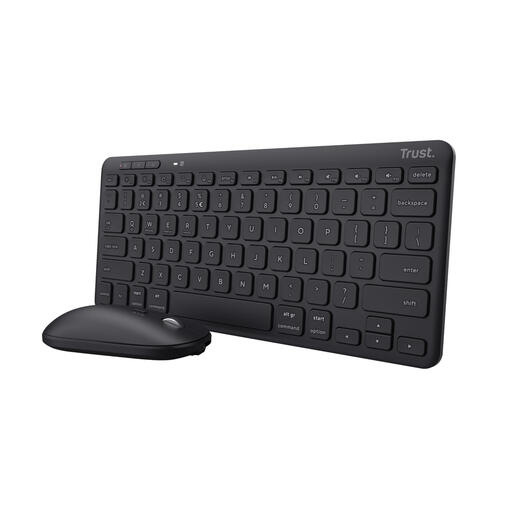
Trust Lyra Wireless Keyboard and Mouse Set (QWERTY US)
This set could be a good fit if you’re looking for a compact keyboard and a mouse to take with you.
The product name lists a rechargeable version and US QWERTY; it’s a keyboard and mouse set. Trust lists two Bluetooth connections and a USB receiver for the Lyra. The description of the keys as quiet is not a comparative noise measurement.
View at Joybuy
 No image available
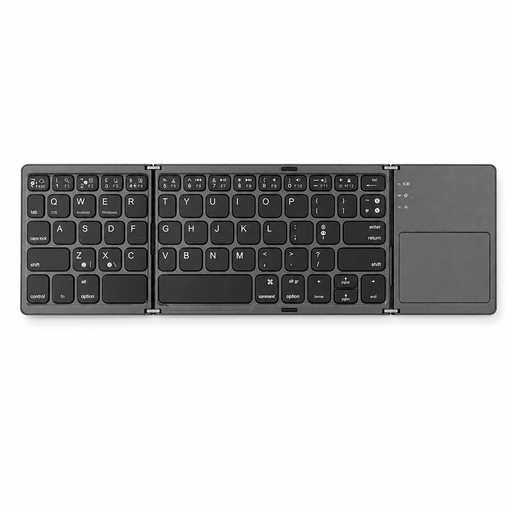
Voxis B033 Tri-Fold Bluetooth Keyboard with Touchpad
A foldable model to consider if you want a compact keyboard to take with you and use with a mobile device.
The product name lists Bluetooth, a touchpad and compatibility with tablets, smartphones and computers. Check the language layout and that the connection options suit your device.
View at Joybuy
 No image available
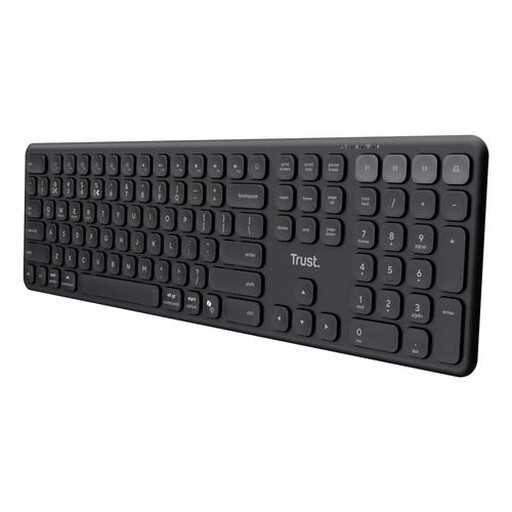
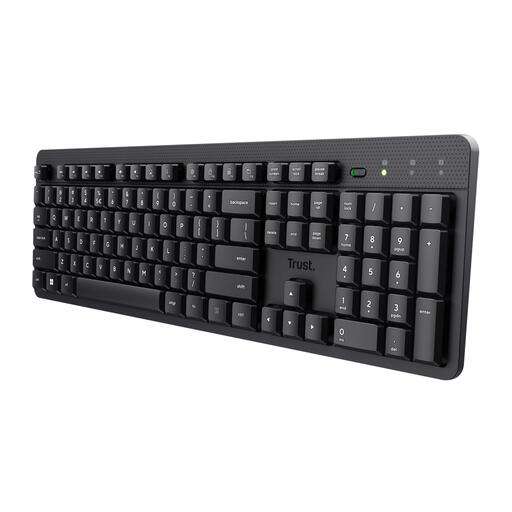
Trust Vaiya Full-Size Wireless Keyboard with Numpad (QWERTY US)
A larger layout could suit you if you prefer having a numeric keypad while writing.
The product name lists a full-size layout, scissor keys and US QWERTY. Check that the size suits your bag and workspace.
View at Joybuy
 No image available
Trust Ody II Full-Size Wireless Keyboard (QWERTY US)
A larger model to compare if you want a numeric keypad and usually write at a spacious workspace.
The product name lists quiet keys, a numeric keypad and US QWERTY. Check that the USB receiver connection suits your device and that the keyboard fits in your bag.
View at Joybuy
Frequently asked questions
What should you look for when typing longer journal entries on a phone or tablet?
Check that your device supports the keyboard’s connection and that its layout works for the punctuation and language you use. Trust lists iOS, iPadOS and Android among the systems supported by the Lyra; Keychron lists mobile operating systems for the B1 Pro. Always check the exact version.
How can you keep a rechargeable travel keyboard ready to use on the go?
Check the charging port and charging options for the model you choose. Trust lists a rechargeable battery for the Lyra and says you can work while it’s charging; this information does not necessarily apply to other models.
What if a keyboard bought online isn’t suitable or is faulty?
For online purchases from a business in the Netherlands, you’ll usually have a 14-day cancellation period, subject to legal exceptions. The Dutch government also states that you’re entitled to a product that works as it should, and that the Netherlands has no fixed statutory warranty period. If a product is faulty, the seller must provide a solution.
What product rules apply to a Bluetooth keyboard sold in the Netherlands?
For electronic equipment with Bluetooth, the Dutch government refers to the Radio Equipment Directive. Where the requirements apply, the manufacturer must meet the relevant technical and administrative requirements, draw up an EU declaration of conformity and affix the CE marking. These are obligations for placing a product on the market, not a separate registration or driving-licence requirement for the buyer.


