
Traveller typing on a phone or tablet
Wants to answer practice questions without a laptop, so needs a keyboard that connects to their device. The screen must also be positioned so it can be used during the journey.


For practice exams on the train, a compact Bluetooth keyboard is a practical starting point if you type on a phone or tablet. A foldable model is worth considering if saving space in your bag is a priority. Check that the keyboard layout, connection and any pointer controls work with your device and practice environment. Logitech describes some models as having quiet keys, but this is not a sound measurement taken on a train; in an NS quiet zone, it really must be quiet.
Wants to answer practice questions without a laptop, so needs a keyboard that connects to their device. The screen must also be positioned so it can be used during the journey.
Prefers a slim or foldable keyboard, but also needs to check how much space it takes up when in use.
Wants to move between answer fields and questions. Check that the keyboard and any pointer controls work with your device and practice environment.
Choose this if: you mainly type text and want to use the keyboard with both a phone and a tablet. Logitech says the Pebble Keys 2 K380s can switch between three devices.
Bear in mind: the keyboard does not fold, so check that it fits in your bag and that your screen can stand on its own.
Choose this if: you carry a separate keyboard with your phone or tablet and want to protect the keys while travelling. Logitech describes the universal Keys-To-Go 2 as having a built-in cover.
Bear in mind: the cover is not a tablet stand. Logitech specifies two CR2032 coin-cell batteries for the Keys-To-Go 2, which will need replacing later.
Choose this if: a compact folded size or pointer controls are important to you. ProtoArc describes the XK01 TP as a foldable model with a touchpad.
Bear in mind: check how much space the keyboard takes up when unfolded and whether the touchpad works with your practice environment.
| What to consider | What to look for when buying | Who is this more important for? |
|---|---|---|
| Carrying and using the keyboard | Compare its size both folded and unfolded. Check that you have a suitable surface and a way to support your screen. | If I have limited bag space, I want to carry a compact keyboard without finding that it does not fit in the space available when unfolded. Around 36% of consumers make portability and room to use the keyboard their top priority. |
| Connection and layout | Check the exact version, Bluetooth connection and keyboard layout. Also test your practice app on your device. | Anyone practising with a specific device wants to be sure that both the connection and keyboard layout are suitable. Around 29% of consumers prioritise device compatibility. |
| Typing quietly | Try the key action and typing noise for yourself; a manufacturer's description is not an independent sound measurement. | If I type longer answers, I want to do so without disturbing other passengers. Around 21% of consumers prioritise typing as quietly as possible. |
| Navigating between questions | Test Tab and Enter in your practice environment and check whether any touchpad is supported. | Pointer controls may be a consideration for consumers who need to navigate between questions and answer fields. Around 14% make navigation their top buying priority. |
A foldable keyboard still needs to fit alongside a screen that is positioned for use.
Compare the dimensions in both configurations and consider how it will fit on the sort of surface you usually have on the train.
General Bluetooth or touchpad features do not automatically mean that they will work with your specific practice page.
Test answer fields and navigation on your own device. Choose a touchpad only if you find it useful there.
A manufacturer's description is not a measurement of the noise you will make when typing. NS requires quiet zones to be genuinely quiet.
Try the keyboard's typing noise for yourself and be considerate of the zone and other passengers.
The keyboards reviewed use different power sources. Additional warranty cover does not replace your statutory guarantee.
Check the power source for the exact version and consider any additional warranty cover alongside your statutory rights.
Logitech specifies two CR2032 coin-cell batteries for the Keys-To-Go 2; bear in mind that you will need to replace them when they run out.
The Pebble Keys 2 K380s and Keys-To-Go 2 offer different approaches: a compact keyboard that does not fold, and a slim model with a cover.
The Smart Keyboard Trio 500 is a Bluetooth option for anyone who switches between connected devices.
The XK01 TP is a foldable model with an integrated touchpad.
This selection includes wireless keyboards for typing, from compact and foldable models to larger keyboards. Compare the layout and dimensions with your device, bag and available space for use.
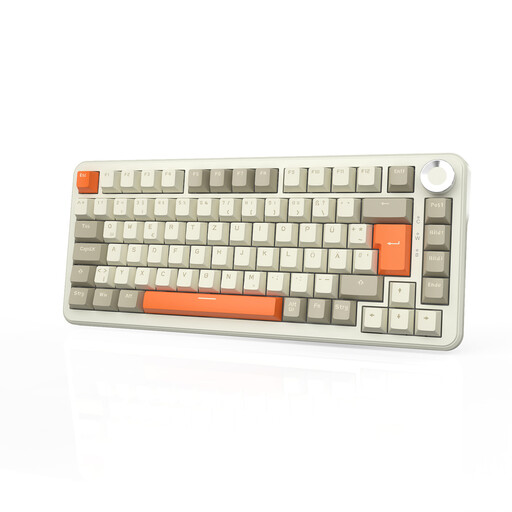 Image unavailable
Bluetooth connectivity makes this an option for typing without a wired connection to your device.
Mechanical keyboard with a 75% layout and German QWERTZ keyboard layout; check that this layout suits your needs.
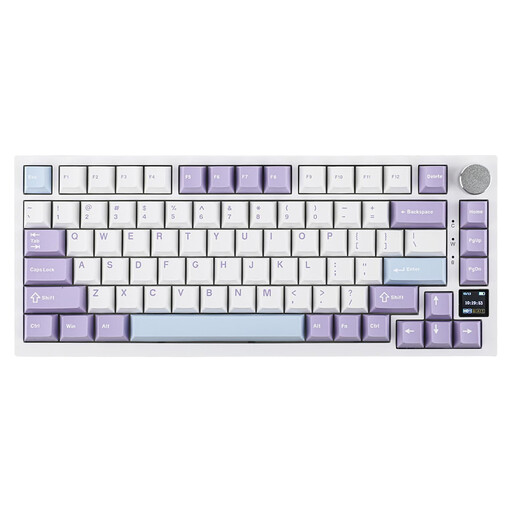 Image unavailable
This model offers Bluetooth for wireless typing; check that the US keyboard layout suits you.
75% layout with 82 keys; the product name also lists wired, Bluetooth and 2.4G connections.
 Image unavailable
The product information lists Bluetooth, support for phones and tablets, and a built-in touchpad for pointer control.
63 keys; stated dimensions when folded: 152 × 97 × 12 mm. Check whether the touchpad is supported in your practice environment.
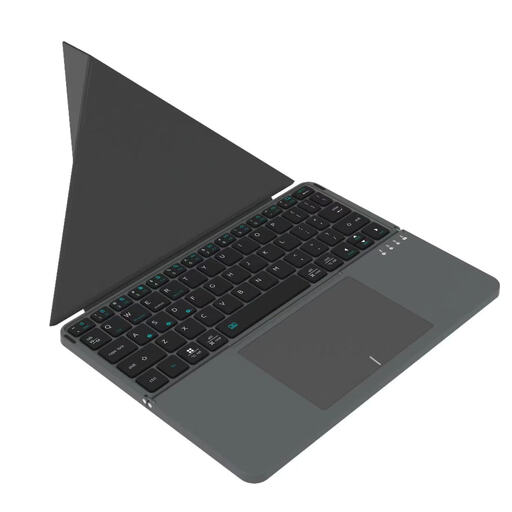 Image unavailable
The product information lists Bluetooth, support for mobile devices and a touchpad; check that its pointer controls work with your practice app.
The listed layout has 64 keys. The folded dimensions are 157.5 × 98 × 15.8 mm.
 Image unavailable
The product information lists Bluetooth and switching between multiple devices. Its full-size design is worth considering if bag or use space is limited.
Dimensions: 420.5 × 120.7 mm. The product information lists USB-C charging.
Only if you keep typing noise to a minimum: NS says quiet zones must be genuinely quiet. External keyboards are not specifically listed as allowed or prohibited. Also, don’t leave your luggage on a seat that another passenger could use.
Follow the connection steps for the exact model and test the keyboard with your device and practice page. Samsung describes Bluetooth pairing for the Smart Keyboard Trio 500 using a code shown on screen. If you’re using an online practice environment, don’t assume there will be Wi-Fi: NS says free Wi-Fi is available on almost all Intercity trains, but not every train.
Logitech says the Keys-To-Go 2 uses two replaceable CR2032 coin-cell batteries, rather than USB charging. According to the support instructions, you’ll need a T5 screwdriver and access to the battery compartment to replace them.
According to ACM ConsuWijzer, a standard online purchase generally comes with a statutory 14-day cooling-off period from delivery; check whether an exception applies to your purchase. Your statutory guarantee also applies if the product does not meet what you could reasonably expect under normal use. Additional warranty cover does not replace this statutory right.