Start with your workspace. In a silent study area, keyboard noise matters, while for long writing sessions, the layout and a practical screen-and-keyboard setup may matter more than the smallest size. Also check that the connection, physical layout and power supply are right for your laptop or tablet. Descriptions such as ‘quiet’ are not comparative noise measurements.
Who might find a portable keyboard useful?
Writers in silent study areas
If you want to disturb others as little as possible, assess the keyboard noise in a suitable setting. Logitech and Trust describe specific models as quiet, but these descriptions are not based on comparative noise measurements.
Writers with long sessions
If you type for long stretches, a practical keyboard layout and a comfortable position for your hands and screen can make a difference. Arboportaal recommends a relaxed working posture and changing position regularly; this advice is not automatically a legal requirement for every student.
Students who switch between devices
If you switch between, for example, a tablet and a laptop, compare the supported connections with your devices. Size and protection during transport also matter if you often carry the keyboard in your bag.
What should you look for?
First, decide what matters most for your library work: quiet typing, comfort during longer writing sessions, carrying as little as possible or easily switching between devices.
| What to consider |
What should you check? |
Who is this most important for? |
| Keyboard noise |
Where possible, assess the noise for yourself and bear in mind the rules of the library space. |
If you want to disturb others as little as possible in a silent study area, noise is your top priority. Around 33% of consumers prioritise quiet when making this choice. |
| Typing for long periods |
Try out the physical layout and frequently used keys; also check how the screen and keyboard sit on the table. |
If you type long passages, a familiar layout and a practical setup are more important than compact size alone. Around 27% of consumers prioritise typing for long periods. |
| Size and protection |
Compare the dimensions and weight with your bag and table, and check whether the keys are covered during transport. |
If you often take your keyboard with you, you’ll want it to fit in your bag and be practical to carry. Around 20% of consumers prioritise portability. |
| Connection and layout |
Check the model variant, operating system, available connection and physical keyboard layout. |
If you switch between devices, you’ll want to know whether the keyboard can connect to each one and whether the layout suits your writing. Around 20% of consumers prioritise connecting to devices. |
Common pitfalls when choosing a portable keyboard
-
Taking ‘quiet’ as proof that a keyboard is quieter
Logitech and Trust describe certain models as quiet to type on, but these descriptions are not based on comparable measurements. So you won’t know how the keyboard sounds on your table or compared with another model.
Where possible, assess the noise for yourself before choosing a keyboard for a silent study area.
-
Looking only for ‘QWERTY’
The physical layout can vary, and a model may have specific system requirements or need a particular connection. A layout that doesn’t suit your device or writing may be awkward to use; you may need a different version or additional equipment.
Check the full model variant, keyboard layout, system requirements and connections against your own device.
-
Assuming a compact keyboard is a complete workstation solution
For extended screen work, the relationship between your screen, hands and posture also matters. Choosing a small keyboard alone doesn’t tell you whether the whole setup will be comfortable.
Try the setup on a library table and change your posture during long sessions.
Brands to consider
Logitech
Logitech offers the slim Keys-To-Go 2 with cover, as well as the compact Pebble Keys 2 K380s Bluetooth model.
- According to Logitech, both of these models can switch between up to three devices.
- Logitech describes the keys on the Pebble Keys 2 K380s as quiet.
- These descriptions are not based on comparative noise measurements. For the Keys-To-Go 2, check whether you’re looking at the universal or Apple version.
Trust
Trust offers the compact Lyra, with Bluetooth and a USB receiver, as well as the Nado II and Vaiya Bluetooth models.
- According to Trust, the Lyra supports two Bluetooth connections and one connection via a USB receiver.
- Trust describes the Nado II as quiet.
- The description ‘quiet’ is not based on an independent noise test. Check the version, layout and availability of the model you’re looking at.
Apple
Apple describes a Dutch-layout Magic Keyboard version (USB-C) for devices and software versions that meet the stated system requirements.
- Apple lists this version as 27,89 cm wide and weighing 239 g.
- Check the system requirements for your device. The product information doesn’t support a claim that this model is quieter than other keyboards.
Portable keyboards at Joybuy
This selection includes compact keyboards, foldable models and keyboards for specific iPad versions. Check each model to make sure its layout and connection suit your workspace.
 No image available
Trust Lyra keyboard and mouse, US QWERTY
An option to consider if you want to carry a compact keyboard and switch between devices.
The product description lists Bluetooth, a USB receiver and connections to up to three devices. The stated layout is US QWERTY.
The product description calls the scissor keys quiet; this is not a comparative noise measurement.
View at Joybuy
 No image available
Voxis B033 foldable keyboard with touchpad
A foldable model to consider if you want to save space in your bag.
The product description lists Bluetooth, a touchpad and compatibility with computers, phones and tablets.
The stated folded size is 152 × 97 × 12 mm; also check that the keyboard layout suits your writing.
View at Joybuy
 No image available
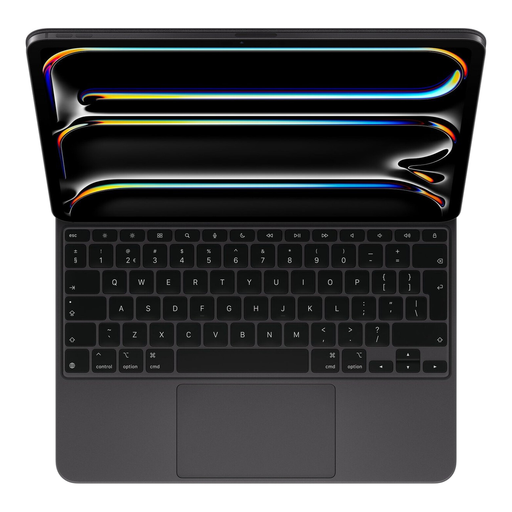
Apple Magic Keyboard for iPad Pro 13-inch (M4)
This version is designed for the compatible iPad Pro models listed; check that your iPad is one of them.
The product description lists a detachable Dutch QWERTY keyboard, a trackpad, adjustable positions and a protective cover.
View at Joybuy
 No image available
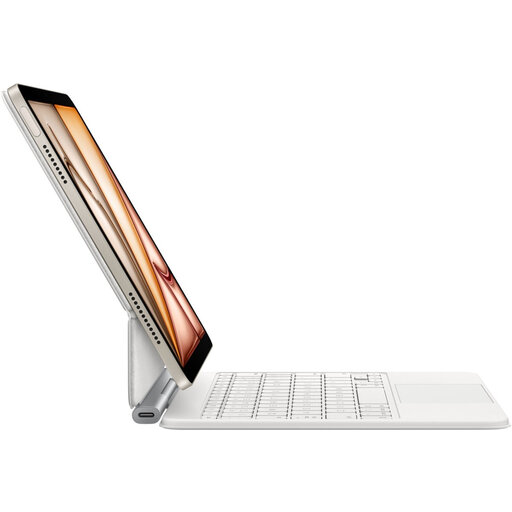
Apple Magic Keyboard for iPad Air 11-inch M3, Dutch layout, white
An option to consider if you use a compatible iPad Air model.
The product title lists iPad Air 11-inch M3 and a Dutch layout. Check the stated iPad compatibility and the connection for your device.
View at Joybuy
 No image available
Trust Vaiya wireless full-size keyboard, US QWERTY
A full-size option if you have room for a keyboard and want to switch between devices.
The product description lists Bluetooth and a USB receiver, connections to up to four devices and a rechargeable battery.
The model has a numeric keypad and US QWERTY layout. Trust describes the low-profile keys as quiet, but this is not a comparative noise measurement.
View at Joybuy
Frequently asked questions
Is a keyboard described as ‘quiet’ definitely suitable for a silent study area?
No. That description doesn’t show how the keyboard compares with other models or how it will sound in your library. Logitech and Trust describe specific models as quiet, but this isn’t based on comparative noise measurements. Where possible, assess the noise for yourself and bear in mind the rules of the library space.
How should I use a separate keyboard during a long writing session?
Position the screen and keyboard so you can work comfortably, and change your posture regularly. Arboportaal offers this as workplace advice; the statutory rules on screen work for employees do not automatically apply to every student in a library.
What can I do if a keyboard bought online isn’t right for my device or layout?
For an online consumer purchase, ACM ConsuWijzer says you generally have a cooling-off period of up to 14 days after delivery, subject to exceptions. Check the layout and compatibility beforehand. If the product is faulty, your statutory consumer rights against the seller are also relevant.
What should I check to ensure a wireless keyboard complies with regulations in the Netherlands?
Check the CE marking on the device and bear in mind that applicable European requirements apply to radio equipment. The Dutch Authority for Digital Infrastructure describes these requirements for equipment placed on the market; a product description alone does not prove that a specific item meets them.


