Start by checking your laptop or tablet’s connections and the space available at the shared table. A compact keyboard can be practical, as long as the layout is comfortable for longer answers too. Bluetooth doesn’t use a USB port, while a model with a receiver or cable may offer more connection options. Try the keys for yourself: a manufacturer’s ‘quiet’ claim isn’t a sound measurement.
Who is a portable keyboard suitable for?
Those practising at a shared table
If you’re typing answers alongside other people, look for a typing feel that’s comfortable for you without causing unnecessary distraction. ‘Quiet’ is a manufacturer’s description, so try the keyboard for yourself if you can.
Those who often change workspaces
A compact keyboard may be easier to carry in your bag and leave more room on a small table. Check the layout too, and whether you can store the keyboard safely.
Those who practise on multiple devices
If you switch between, for example, a laptop and a tablet, check which connections and operating systems the exact model supports. Logitech says the Pebble Keys 2 K380s can switch between three devices.
What should you look for when buying?
| What to consider |
What should you check? |
Who is this important for? |
| Key noise |
Try the letter keys, space bar and Enter key for yourself; a ‘quiet’ claim isn’t a sound measurement. |
I want to type in a shared space without unnecessarily distracting others; around 31% of consumers prioritise a typing feel that won’t cause much disturbance. |
| Size and table space |
Check the dimensions and physical layout, and think about how much room you need for your hands and practice materials. |
I take my keyboard with me and want to use it on a small table alongside my practice materials; around 25% of consumers prioritise portability and space. |
| Connection |
Check whether your device supports Bluetooth, a USB receiver or a cable, and which of these are included with the model. |
I want to make sure my keyboard connects to the device I practise on; around 25% of consumers prioritise connectivity. |
| Layout and typing feel |
Check the physical key layout, punctuation and function keys. If possible, try typing an answer of a similar length to the ones you’ll write. |
I write longer answers and want to find the keys without having to get used to a different layout; around 19% of consumers prioritise layout and typing comfort. |
Common buying mistakes
-
Assuming ‘quiet’ means completely silent
A manufacturer’s description won’t tell you how the keyboard sounds in your shared space or when you type.
Try the keys for yourself where possible, and pay attention to larger keys such as the space bar and Enter key.
-
Assuming Bluetooth, a receiver and a cable are interchangeable
Available connection options vary by model and need to be compatible with the connections and support offered by your practice device.
Check the connection options and included accessories for the exact model. If your device doesn’t have a compatible connection, you may need a separate adapter.
-
Focusing only on the compact size
A small keyboard can save space on the table, but the layout and typing feel still matter if you write longer answers.
Look at the physical layout and, if possible, type a practice answer that’s about the same length as the ones you’ll be writing.
Brands to consider
Logitech
The Pebble Keys 2 K380s is a compact Bluetooth option for anyone who takes their keyboard with them and switches between devices.
- Logitech says it can switch between three devices and has a portable design.
- Check the layout of the model and try the keys for yourself; a description such as ‘quiet’ isn’t a sound measurement.
CHERRY
The KW 7100 MINI BT is designed for compact Bluetooth use; according to CHERRY, the KW 9200 MINI also offers a receiver and wired mode.
- CHERRY lists scissor keys and a carry case for both compact models.
- Choose additional connection options only if your practice device can use them. A particular key mechanism doesn’t, by itself, prove a specific noise level.
Trust
According to Trust, the compact Lyra combines a USB receiver with two Bluetooth connections.
- Trust lists a rechargeable battery and low-profile scissor keys.
- Check the exact layout and model before buying. A manufacturer’s stated battery life isn’t a guarantee of how long it will last in your use.
Rapoo
The E9600M is a slim option to consider if you want to compare Bluetooth with a USB receiver.
- Rapoo lists device switching, a rechargeable battery and scissor keys.
- The listed features don’t tell you how quiet the keys will sound in a shared space; check the layout of the model too.
Joybuy products for different workspaces
These keyboards include compact, foldable and full-size models, including versions with multiple connection options. Compare the layout, connection and available table space with your practice setup.
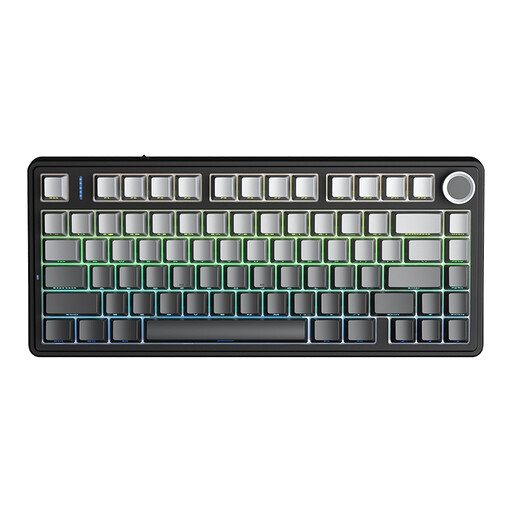 No image available
AULA F75 Pro 75% mechanical keyboard
A compact model to consider if you want to compare multiple connection options.
75% layout, mechanical, tri-mode and US layout.
View at Joybuy
 No image available
AJAZZ AK820 MAX 75% mechanical keyboard
A compact option to compare if you want the layout and connection options to suit your practice device.
75% layout, tri-mode, US QWERTY and an 8000mAh battery.
View at Joybuy
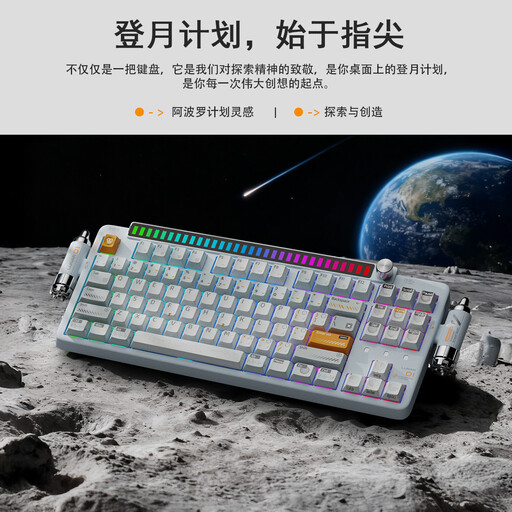 No image available
KEYSME Lunar 01 80% mechanical keyboard
The 80% layout is worth comparing if you type longer answers and want to consider different connection options.
US QWERTY, tri-mode, hot-swappable keys and a 4000mAh battery; white model.
View at Joybuy
 No image available
Voxis B033 foldable Bluetooth keyboard
A foldable model to consider if you want to take your keyboard to different workspaces.
Bluetooth, 63 keys and a touchpad.
View at Joybuy
 No image available
Trust Vaiya full-size wireless keyboard
The full-size layout is worth comparing if you want a numeric keypad; bear in mind how much table space the keyboard will take up.
Numeric keypad, scissor keys and US QWERTY layout.
View at Joybuy
Frequently asked questions
Can I connect a Bluetooth keyboard directly to my practice device?
Yes. If your laptop or tablet supports external Bluetooth keyboards, you can connect without a USB receiver. Check your device’s compatibility and pair the keyboard before your practice session. Available function keys may vary by operating system.
What should I check when using the keyboard for the first time?
Test your chosen connection mode and try the letters, punctuation and larger keys in the programme you use for practice. Charge a rechargeable model if needed; Trust lists a rechargeable battery for the Lyra, while CHERRY says the KW 9200 MINI comes with a cable for data transfer and charging.
What if I’m unhappy with the feel of the keys after buying online, or the keyboard develops a fault?
For online purchases from a business, consumers are often entitled to a 14-day cooling-off period, according to the Dutch government; check which terms apply to your purchase. If there’s a fault, contact the seller, who is responsible for providing a product that works properly. The Dutch government says there is no fixed statutory guarantee period that applies to all products in the Netherlands.
Where can I recycle an old keyboard or used loose batteries?
The Dutch government says household electrical appliances can be recycled through local council collection points, among other options, and that you can return an old appliance when buying a similar one under the take-back scheme. Don’t put used loose batteries in the bin; take them to a collection point.


