
Recipe editor using a tablet or phone
You edit recipes on a mobile device and mainly need a reliable connection and a suitable keyboard layout.


Choose a portable keyboard that is confirmed to connect to your phone, tablet or laptop, and plan how you’ll power both the keyboard and the device with the screen. A separate Bluetooth model gives you the flexibility to position it independently, a folding model takes up less space when packed away, and a keyboard case only fits certain tablets. Manufacturer information won’t tell you how long your complete recipe-editing setup will work without a power socket.
You edit recipes on a mobile device and mainly need a reliable connection and a suitable keyboard layout.
You don’t want to interrupt your work to recharge, so you’re considering the power needs of both the keyboard and the device with the screen.
You’re weighing up a compact standalone keyboard, a folding model and a case that keeps the keyboard and tablet together.
Choose this if: you want to position the keyboard separately or type on several supported devices.
Bear in mind: you’ll need space and power for both the keyboard and the screen device.
Choose this if: you want the option of switching between Bluetooth and a computer with a suitable USB port. Trust describes the Lyra as having two Bluetooth connections and a USB receiver.
Bear in mind: a receiver only works if your device has the right port, and a rechargeable keyboard needs charging in good time.
Choose this if: saving space in your bag matters more than having a keyboard ready to use without unfolding it.
Bear in mind: check the keyboard layout, how much space it takes up when unfolded and how it charges.
Choose this if: you have a compatible iPad and want to carry the tablet and keyboard together. Apple lists the iPad models that fit each version of Magic Keyboard.
Bear in mind: these cases aren’t universal. Check your exact tablet model and plan separately for powering the iPad.
| What to consider | What should you check? | Who is this important for? |
|---|---|---|
| Connection | Check Bluetooth support and, if using a USB receiver, whether your device has the right port. | If I edit recipes on different devices, I want to know whether the keyboard can connect to each one. Around 33% of consumers say connectivity is their main concern when buying. |
| Power | Check whether the exact model uses batteries or a rechargeable battery, and plan how you’ll power the screen device too. | If I want to keep working away from a power socket, I want to know in advance how to power both devices. Around 27% of consumers prioritise power. |
| Keyboard layout | Check both the physical layout and your device’s input language, especially for punctuation and numbers. | If I’m entering ingredients and quantities, I want the keys to produce the characters I expect. Around 20% of consumers prioritise the layout for text and numbers. |
| Portability and workspace | Compare the space available in your bag with the space the keyboard takes up when in use. If you’re choosing a case, check tablet compatibility. | If I have limited space in my bag or on the table, I’m looking for a model that fits and sits comfortably beside the screen. Around 20% of consumers prioritise portability and workspace. |
The phone, tablet or laptop displaying your recipes also needs power. A stated battery life for the keyboard doesn’t tell you how long your complete setup will work away from a power socket.
Plan separately for both devices, and don’t treat the manufacturer’s usage estimate as guaranteed working time.
Apple lists different compatible models for different versions of Magic Keyboard, so a case won’t necessarily fit every iPad.
Compare your exact iPad model with the compatibility information for the specific case.
The physical keyboard layout and the selected input language together determine which letters and symbols appear. Trust lists an incorrect input language as one possible reason for unexpected characters.
Check both the keys and the language setting, paying particular attention to punctuation and quantities.
The Trust Lyra offers both connection options, but using the USB receiver requires a suitable port.
Check your device’s ports and Bluetooth support before choosing how to connect.
The Pebble Keys 2 K380s and Keys-To-Go 2 are standalone keyboards for typing on the go.
The Lyra 24707 combines Bluetooth with a USB receiver, while the Nado II is a rechargeable Bluetooth model.
The Magic Keyboard range is worth considering if you want to use a compatible iPad with an integrated keyboard case.
The Smart Keyboard Trio 500 is a standalone Bluetooth keyboard designed for use with multiple devices.
This selection includes keyboard cases for specific iPad Pro models, folding models and compact wireless keyboards. Check each product to make sure its connection type and compatibility suit the device you use to edit recipes.
 No image available
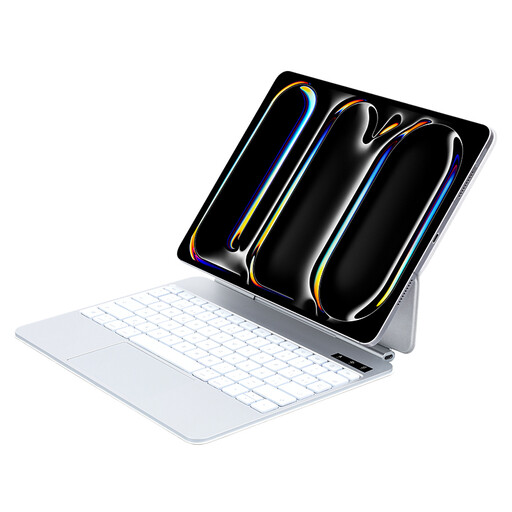
A keyboard case to consider if you use a compatible 11-inch iPad Pro with an M4 or M5 chip.
The product title describes a wireless keyboard in a white finish. Check that it matches your exact iPad model.
 No image available
A folding option to consider if you want to take a keyboard with you to use with a phone or tablet.
The product title mentions a rechargeable model, an aluminium body, quiet keys and a magnetic stand. Check that it connects to your device.
 No image available
A wireless keyboard to consider if you’re looking for a compact 75% layout and your device supports Bluetooth.
The product title lists QWERTY US and tri-mode connection via cable, Bluetooth or 2.4G. Check that the US layout suits your input language.
 No image available
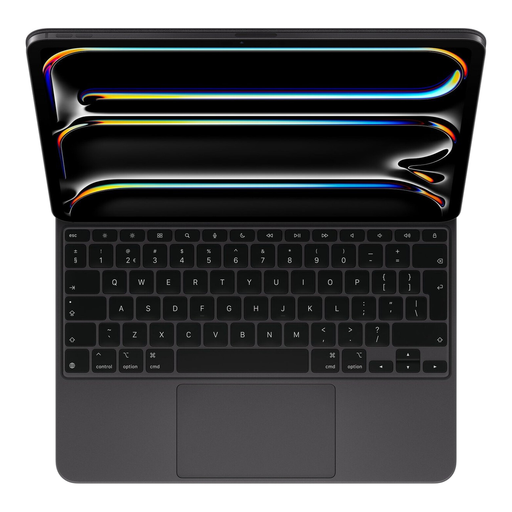
A keyboard case designed for a specific model, worth considering if you use the iPad Pro listed.
The product title specifies iPad Pro 13-inch (M4). Check that your exact iPad model is compatible before choosing.
 No image available
A compact wireless option to consider if you want to connect to a compatible device via Bluetooth.
The product title lists tri-mode connection, an 8000 mAh battery and a US QWERTY layout. Check that the layout suits your input language.
The Trust pairing instructions described use Bluetooth: switch on Bluetooth on the receiving device and, if prompted, enter the code shown using the keyboard. Whether your recipe app can open and save recipes without an internet connection depends on the app.
Check that the input language on your device matches the physical keyboard layout. Trust lists an incorrect input language as one possible reason for unexpected letters or symbols.
No, it varies by model. Trust describes the Nado II as rechargeable, while the manual for the Apple version of Keys-To-Go 2 describes two replaceable CR2032 batteries. Check the exact version before buying.
Contact the seller to discuss a solution. The Dutch government explains that there is no set statutory guarantee period for all products in the Netherlands, and that a manufacturer’s guarantee doesn’t replace your statutory rights.
ACM ConsuWijzer says that online purchases usually come with a 14-day cooling-off period after delivery. Check the relevant exceptions and return conditions for your specific purchase.
The Dutch government lists shops and supermarkets that sell batteries as collection points for ordinary household batteries. When you buy a new electrical appliance of a similar type, you can return an old appliance to the shop under the old-for-new scheme.