
Practice exam taker with limited desk space
You have a screen and possibly paper on the same small desk, and mainly want a keyboard that fits comfortably alongside them.


Start with a keyboard that fits beside your screen and study materials, and has a familiar layout. If you type lots of longer answers, pay extra attention to the typing feel. If you often take your keyboard with you or switch between a laptop and tablet, compare its dimensions and connection options too. Always check the layout and connectivity of the exact version you’re considering.
You have a screen and possibly paper on the same small desk, and mainly want a keyboard that fits comfortably alongside them.
You regularly type longer passages and value a familiar keyboard layout and typing feel more than the smallest possible size.
You might use a laptop and tablet in turn, for example, and want to know in advance how the keyboard connects to each device.
Don’t just compare the overall dimensions: the layout, typing feel and connection also determine whether a keyboard suits your study space and device.
| Consideration | What to look for when buying | Who should pay particular attention? |
|---|---|---|
| Desk space and portability | Compare the dimensions and actual key layout with the space you have available. | If I need to fit my screen and paper on the desk too, I want to know how much workspace the keyboard takes up. Around 36% of consumers give desk space the highest priority. |
| Typing feel for longer answers | Check the switch type and, if possible, try the size and typing feel to see if they suit you. | If I often type out open-ended answers, I want keys that feel comfortable when writing longer passages. Around 29% of consumers prioritise this typing experience. |
| Familiar keyboard layout | Check the physical layout, punctuation keys and language settings on your device. | If I use lots of characters without looking at the keyboard, I want their positions to match what I’m used to. Around 21% of consumers care most about a familiar layout. |
| Connectivity and switching between devices | Check which connection your device supports and whether the version you choose is compatible. | If I use a laptop and tablet in turn, I want to know in advance how to connect to both. Around 14% of consumers give device compatibility the highest priority. |
A smaller layout may omit or move keys you use when typing answers.
Compare the full key layout with your current keyboard, and bear in mind how much desk space you have.
The physical layout and language settings on your laptop or tablet both affect which characters appear.
Check the version and test the punctuation marks you use most on the device you practise on.
Whether you can use aids in an official exam may depend on the school and the exam conditions.
For practising at home, choose based on your own devices and workspace. For an official exam, ask the school separately what is allowed in your circumstances.
Logitech describes the Pebble Keys 2 K380s as a compact keyboard to take with you and switch between devices. The MX Keys Mini has backlit, contoured keys.
The CHERRY KW 7100 MINI BT is a compact option with scissor keys and Bluetooth connectivity.
According to Trust, the Trust Lyra Compact combines laptop-style scissor keys with connectivity via a USB receiver or Bluetooth.
These keyboards offer different layouts and connection options for studying at a small desk. For the version you choose, check that the layout and connectivity suit your device and the way you work.
 No image available
Could suit you if you’re looking for a compact layout and different connection options for a small desk.
75% layout; QWERTY US; wired, Bluetooth and 2.4G. Check that the layout includes the keys you use for practice exam answers.
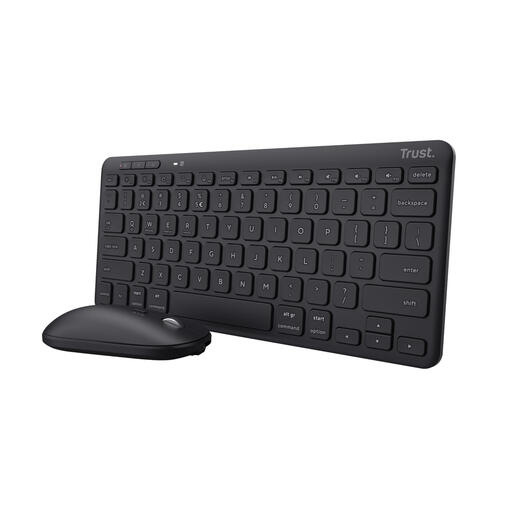 No image available
Could suit you if you’re looking for a compact keyboard and also want a mouse to take to your study space.
Rechargeable; QWERTY US. Check which connection option suits your devices and whether the physical layout matches your preference.
 No image available
Could suit you if you want to use your keyboard in different places and would like a touchpad built into the same product.
Foldable; Bluetooth; integrated touchpad. Check that it works with the device you use for your practice exam.
 No image available
Could suit you if you’re looking for a compact set-up and a wired connection works for your desk.
Linear Optical Switch; US. This version has a wired USB connection, so bear that in mind if you often want to take the keyboard with you.
 No image available
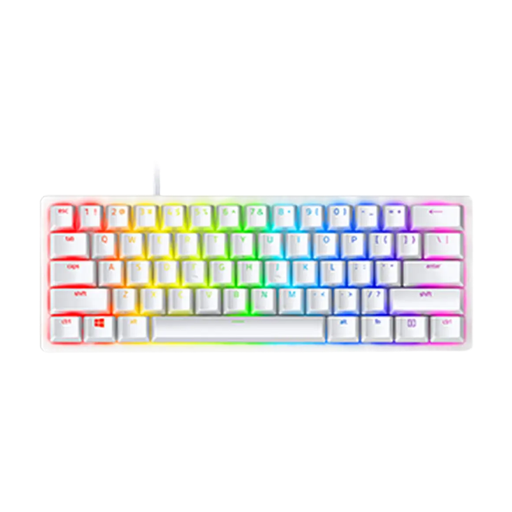
Could suit you if desk space is limited and you use a fixed, wired set-up.
60% layout; 61 keys; QWERTY US; RGB lighting; wired. Check that the available keys and their positions work for the answers you type.
Compare the physical keys and punctuation with your current keyboard, and check the language settings on your laptop or tablet. The term ‘QWERTY’ doesn’t describe the full layout on its own.
First, check which connection your device supports. Trust describes the Lyra as a model with a USB receiver and two Bluetooth connections; CHERRY says the KW 7100 MINI BT connects via Bluetooth without a dongle. Follow the pairing instructions for the version you choose.
It varies by model. Trust describes the Lyra as rechargeable and states that it offers six months’ use per charge. Before buying, check the power source for the version you’ve chosen, and charge a rechargeable model in good time.
According to the Dutch government, many online purchases from a business come with a 14-day cooling-off period. This is separate from problems with a faulty product: contact the seller about those. The Dutch government states that the Netherlands has no fixed statutory warranty period.
Being able to practise with it at home doesn’t mean you can use it in an official exam. The school decides whether aids or adjustments are allowed in school and central exams in secondary education; ask in advance what’s permitted in your circumstances. Other exam providers may have their own rules.