What should you look for when choosing?
First, check which connections your practice device supports. Then consider the keystroke feel, size and layout for the place where you’ll be typing.
| What to consider |
What should you check? |
Who is this important for? |
| Typing noise |
Try the keys yourself and check the rules for your library and study area. |
If I practise in a quiet space, I don’t want to distract other students. Around 33% of consumers say typing noise is their top priority. |
| Size and portability |
Compare the dimensions, any included case and the key layout with your bag and the available desk space. |
If I often take my keyboard with me, I want to leave enough room for my practice device. Around 27% of consumers prioritise portability and desk space. |
| Device connection |
Check Bluetooth, available USB ports, any cable and compatibility with your device. |
If I practise on different devices, I want a connection that works with my laptop, tablet or phone. Around 20% of consumers put device compatibility first. |
| Longer typing sessions |
Try the layout and keystroke feel with the kind of answers you write. Also check that you can position the screen and keyboard comfortably. |
If I practise writing longer answers, I want a layout and keystroke feel that suit my typing sessions. Around 20% of consumers focus mainly on extended typing. |
Keyboards at Joybuy
This selection includes keyboards for practising on the go, with a range of sizes and connection options. Check that each model’s connection and layout suit your device and study space.
 No image available
Trust Lyra keyboard with mouse, RF wireless + Bluetooth, QWERTY US English, blue
A good fit if you’re looking for a compact keyboard and want to switch between devices.
QWERTY US layout; Bluetooth and USB receiver. The product description mentions low-profile scissor keys and three typing angles.
View at Joybuy
 No image available
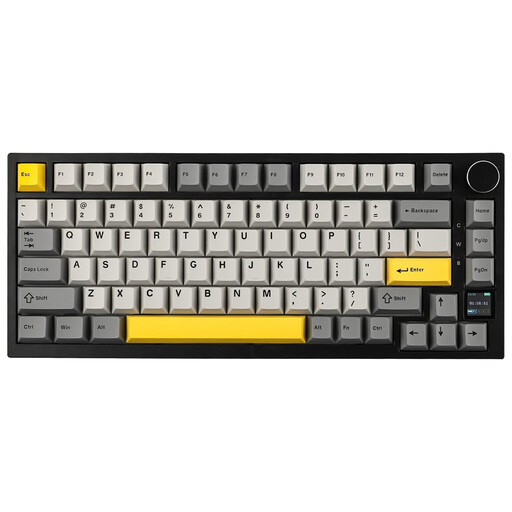
Ajazz AK820 Pro, 75%, QWERTY US, grey
An option if you’re looking for a compact layout and several connection options; check that the layout suits the type of answers you write.
The description lists 82 keys, Bluetooth, 2.4 GHz and USB-C. The foam is described as sound-dampening, but this is not a sound measurement.
View at Joybuy
 No image available
Razer Huntsman Mini, RZ03-03390200-R3M1
A good fit if you’re looking for a small keyboard with a wired connection that you can take with you.
The description lists a 60% layout and a detachable USB-C cable.
View at Joybuy
 No image available
Voxis B033 Tri-Fold Bluetooth keyboard with touchpad
A foldable model for anyone short on space in their bag or on the desk.
The description lists 63 keys, Bluetooth and support for iOS, Android and Windows. Folded dimensions: 152 × 97 × 12 mm.
View at Joybuy
 No image available
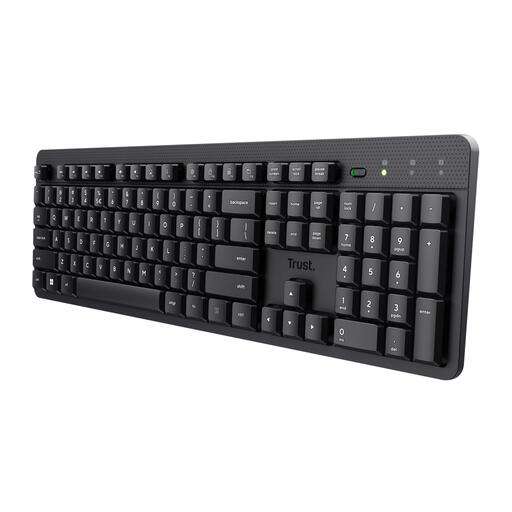
Trust Ody II, full-size, QWERTY US
A good fit if you want to use a USB receiver and prefer a full-size keyboard; it’s less compact to carry around.
The product description calls the low-profile membrane keys soft and virtually silent. Dimensions: 422 × 136 mm.
View at Joybuy
Frequently asked questions
Can I use my own keyboard in a library?
It depends on the library’s rules and the study area. The TU/e library designates quiet study zones, while Utrecht University Library has its own rules to prevent disruption. If in doubt, check what applies at your location.
How can I make sure the keyboard works with my practice device?
Before buying, check that your device supports the Bluetooth, receiver or cable connection you’ve chosen. Pair the keyboard in advance and try the key layout and input in the practice environment you use.
What should I consider when it comes to charging and care?
Before you leave, check the power requirements of the version you’ve chosen and follow its charging and care instructions. Trust lists a rechargeable battery for the Lyra; the stated battery life is a manufacturer estimate and may depend on how you use it.
What are my rights when buying a keyboard online in the Netherlands?
When you buy online from a business, you generally have 14 days to change your mind, subject to exceptions and conditions that depend on the purchase. The product must also match the agreement; if it’s faulty, the seller is your point of contact. According to the Dutch government, there is no fixed statutory two-year guarantee period.
Does the occupational health and safety rule apply to every student who spends a long time practising on a laptop?
No. The Arboportaal describes the rule about using a separate monitor or keyboard when working with a screen for more than two hours a day in the context of employees and employers. It is not a general legal requirement for students practising independently to buy specific equipment.


