
If you type in a quiet library
If you edit notes in a shared study space, consider both the feel of the keys and your library’s rules. A manufacturer’s description such as ‘quiet’ doesn’t give you a comparable measured noise level.


Start with your workspace and device. A compact keyboard with low-profile keys may suit a small study space, but a manufacturer’s description such as ‘quiet’ is not a sound measurement. Choose a model with a layout and connection that suit your needs. An integrated cover is handy when you’re travelling, while charging options or the ability to switch between devices may matter for other routines. Check your library’s rules, too.
If you edit notes in a shared study space, consider both the feel of the keys and your library’s rules. A manufacturer’s description such as ‘quiet’ doesn’t give you a comparable measured noise level.
If you carry a separate keyboard and work at a small table, its size and protection while travelling are important things to consider.
If you edit notes on more than one device, check that the connection, layout and shortcut keys work with your devices.
A good fit if: you type in a small study space or switch between devices. Logitech and Trust describe models with low-profile keys; Logitech calls the keys on the Pebble Keys 2 K380s quiet.
Bear in mind: the exact layout and typing feel; ‘quiet’ isn’t a comparative sound measurement.
A good fit if: you often carry your keyboard loose in your bag. Logitech says its universal Keys-To-Go 2 has a built-in cover and scissor keys.
Bear in mind: the version on offer, its keyboard layout, and compatibility with your device and shortcut keys.
A good fit if: you want a rechargeable keyboard or the option of using a USB receiver as well as Bluetooth. Trust describes the rechargeable Nado II; Rapoo lists Bluetooth and 2.4GHz connectivity for the E9050L.
Bear in mind: a 2.4GHz receiver needs a suitable USB port. Check the keyboard layout, too.
A good fit if: you don’t want to deal with wireless pairing or battery management, and your device has a suitable port.
Bear in mind: the cable and any adapter take up space; check the connection and cable length.
| What to consider | What should you check? | Who might find this especially important? |
|---|---|---|
| Quiet typing | Look at the key mechanism and, if possible, try the feel of the keys. Logitech and Trust describe some keys as quiet or low-profile, but this isn’t a comparative sound measurement. | If I’m working alongside other students, I want a typing feel that suits the space and I’ll bear the house rules in mind. Around 32% of consumers prioritise a quiet environment. |
| Size and portability | Compare the dimensions, weight, key protection and layout of the version on offer. | If I’m carrying a separate keyboard and working at a small table, I’ll consider what fits in my bag as well as what’s practical on the table. Around 25% of consumers prioritise portability and desk space. |
| Connecting to your devices | Check Bluetooth support, operating system, available USB ports and the exact product version. | If I’m editing notes on a laptop and tablet, I want to know whether the keyboard will connect to my devices. Around 25% of consumers give compatibility top priority. |
| Layout and editing comfort | Check the keyboard layout and make sure the navigation and function keys suit the way you proofread and edit text. | For longer editing sessions, I want familiar key positions and shortcut keys. Around 18% of consumers prioritise layout and editing comfort. |
Logitech and Trust describe some keys as quiet or low-profile, but that doesn’t tell you how loud they’ll sound in your study space.
If possible, try the keys for yourself and follow the rules of the library where you’re working. Utrecht University Library has its own house rules and may speak to visitors if they disturb others.
The version and keyboard layout can affect familiar key positions and shortcut keys. Logitech lists separate universal and Apple versions of the Keys-To-Go 2.
Check the full product version, layout and compatibility on the product page for the model you’re considering.
With the Rapoo E9050L, a 2.4GHz connection is an alternative to Bluetooth and requires a suitable USB port.
Decide in advance which connection you want to use and check which ports are available on your device.
The Keys-To-Go 2 and Pebble Keys 2 K380s offer two different compact keyboard experiences.
The Nado II is a Bluetooth model for anyone using a compact keyboard with multiple devices.
The E9050L is a compact, rechargeable model with Bluetooth and a 2.4GHz receiver.
The B1 Pro is an example of a compact model with several connection options.
These Joybuy picks focus on compact keyboards for smaller study spaces, with both wired and wireless options.
 No image available
The compact layout may suit a small desk, but check that the stated US layout works with the key positions you’re used to. The product name lists Hall-effect magnetic switches and Rapid Trigger.
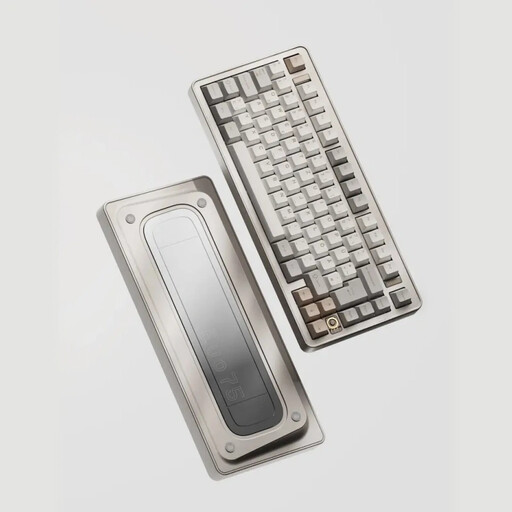 No image available
The 75% model may appeal if you’re looking for a compact layout. Check that the stated US layout suits the way you use your keyboard. The product name lists tri-mode wireless connectivity and an 8000 mAh battery.
 No image available
The 68-key layout may suit a small workspace, but bear in mind the stated US layout and check that the key positions work for your notes. The product name lists magnetic switches and a detachable Type-C cable.
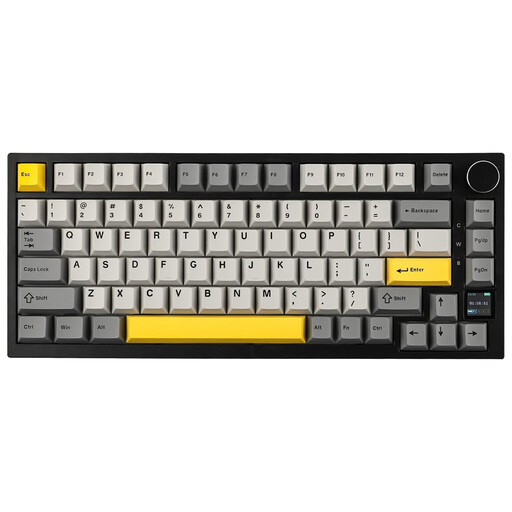 No image available
This compact model may suit you if you want different connection options. Check the stated US layout and whether the connection modes work with your device. The product name lists wired, Bluetooth and 2.4G connection options.
 No image available
A foldable model may suit you if you want a keyboard that’s easy to carry. Check in advance that the layout and connection work with your devices. The product name lists Bluetooth and a touchpad.
Not necessarily. Check the rules of the library and study area where you plan to work. Utrecht University Library has its own house rules, may speak to visitors who disturb others and may require reservations for certain spaces.
Compare the connection method and system support of the exact version with your laptop, tablet or phone. Logitech says the Pebble Keys 2 K380s can switch between three devices; the Rapoo E9050L’s 2.4GHz receiver requires a suitable USB port.
It depends on the model. Trust says the Nado II can be charged with the supplied USB-A to USB-C cable and used while charging. Check the product information for other models separately.
Radio equipment sold in Europe must meet the applicable European product requirements. The Dutch Authority for Digital Infrastructure says that equipment meeting these requirements receives a CE mark and advises against using it if the mark is missing or incorrect. This doesn’t automatically confirm that a specific version complies.
For an eligible online purchase from a business, the Dutch Government says you generally have 14 days to change your mind. If a product is faulty, the seller must provide a solution under the Dutch statutory guarantee; there is no single statutory guarantee period that applies to all products.