If you’re typing up long reports in one place, focus on the keyboard layout and how the keys feel. If you often travel with your equipment, compare weight, packed size and protection. Also check that the keyboard layout and connection are right for your device. A claim such as ‘quiet’ comes from the manufacturer; it doesn’t guarantee that a keyboard will be quiet enough in every library space.
Who is this suitable for?
Someone typing up long field reports
You’re turning detailed notes into text and want a comfortable keyboard layout with plenty of room to type; the smallest packed size is less important. The Dutch Consumers’ Association highlights factors such as key size, position and layout when choosing a tablet keyboard.
Mobile tablet or phone user
You take your workspace with you and want a keyboard that’s easy to pack away and connect to your own device. Logitech lists a protective cover for the Keys-To-Go 2; its stated keyboard weight is 222 g.
Typist in a shared study space
You’re considerate of others and look for keys that the manufacturer says are quiet. Logitech and Trust use descriptions like this for specific models, but they aren’t based on comparable sound measurements and don’t tell you whether a keyboard is suitable everywhere.
What should you look for when choosing?
| What to consider |
What should you check? |
Who should consider this? |
| Typing noise |
Check the key mechanism and, if possible, try the exact version. A manufacturer’s description such as ‘quiet’ isn’t based on comparable sound measurements. |
If I work in a shared study space, I want to be considerate of others without assuming a keyboard will be quiet enough everywhere. Around 31% of consumers rank sound as their top buying priority. |
| Typing space for long reports |
Check the layout, key spacing and available desk space; don’t rely on the term ‘full-size’ alone. |
When writing long reports, I want a layout and key feel that let me work comfortably, even if the keyboard takes up more space. Around 25% of consumers rank this as their top priority. |
| Carrying and storage |
Compare the stated weight and dimensions of the right version. Also check whether a cover or folding design protects the keys in your bag. |
If I carry my keyboard around often, I want it to be easy to pack away and may be willing to compromise on typing space. Around 25% of consumers prioritise a compact packed size. |
| Connection and power |
Check the system requirements, Bluetooth support, exact version and battery or charging type. Pair the keyboard in advance. |
When switching between devices, I want to know in advance whether the connection and power options suit the way I work. Around 19% of consumers rank switching between devices and power as their top priorities. |
Common buying mistakes
-
Assuming ‘wireless’ means Bluetooth
Not every wireless keyboard uses Bluetooth. The Trust Nado II is a Bluetooth model; according to the product information, the Trust Ody II on Joybuy works with a USB receiver. This difference could determine whether the keyboard works with your tablet or the ports available to you.
Check the connection type for the exact model, not just the brand or the word ‘wireless’.
-
Assuming ‘quiet’ means suitable for every quiet space
The quietness claims described here are product descriptions, not comparable sound measurements or approval from a library.
Try the keyboard’s sound where possible, and check the rules at your chosen branch and workspace.
-
Buying a keyboard case without checking your tablet model
A case made for one specific tablet version won’t necessarily fit another model.
Compare your tablet’s full model name with the compatibility information before choosing.
Brands to compare
Logitech
Logitech describes the Keys-To-Go 2 as a portable keyboard with a protective cover. The Pebble Keys 2 K380s is a compact alternative that can switch between devices.
- For the Keys-To-Go 2, Logitech lists a keyboard weight of 222 g and an integrated cover. For the Pebble Keys 2 K380s, the brand mentions low-profile, quiet keys and switching between up to three devices.
- The ‘quiet’ claim isn’t an independent sound comparison. Also check whether you need the Universal or Apple version of the Keys-To-Go 2, and whether the system requirements suit your device.
ProtoArc
ProtoArc describes the XK01 as a tri-fold keyboard with 105 keys and a number pad.
- The manufacturer lists USB-C charging and connection to three devices for the XK01.
- The US product page doesn’t confirm a Dutch keyboard layout or local availability. Features of the XK01 TP, a different version, don’t automatically apply to the XK01.
Trust
Trust describes the Nado II as a compact Bluetooth keyboard that can be used with up to three devices.
- Trust describes the Nado II as small and quiet.
- ‘Quiet’ is the manufacturer’s description, not a comparable sound measurement. Don’t confuse the Bluetooth Nado II with the Trust Ody II, which the product information says works with a USB receiver.
Apple
Apple offers keyboards for iPad models, where compatibility depends on the exact tablet.
- A compatible keyboard case can create a setup that attaches to the tablet.
- An Apple keyboard case won’t automatically fit every iPad. Check your tablet’s full model name before choosing.
Joybuy product picks
This selection includes keyboard cases for specific iPad models and standalone keyboards for mobile use. Check each model’s device compatibility and keyboard layout, especially if you need a Dutch layout.
 No image available
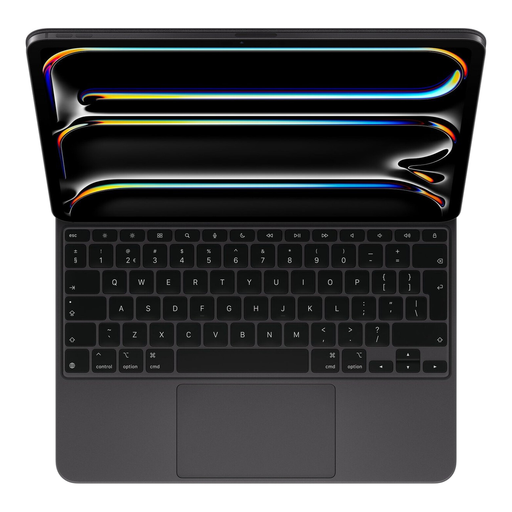
Apple Magic Keyboard for iPad Pro 13-Inch (M4)
A keyboard case made for a specific model, for anyone typing up notes on an iPad Pro 13-inch (M4).
The description lists a Dutch QWERTY layout, trackpad, backlighting and USB-C pass-through charging. Check that your iPad model is compatible.
View product
 No image available
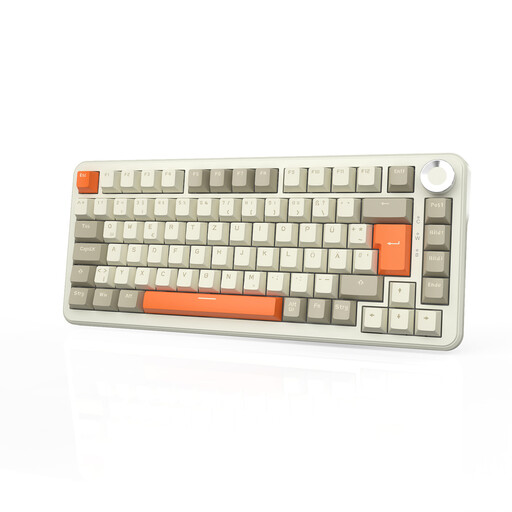
AJAZZ AK820 MAX, German QWERTZ
A compact option if you’re looking for a 75% layout and the German QWERTZ keyboard suits the way you work.
The product information lists Bluetooth, 2.4 GHz and USB-C connection options. The stated layout is German QWERTZ, not Dutch QWERTY.
View product
 No image available
Trust Lyra Keyboard Mouse Included, US English QWERTY
A keyboard with an included mouse for anyone who wants to switch between devices; the product description mentions flat scissor keys that Trust describes as quiet.
The description lists connections to up to three devices via Bluetooth or a USB receiver. The keyboard layout is US English QWERTY, so check that it suits your note-taking. The quietness claim isn’t based on comparative sound measurements.
View product
 No image available
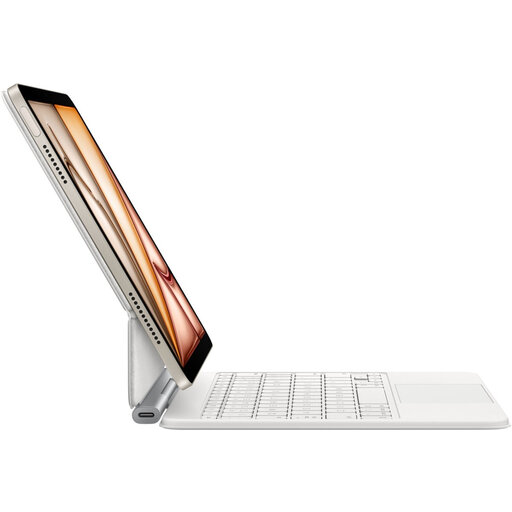
Apple Magic Keyboard for iPad Air 11-Inch M3, Dutch Layout, White
A keyboard case for a dedicated workspace using the specified iPad Air version.
The title lists a Dutch layout and compatibility with iPad Air 11-inch M3. Check your exact tablet model before choosing.
View product
 No image available
Apple Magic Keyboard for iPad Air 13-Inch (M3), US English, White
A keyboard case made for a specific model, for anyone using an iPad Air 13-inch M3 as a dedicated workspace.
The title lists a US English layout. The description mentions a trackpad, a protective case and USB-C pass-through charging. Check both the keyboard layout and your exact iPad model.
View product
Frequently asked questions
How do I know whether a Bluetooth keyboard will work with my laptop?
Check the system requirements for the exact keyboard version and whether your laptop has Bluetooth. Microsoft Support says that a Windows device needs Bluetooth to pair with a Bluetooth device; if it doesn’t have Bluetooth, check which suitable connection options are available.
Is a standalone keyboard or a keyboard case more practical with a tablet?
A standalone Bluetooth keyboard may suit you better if you want to switch between devices; a keyboard case is an option if you want a setup that attaches to your tablet. Always check that a case is compatible with your exact tablet model.
How can I get my keyboard ready for a long writing session?
Pair the keyboard with your device in advance and check its power supply. Logitech says the Keys-To-Go 2 uses two replaceable CR2032 cells; ProtoArc describes the XK01 as rechargeable via USB-C. Also check the rules for your chosen library workspace.
What are my rights when buying online in the Netherlands?
According to ACM ConsuWijzer, online purchases generally come with a statutory cooling-off period of up to 14 days after delivery, subject to legal exceptions. You’re also entitled to a product that does what you could reasonably expect. If the product breaks during normal use sooner than you could reasonably expect, the seller must put things right free of charge, according to ACM ConsuWijzer.


