
Editor in a quiet reading room
You type close to other visitors and want to find out how much noise the keys make. Logitech and Trust describe certain models as quiet, but these manufacturers’ claims are not independent sound measurements.


For editing in the library, a compact Bluetooth keyboard is handy if you have limited table space and your device supports Bluetooth. If you want to cover the keys while carrying it, consider a model with a key cover. A wired model may be a better fit if your device has the required port and you’d rather not use a wireless connection. Treat manufacturers’ claims about quietness as non-comparable sound measurements, and check that the keyboard layout suits your writing work.
You type close to other visitors and want to find out how much noise the keys make. Logitech and Trust describe certain models as quiet, but these manufacturers’ claims are not independent sound measurements.
You make lots of corrections and move text around, so a suitable layout, easy-to-reach navigation keys and a comfortable feel are all useful. Compact models vary in their design and mechanisms.
You take a separate keyboard to the library and weigh up the space it needs in your bag, how it’s protected and how it connects to your device.
A good fit for: limited table space and a device that supports Bluetooth.
Bear in mind: check the layout and try the key feel; manufacturers’ claims about quietness are not directly comparable measurements.
A good fit for: anyone who takes a tablet with them and wants to cover the keys while carrying it.
Bear in mind: check that you’ve chosen the right model and layout, and that the size feels comfortable for longer editing sessions.
A good fit for: a device with the required port, if you don’t want to use a Bluetooth connection.
Bear in mind: the cable limits where you can place it; check the layout and whether the port is available without an adapter.
A good fit for: anyone who switches between devices and prefers to connect a device using a USB receiver.
Bear in mind: the receiver needs a compatible USB port and is an extra item to carry.
When choosing a portable keyboard for editing a newsletter in the library, key noise, extended typing, portability and connection to your device could each be deciding factors.
| Consideration | What to look for when buying | Who might this matter to? |
|---|---|---|
| Key noise in a shared space | Look at the key mechanism and, if possible, try the feel for yourself; manufacturers describe the Nado II and Pebble Keys 2 as quiet. | When I work close to other people, I want to know how much noise my keystrokes make. Around 31% of consumers prioritise key noise. |
| Extended editing and layout | Check the physical layout, punctuation keys and access to the arrow and function keys. | When making lots of corrections, I want a layout and key feel that suit my writing work, not just a small keyboard. Around 25% of consumers prioritise text input and layout. |
| Portability and protection | Compare the size when in use with the space in your bag, and check what protection is included. | If I carry the keyboard separately, I want to know how much space it takes up and how the keys are protected. Around 25% of consumers mainly choose based on portability and protection. |
| Connectivity and power | Check that your device supports Bluetooth or USB, and find out how the keyboard is powered. | Before starting an editing session, I want to be sure my device will connect and that the keyboard has power. Around 19% of consumers prioritise connectivity and power. |
Logitech and Trust’s descriptions of their keyboards as quiet are manufacturers’ claims. They don’t provide directly comparable noise levels for use in a library.
Choose a suitable model and, where possible, assess the key feel and noise for yourself.
The physical keyboard layout and the input language set on your device affect which characters appear.
Check the layout of the specific model and the input language on your laptop or tablet.
An unsuitable layout can make entering punctuation and editing text more cumbersome.
The standalone Trust Lyra is a different version from a set that includes a keyboard and mouse.
Compare the full model name and what’s included before treating two listings as the same product.
A mouse included in a set may be an extra item you don’t need in the library.
The Pebble Keys 2 K380s is a compact Bluetooth option, while the Keys-To-Go 2 puts more emphasis on portability, with an integrated key cover.
The Nado II is a compact Bluetooth option, while the Lyra combines Bluetooth with a USB receiver.
The KW 7100 MINI BT offers Bluetooth connectivity and a carry case; the G84-4100 is a compact wired alternative.
The E9500M combines Bluetooth with a 2.4GHz receiver.
This selection includes folding and compact keyboards for a small workspace, with wireless or wired connectivity.
 No image available
This foldable model is designed to be portable; check that Bluetooth works with your device. The product name mentions a rechargeable battery and a magnetic stand for a phone or tablet. The title describes the keys as quiet, but this is not an independent sound measurement.
 No image available
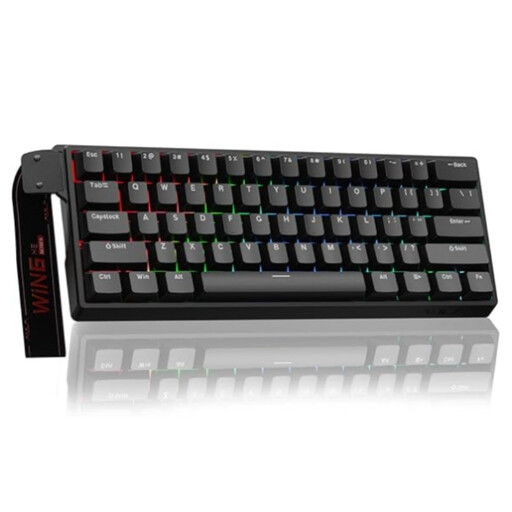
This wired 60% model may suit you if you’re looking for a compact layout and a cable connection. The product name mentions Hall Effect magnetic switches; check that the layout and connection suit your workspace.
 No image available
This wired 75% model is an option if you’re looking for a compact layout and want to use a USB connection. The product name lists QWERTY US and 83 keys; check that the layout suits your typing needs.
 No image available
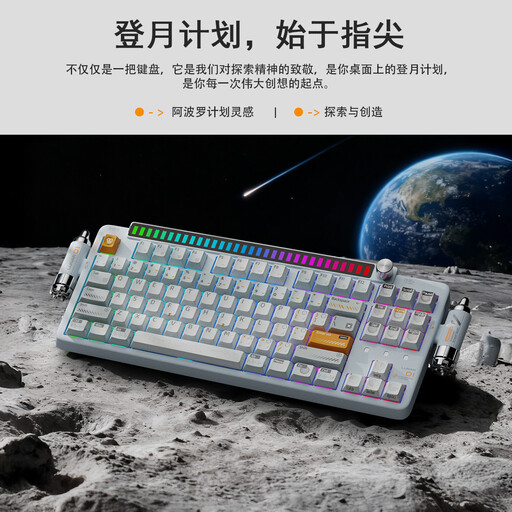
This compact model may suit you if you’re looking for an 80% layout. The product name lists tri-mode, QWERTY US and a 4000mAh battery; check which connection options work with your device and how you work.
 No image available
This foldable model with touchpad is designed for anyone who wants to combine typing and pointing on one device. The product name lists support for tablets, smartphones and computers; check that your device is compatible.
Check both the physical keyboard layout of the model you’ve chosen and the input language on your device. Trust says that a different system input language can produce the wrong characters on another, older Nado model; don’t treat this as a specification for the Nado II.
The Dutch Authority for Digital Infrastructure (RDI) outlines the applicable requirements and CE marking for radio equipment placed on the Dutch and European markets. Check the marking on the specific model; a product name or manufacturer’s claim alone doesn’t confirm that an individual item meets the requirements.
For a distance purchase from a business, the Dutch government says you’ll often have a 14-day cooling-off period; this doesn’t necessarily apply, for example, to an online purchase from a private seller. Before ordering, check who the seller is and what returns information they provide.
The Dutch government says that used batteries shouldn’t go in the bin and can be handed in at shops that sell batteries, among other places. When buying a similar new electrical appliance, you can return an old one through the take-back scheme; local council collection is another option.