For one soup pan at a temporary workshop venue, a portable induction hob with a suitable pan size and well-controlled low settings is a sensible choice; a high maximum power rating alone does not show how well it simmers soup. Choose a double hob if you need a second pan at the same time, and check the total power and the electrical circuit. A built-in hob is better suited to a permanent workshop kitchen, provided the space and electrical connection are suitable.
Who is this choice relevant to?
Soup demonstrator using one pan
You want to keep the soup simmering gently and need a hob that suits the base size of your soup pan. Consumentenbond treats cooking performance as a separate test factor; Inventum specifies a particular pan size range for the KI120T.
Workshop cook using several pans
You want to prepare a second dish at the same time as the soup, so you’ll need to consider the number of cooking zones and the available connection power. Consumentenbond notes that several zones cannot always be used on a high setting at the same time.
Fitting out a permanent workshop kitchen
You’re choosing a permanent cooking area, so you’ll need to take both the cut-out dimensions and the electrical connection into account. Consumentenbond distinguishes between freestanding and built-in hobs as separate options.
What should you look for when buying?
Portable single-zone hob
Suitable if: you’re using one suitable soup pan at a temporary venue.
Bear in mind: there’s no space for a second pan, and simmering performance has not been independently measured for every model.
Portable double-zone hob
Suitable if: you need a second pan at the same time as the soup.
Bear in mind: the zones share the stated total power; check the connection and the instruction manual.
Built-in hob
Suitable if: the workshop takes place in a permanent kitchen.
Bear in mind: the space and electrical installation must be suitable; have the connection checked.
First decide whether you need to cook with one pan, cook several things at once or install a permanent hob. Then compare the simmer control, pan size and connection requirements for the exact model.
| What to consider |
What should you check? |
Who is this most important for? |
| Gentle simmering |
Check the low power settings and controls on the exact model; compare independent simmering tests if available. |
If I want to let the soup simmer gently after bringing it to the boil, I’ll focus on the low settings. Around 36% of consumers rank simmering as their top buying priority. |
| Connection and setup |
Check the plug, rated power, electrical circuit, ventilation space and positioning requirements in the manual. |
At a temporary workshop venue, I want to know whether the hob can be positioned safely and whether it’s compatible with the available connection. Around 29% of consumers prioritise connection and setup. |
| Suitable soup pan |
Check that the pan base is magnetic and compare its size with the hob’s stated range. |
If I want to use my existing soup pan, the pan base and compatible zone are key. Around 21% of consumers prioritise pan size. |
| Using a second pan at the same time |
Compare the number of zones, total power and connection instructions for simultaneous use. |
When I’m preparing another dish as well as the soup, I want to know whether there’s room for a second pan and what the connection can handle. Around 14% of consumers rank cooking at the same time as their top buying priority. |
Common buying mistakes
-
Comparing only the highest wattage
The maximum power rating doesn’t tell you how the soup will behave on a low setting. For simmering, low-power control is what matters.
Compare the low settings and independent test results when they’re available for the exact model. Treat a manufacturer’s claim about maintaining a constant temperature as just that: a claim, not an independent measurement.
-
Assuming two zones can always run at full power at the same time
On a double hob, the zones share the stated total power. Other appliances on the same electrical circuit may also affect what you can use.
Before buying, check the total power, plug and electrical circuit at the workshop venue.
Depending on the existing connection, you may need to modify the installation or limit simultaneous use.
-
Not measuring the soup pan and available space
Pan size ranges and positioning requirements vary between models, so a compact hob won’t necessarily suit every soup pan or table.
Measure the pan base and the space available, and follow the ventilation clearances in the manual for your chosen model.
If your existing pan isn’t suitable, you may need a different compatible pan.
Brands to compare
Inventum
The KI120T is a portable single-zone hob for one pan, provided the pan is within the stated size range.
- Inventum specifies 2000 W, a pan size range of 15–20 cm and a timer of up to 180 minutes.
- Inventum states that the keep-warm function has no adjustable temperature. The manual describes domestic and similar use and sets out positioning requirements; the specifications do not prove independently measured simmering performance.
Severin
The DK 1031 is a portable double induction hob designed for use with two pans.
- Severin specifies two zones, around 3400 W in total, a timer and a Schuko plug.
- Check the electrical circuit and the pan and positioning requirements. The stated features are not an independent measure of simmering performance.
Princess
The 303010 is a portable single-zone hob for extra cooking space.
- Princess specifies 1800 W, adjustable temperature and power settings, and a timer of up to 180 minutes.
- The claim that the hob maintains a constant temperature comes from the manufacturer; it is not an independent measurement using a soup pan.
Tristar
The IK-6178 is a portable single-zone option with a timer.
- Tristar specifies 2000 W, a temperature range of 60–240 °C and a timer of up to 180 minutes.
- The manufacturer’s claim about maintaining a constant temperature is not an independent test result; check the pan size and how easy the controls are to use, too.
CASO Design
The S-Line 2100 is a portable single-zone hob with several setting options.
- CASO specifies 12 power settings, a pan size range of 12–24 cm, a timer of up to 180 minutes and a maximum pan load of 6 kg.
- The product specifications are not an independent simmering test. Check that the plug, documentation and conditions of use are suitable for your workshop venue.
Induction hobs at Joybuy
This selection includes portable hobs for one pan, a model with two zones and a built-in hob for workshops with different cooking setups.
 No image available
MELISSA induction hob, 2000 W
The stated settings and temperature range may be useful if you’re preparing soup in one pan on a portable hob; check that this model suits your intended use.
The product information specifies 10 power settings, 8 presets, a timer and a temperature range of 60–240 °C.
The product description restricts use to indoor, domestic purposes and excludes commercial use.
Joybuy
 No image available
Induction hob with two cooking zones
The two zones are designed for a setup where you want to use a second pan alongside the soup.
The product title specifies five temperature settings, including simmering and keeping warm.
Joybuy
 No image available
Portable single-zone induction hob, 1000 W
A single-zone tabletop hob is an option if you want to use one pan at a time at the workshop venue.
The product title specifies five power settings and 1000 W.
Joybuy
 No image available
Joyami JCL02M induction hob, 220V/240V, 2100 W
This single-zone hob is designed for a cooking area where you’ll use one pan; check that it’s compatible with the connection at your venue.
The product title specifies 220V/240V and 2100 W. The product description mentions temperature control and several cooking settings.
Joybuy
 No image available
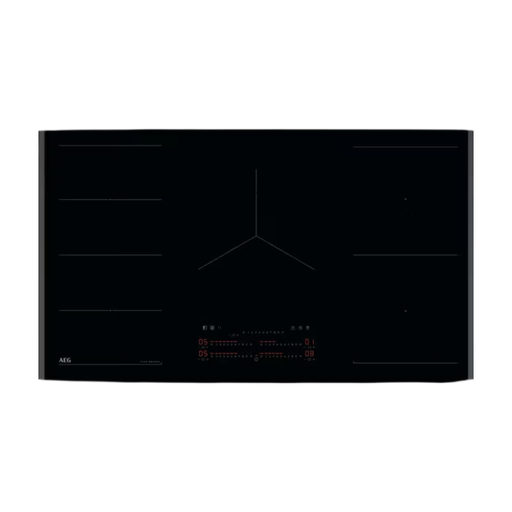
AEG TK95II08FB induction hob with four cooking zones
A built-in hob is suited to a permanent workshop kitchen; check the space and have the electrical connection assessed.
The product title specifies four cooking zones. The product description mentions PowerSlide for switching between cooking, simmering and keeping warm.
Joybuy
Frequently asked questions
Can you use your existing soup pan?
It depends on the pan base and the hob’s stated pan size range. Check whether the base is magnetic with a magnet, then compare its size with the specifications for the exact model. Inventum gives a range of 15–20 cm for the KI120T; this does not automatically apply to other hobs.
Is a timer enough to leave soup simmering unattended?
No. A timer is no substitute for keeping an eye on the food while it cooks. It won’t tell you what’s happening to the soup or what temperature it has reached in the meantime, so check the food during the workshop.
What should you check before putting a portable hob on a workshop table?
Follow the manual for the exact model on the surface, ventilation and permitted use. For the Inventum KI120T, the manual specifies a flat, heat-resistant surface and at least 10 cm of clearance at the sides and back. Brandweer Nederland advises connecting high-power appliances directly to a socket wherever possible.
What food safety rules apply if you serve soup to paying participants?
If the activity involves food preparation or sales by a food business, the NVWA requires a HACCP food safety plan or an applicable hygiene code. For keeping food hot for customers, the NVWA specifies 60 °C or above, with checks using a digital probe thermometer. The temperature set on a hob is not the same as a measurement taken in the soup; whether business rules apply depends on how the workshop is organised.
What does CE marking mean when you’re buying?
Electrical equipment covered by the applicable EU low-voltage rules must carry CE marking when it is placed on the EU market. EUR-Lex and Your Europe explain that the manufacturer applies the mark as a declaration of conformity; it is not a performance certificate issued by a central EU body. Check the documentation for the exact model, and don’t treat the mark alone as proof of simmering performance.


