
Solo cook with limited worktop space
You want to use one soup pan without fitting a hob or giving up a lot of permanent worktop space.


For one pan of pumpkin soup, a portable induction hob with a single cooking zone is a sensible choice if your pan falls within the specified size range and you can connect and position the hob in line with the instructions. A timer or simmer setting doesn’t guarantee that your soup will simmer evenly in your pan. Choose two zones only if you regularly use a second pan at the same time, and bear in mind the extra space and the electrical connection available.
You want to use one soup pan without fitting a hob or giving up a lot of permanent worktop space.
You want to know whether the base of your pan falls within the size range recognised by the cooking zone.
You value useful lower settings, a timer and straightforward controls more than a high maximum power rating alone.
Choose this option: if you usually use one compatible soup pan and don’t want a cut-out in your worktop.
Bear in mind: you can’t use a second pan on the hob at the same time. Settings and a timer don’t prove that your soup will simmer evenly.
Choose this option: if you regularly use a second pan alongside your soup and have enough worktop space.
Bear in mind: the hob takes up more space. The Consumentenbond notes that with a limited electrical connection, you can’t necessarily use several zones at high power at the same time.
Choose this option: if you’re changing your kitchen and regularly want to use several pans at once.
Bear in mind: you’ll need to check the cut-out and electrical connection. Some more powerful models require a different connection.
Checking the pan size is a good first step: according to the Consumentenbond, a cooking zone may not recognise a pan that’s too small. Before choosing, compare the base diameter with the instructions for the exact model.
| What to consider | What should you check? | Who is this important for? |
|---|---|---|
| Zone and space | Measure the space, allowing for the ventilation clearance specified in the instructions. Decide whether you’ll really use a second pan at the same time. | I want space for one soup pan without giving up a large part of my worktop; around 28% of consumers say space and a single cooking zone are their main concern. |
| Pan detection | Check that the base is suitable for induction and compare its diameter with the range specified for the exact model. | If I want to keep using my small soup pan, the cooking zone must recognise its base size; around 22% of consumers prioritise compatibility with their own pan. |
| Gentle simmering | Compare the lower settings and timer operation. Check separately whether you can adjust the keep-warm setting. | I want to turn down the heat after cooking and let the soup simmer; around 22% of consumers say temperature control is their main consideration. |
| Connection and positioning | Read the model-specific instructions for the socket, circuit and ventilation. The NVWA outlines the applicable safety requirements; CE marking is mandatory for this product category. | If I want to use the hob without renovating, I need to know in advance what connection and clearance it requires; around 17% of consumers consider the connection and positioning decisive. |
| Using a second pan at the same time | Check the number of zones, external dimensions, total connected load and electrical connection requirements. | I regularly cook with a second pan at the same time and am happy to have a larger hob for that; around 11% of consumers say cooking several things at once is their main concern. |
The percentages shown give an indication of how these concerns are distributed; they are not market shares. Check the CE marking and model-specific requirements for the appliance you’re considering. A product feature or marking alone doesn’t prove that all applicable requirements have been met.
The cooking zone may not recognise a pan that’s too small or unsuitable for induction.
Measure the base of your existing soup pan and compare it with the range specified by the manufacturer for the exact model.
If your pan falls outside that range, you may need a different, compatible pan.
Manufacturer settings describe the features available, but don’t tell you how the hob will perform with your pan and the amount of soup you’re cooking.
Compare the controls and timer operation, but don’t treat them as proof of an even simmering temperature.
The electrical connection and total power limit what you can use at the same time. Some more powerful models require a different connection.
Check the connection instructions and the available circuit before choosing extra cooking zones.
The KI120T is a single-zone model for pans with a specified diameter of 15–20 cm.
The IK-6178 is a portable single-zone hob with adjustable power, temperature and timer.
The 303010 is a single-zone model for anyone looking for digitally adjustable controls.
The portable Everyday Slim IH2108 has preset programmes, including a simmer setting, as well as a manual setting.
The DK 1031 is an example of a double hob for anyone who uses a second pan at the same time.
These models include portable hobs with one or two cooking zones, as well as built-in hobs. Choose based on your pan size, whether you need a second pan and the space available. For the specific product, check the CE marking and the model-specific connection and installation requirements.
 No image available
Suitable if you regularly use a second pan alongside your soup and are also looking for a simmer or keep-warm function.
The product name lists five temperature settings and keep-warm, boiling, simmering, frying and slow-cooking functions.
 No image available
An option to consider if you’re looking for a portable hob to cook one pan at a time.
The product name lists 220V/240V/2100; check the precise electrical specifications and connection for the product in question before choosing.
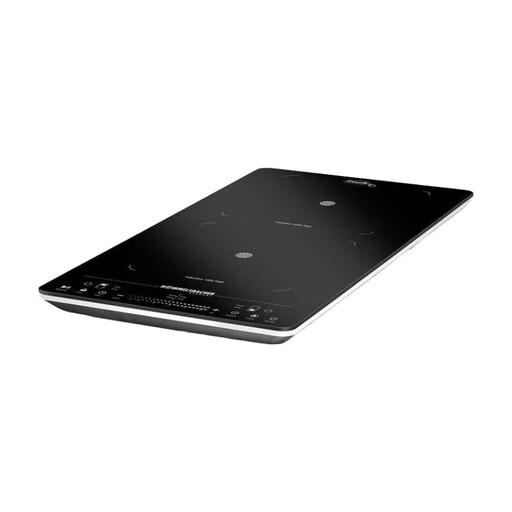 No image available
Suitable if you have the space and connection for a portable hob with two cooking zones.
Check that your pans fall within the specified range of 120–260 mm and have a flat, magnetic base.
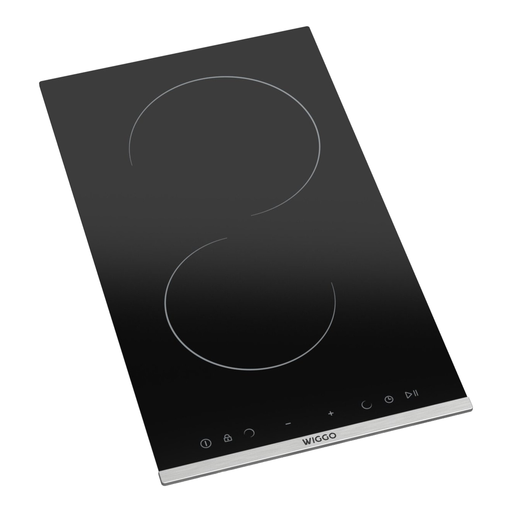 No image available
A built-in option to consider if you want to use a second pan at the same time and are adapting your kitchen to accommodate it.
The product name lists 1-Phase Plug & Play. The product description specifies installation by a qualified electrician and advises users with a pacemaker or active medical implant to consult a doctor before use.
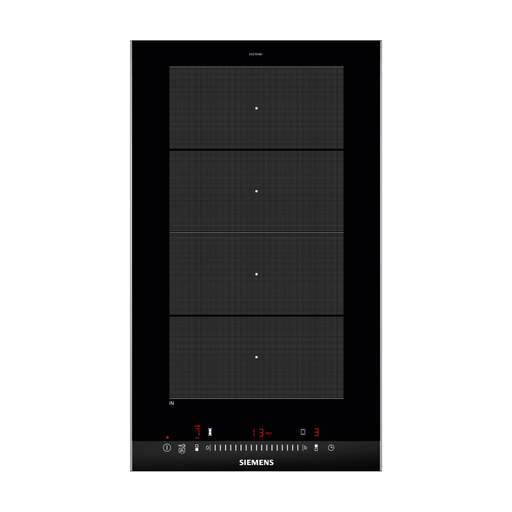 No image available
Suitable if you’re looking for a built-in model and want to take pan size into account when choosing.
The product name specifies a flush-mounted version with a frame; this isn’t a portable, freestanding hob.
Check whether the base is magnetic, for example by using a magnet or looking for the induction symbol, and compare its diameter with the range specified for the hob you’ve chosen. According to the Consumentenbond, a pan outside that range may not be recognised.
Follow the instructions for the exact model and keep the ventilation openings clear. For the Inventum KI120T, the manufacturer specifies a flat, heat-resistant surface and at least 10 cm of clearance at the sides and back. Don’t assume the same distances apply to other models. Let the appliance cool down before cleaning it.
It depends on the model. Inventum describes the KI120T as suitable for connection to an earthed Dutch socket, while according to the Consumentenbond, more powerful freestanding models may require a Perilex socket and a two-phase connection. Check the instructions and the available circuit; Brandweer Nederland advises connecting high-power appliances directly to a socket.
The NVWA states that CE marking is mandatory for this category of electrical product and that the applicable statutory safety requirements apply. A marking isn’t an independent performance test. According to the Dutch government, there’s no fixed statutory warranty period in the Netherlands. If a consumer product is faulty, the retailer is your point of contact for your statutory guarantee rights. Any manufacturer’s warranty is in addition to your statutory rights.