
Cheese sauce maker who wants control
If you want to adjust the heat quickly while stirring, compare the controls and pan size rather than looking only at the maximum power.


If you use one saucepan and want to keep your worktop clear, compare portable single-ring hobs by their overall dimensions, the required clearance and how easily you can turn down the heat. Induction needs a compatible pan and responds quickly. A classic electric hotplate may suit you if you want to keep using your existing pan, but it takes longer to respond when you adjust the heat.
If you want to adjust the heat quickly while stirring, compare the controls and pan size rather than looking only at the maximum power.
If you want to use one pan and put the hob away afterwards, measure the space around the appliance too. For example, the Inventum KI120T manual requires at least 10 cm of clearance at the sides and rear.
Your saucepan and socket may determine your choice. Milieu Centraal recommends using a magnet to check whether the pan base is suitable for induction. If it isn't, you could compare it with a classic electric hotplate.
Choose this when: your saucepan is suitable for induction and you want to adjust the heat quickly while stirring.
The trade-off: check the pan diameter and bear in mind that a single zone leaves no room for a second pan.
Choose this when: you want to keep using an existing pan that isn't suitable for induction.
The trade-off: the hotplate and pan may continue to give off heat after you turn the setting down. Remove the pan from the hotplate if needed.
Choose this when: you regularly prepare sauce and a second dish at the same time, and your space and installation allow for it.
The trade-off: check the dimensions and connection requirements of the specific model. Requirements for a portable hob do not automatically apply to a built-in hob.
If you're choosing a portable electric hob for making cheese sauce in a kitchen with limited worktop space, these are the considerations that may guide your purchase.
| Consideration | What should you check? | Who is this important for? |
|---|---|---|
| Heat for cheese sauce | Compare the controls and available settings. The stated power isn't a measure of the temperature of the sauce. Keep stirring and remove the pan from the heat source if needed. | I want to be able to turn the heat down while stirring so I can control the sauce more easily; around 36% of consumers in this situation prioritise adjustable heat for sauce. |
| Worktop space | Measure the full space available and compare the overall dimensions with the ventilation clearance required in the model's manual. | If my worktop is narrow, I want to know whether the hob will fit with the required clearance and can be put away after use; around 29% of consumers in this situation prioritise worktop space. |
| Existing saucepan | Test the base with a magnet. For induction, also check that the pan size is suitable for your chosen hob. | I want to keep using my current saucepan and find out first whether it will work with the hob; around 21% of consumers in this situation prioritise reusing their pan. |
| Connection and positioning | Read the manual and check the socket, cable route, surface and required ventilation clearance for the specific model. | I want to connect the hob safely in the space available, without unexpected installation requirements; around 14% of consumers in this situation place the greatest importance on the connection and positioning. |
The overall size of the hob and the required ventilation clearance both affect whether it will fit where you plan to use it. The Inventum KI120T manual requires at least 10 cm of clearance at the sides and rear, and warns against using it in small spaces.
Measure the entire space and read the positioning instructions for the exact model you're considering.
Induction requires a magnetic pan base, and the hob may specify a minimum or maximum pan diameter.
Test the pan base with a magnet and compare its diameter with the product specifications. If your pan isn't suitable, include a classic electric hotplate in your comparison too.
You may need to buy a suitable induction pan as well as the hob.
A manufacturer's warranty doesn't replace your statutory rights in the Netherlands if a product is faulty. According to the Dutch government, the retailer is your point of contact if there's a problem with the product. The Netherlands does not have a fixed statutory warranty period of two years.
Check exactly what any additional warranty covers, and contact the retailer if the product is faulty.
The freestanding IP 1266 single-ring induction hob is a useful comparison for power settings and pan diameter.
The KI120T is a portable single-ring induction hob to compare when weighing up the controls, pan size and positioning.
The KP 1092 is a classic electric single hotplate to compare with portable induction models.
The S-Line 2100 is a portable single-ring induction hob to compare for its controls and overall dimensions.
The CT 2020/IN is another example of a portable single-ring induction hob.
This selection includes portable single-ring hobs for a small cooking space: induction models and a classic electric hotplate. For the appliance you choose, check the CE marking on the product supplied and follow the positioning instructions in the manual.
 No image available
An option to compare if you want to adjust the heat while cooking and use an induction-compatible pan.
The product name lists 2000 W, 8 power settings, temperature control from 60–270 °C and compatible cookware measuring 12–26 cm.
Check that your saucepan has a magnetic base and that its diameter falls within the stated range.
 No image available
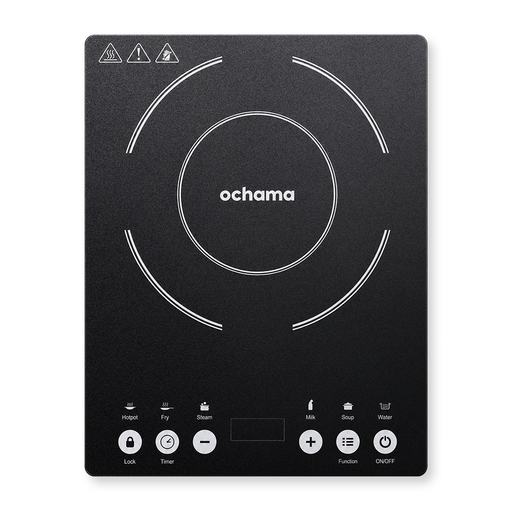
This portable induction hob is an option if you're looking for a compact cooking spot and your pan is suitable for induction.
The product name lists 2000 W and 10 power settings.
Check that your pan is compatible before choosing.
 No image available
An option to compare if you're looking for a portable induction hob with several power settings for a suitable saucepan.
Fritel lists adjustable power from 200–2000 W and suitable pans measuring 12–26 cm for the IP 1266; the product name specifies 10 power settings.
The hob requires compatible induction cookware. Measure the available space and follow the manual when positioning it.
 No image available
A portable induction hob to compare if you use a saucepan that's suitable for induction.
For the CT 2020/IN, Rommelsbacher lists ten power settings and a cooking zone for pans measuring 120–230 mm. The stated dimensions are 29,50 × 36,10 × 4,30 cm.
Check that your pan is compatible, confirm the version you're considering and read the positioning instructions.
 No image available
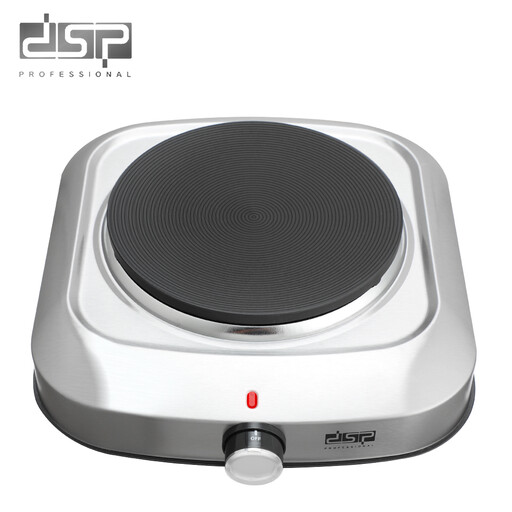
This classic electric single hotplate is an option to compare if you don't want to use an induction pan.
The product name lists 1500 W and adjustable temperature control.
Before use, check that your pan is suitable, look for the CE marking on the appliance supplied and read the positioning instructions.
Follow your recipe's method and choose a hob that lets you turn down the heat. A published Good Food recipe adds the cheese after taking the pan off the heat, then warms the sauce over a low heat. Keep stirring as you cook.
Use a magnet to check whether the base is magnetic, and compare the pan's diameter with the hob specifications. Milieu Centraal describes the magnet test as a way to check whether the pan base is suitable. A classic electric hotplate is an alternative to compare if your pan isn't suitable for induction.
Not without checking the instructions for the specific model. For example, the Inventum KI120T manual requires a flat, heat-resistant surface and at least 10 cm of ventilation clearance at the sides and rear. It also warns against using the hob in small spaces.
That depends on the model. Inventum says the KI120T can be connected to an earthed Dutch socket. The Consumers' Association reports that portable hobs can usually be plugged in directly, while built-in hobs often require the connection to be altered. Check the requirements of the appliance you're considering.
Electrical appliances placed on the EU market must carry the applicable CE marking. Check the product supplied for this marking. According to the Dutch government, the retailer is your point of contact if a product is faulty. The Netherlands does not have a fixed statutory warranty period of two years.